
TL;DR

Get home appliances delivered free with Prime
- Fast, free delivery on millions of items
- Prime Video, Amazon Music and more included
- Member-only deals all year
Interior designers Maci McGee and Kistna Conely shared advice on using custom window treatments in the 2026 Whole Home in Charleston. Their recommendations include balancing pattern and texture, layering treatments for light and privacy, carrying colors or textures between rooms, and getting proportions right.
A House Beautiful report on the 2026 Whole Home in Charleston, South Carolina, highlights how designers Maci McGee of Ellerslie Interiors and Kistna Conely of House Seven Design used window treatments to balance a room’s patterns, light and privacy needs. Their examples show how custom shades and drapes can help a room feel connected and finished without repeating the same look everywhere.
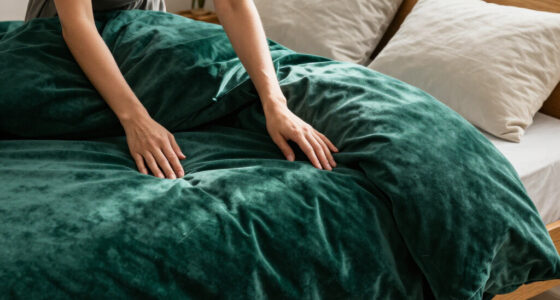
In a bedroom designed by Ellerslie Interiors, a velvet bed, a blue ceiling, antique furniture and mustard check wallpaper already created a richly layered interior. McGee paired patterned drapes with natural woven bamboo shades, using the drapery to add softness and character and the quieter shade to introduce texture and filter daylight. The approach, she said, kept the window treatments from competing with the room’s other prominent elements.
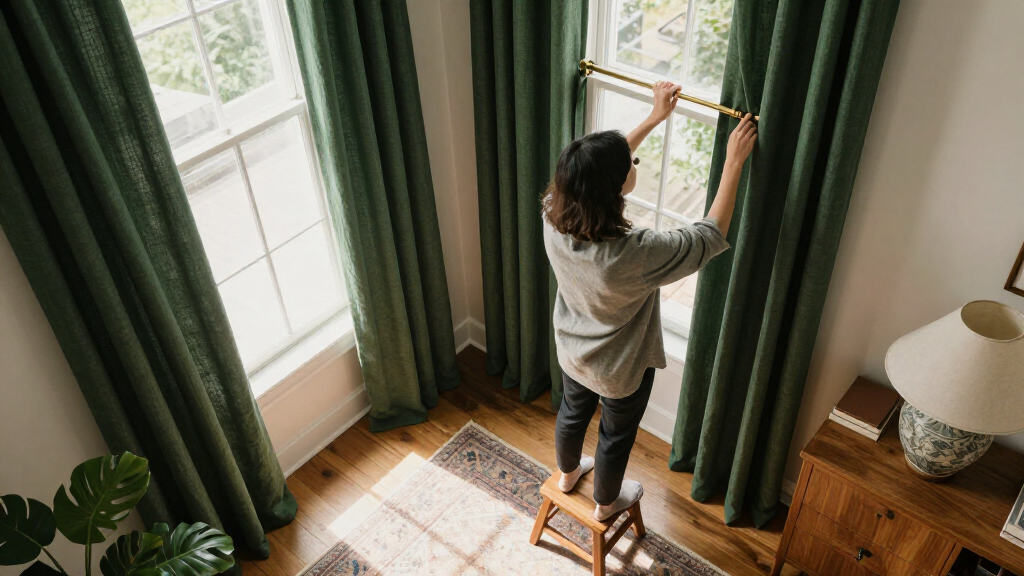
House Seven Design addressed a different need: a bedroom window facing a busy urban street. Conely combined a relaxed Roman shade, a woven bamboo shade and linen drapes. The layers give occupants options to admit filtered daylight or close a layer for more privacy, while adding depth and texture. The report presents these installations as design examples, not as evidence that one treatment combination suits every room.
The designers also recommend connecting rooms through a recurring color or texture rather than matching every window. For sizing, Conely cautioned against drapes that are too short or too narrow. McGee advised considering mounting height, panel width and fullness, along with fabric weight and the room’s overall proportions. The report also says to account for privacy, blackout needs and light filtering before choosing a treatment.
Balancing Style With Everyday Needs
Window treatments affect more than a room’s appearance. Their fabric, placement and layers can shape how daylight enters and how much privacy a room provides. That makes the choice relevant to both the look of a space and the way people use it, especially in bedrooms or rooms facing streets and nearby homes.
The examples also offer a practical distinction: a coordinated home does not have to use identical shades or drapes in every room. A shared color, texture or design sensibility can create continuity while allowing each window treatment to address local needs. Attention to scale matters too; panels that appear undersized can disrupt the visual balance even when their color and fabric work well.
As an affiliate, we earn on qualifying purchases.
Design Lessons From Charleston
The advice comes from designers’ work at the 2026 Whole Home in Charleston, as described by House Beautiful. The report uses rooms by Ellerslie Interiors and House Seven Design to illustrate different approaches: balancing window treatments against an already busy bedroom and layering them to manage exposure to an urban street.
It also references a room by Michael Mitchell, where navy woven shades contribute texture within the broader home. Across the examples, the common idea is not to duplicate one treatment everywhere but to create a thread between spaces. The source names specific TWOPAGES products used in the rooms, but the underlying guidance focuses on choices such as layering, proportion, texture and function.
“They help set the mood, soften the architecture, and make a space feel finished in a way that’s hard to replicate with anything else.”
— Maci McGee, Ellerslie Interiors
As an affiliate, we earn on qualifying purchases.
Limits of the Design Examples
The report does not provide measurements, prices, installation instructions or a comparison of the products’ performance. It also does not establish that the featured combinations are suitable for every window, budget or climate. The degree of privacy, room darkening and light filtering will depend on the specific materials, fit and installation; the source gives no technical ratings for those outcomes.
The article offers designers’ recommendations and examples from one showcase home, rather than independent testing or a survey of homeowners. It does not say how the treatments performed over time or whether the designers considered alternatives such as blinds or shutters.
As an affiliate, we earn on qualifying purchases.
Plan Around Each Window
For readers applying the advice, the next step is to assess each window separately: note the desired privacy and daylight, then consider how a shade and drapery might work together. Before ordering, measure the window and decide where the rod or track will sit, how far panels should extend and how much fullness is needed. Those decisions can affect both the finished appearance and the treatment’s function.
House Beautiful’s report does not announce a later event or provide a product-testing follow-up. Any installation, product availability or pricing details will need to be checked with the relevant retailer or installer; the source does not specify them.
As an affiliate, we earn on qualifying purchases.
Key Questions
How can window treatments help a room feel cohesive?
According to the designers, carry a color or texture from one room into another rather than repeating identical treatments. That can connect adjoining spaces while preserving their individual character.
Can shades and drapes be layered together?
Yes. The report’s House Seven Design example combines two shades with linen drapes to offer different ways to manage daylight and privacy. The best combination depends on the window and the room’s needs.
What sizing mistakes should homeowners avoid?
Conely warns that drapes that are too short or too narrow can make a room feel visually unbalanced. Consider the mounting height, panel width and fullness before selecting fabric.
What should be decided before choosing a fabric?
First consider the treatment’s function, including privacy, blackout needs and light filtering. Then evaluate how the fabric’s weight, texture and pattern will relate to the room.
Source: rss
NFL season / tailgating Picks
team gear
As an affiliate, we earn on qualifying purchases.