TL;DR

Get home appliances delivered free with Prime
- Fast, free delivery on millions of items
- Prime Video, Amazon Music and more included
- Member-only deals all year
Tile makers are presenting more realistic wood-look porcelain, including new collections shown at Cersaie, while flooring retailer Floor & Decor reports growing demand. Designers cited in House Beautiful say it can suit damp or exposed spaces, but it is harder and cooler underfoot, and installation can make it as costly as hardwood. The report does not establish that tile is replacing hardwood across the market.
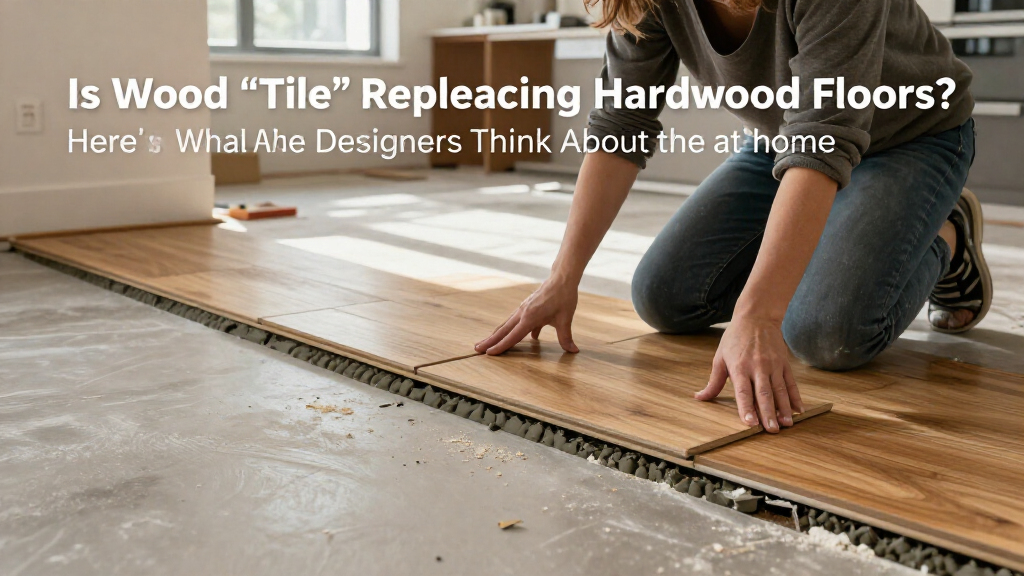
Wood-look porcelain tile is getting more realistic, with new collections presented at this year’s Cersaie exhibition in Bologna, according to House Beautiful. Designers quoted in the report say the material can be useful in moisture-prone or exposed areas, but its growing resemblance to hardwood does not mean it is replacing natural wood across homes.
At Cersaie, Italian manufacturer Atlas Concorde introduced an expansion of its Log Anthology collection, adding six wood species: Douglas fir, ash, elm, walnut, teak and zebrano. The company says its finishes use detailed decoration and surface treatments to reproduce variations in grain and texture. Viola Pagani of Atlas Concorde said, “Realism today is as much about touch as it is about sight.”
Marca Corona also introduced Elisir Pura, a porcelain collection inspired by Slavonian oak. It comes in two looks, one with restrained knots and veining and another with more pronounced markings. House Beautiful reports that a custom-blended glaze creates small depressions along the grain. Floor & Decor, meanwhile, has launched its NatureMatch line, which the retailer says focuses on more realistic wood visuals and textures.
Designers point to performance as a reason to specify tile, particularly in kitchens, bathrooms, mudrooms and coastal homes. Britney Stein of Florida-based Sketch Design Studio told House Beautiful her team chose wood-look porcelain for an oceanfront residence because it could better withstand humidity, salt air and moisture. The report also describes a project pairing outdoor chevron porcelain with indoor hardwood to create visual continuity when sliding doors are open.
Where Porcelain Can Outperform Wood
The trend matters to homeowners weighing appearance against the demands of a room. Porcelain is highly resistant to moisture, scratches and everyday wear, according to the report, which can make it a practical alternative where natural hardwood may be harder to maintain. Designers also use coordinated indoor and outdoor formats to extend a wood-like look across different areas.
But the choice is not simply a matter of getting hardwood’s appearance with none of its drawbacks. Tile feels harder and cooler underfoot, and the report cautions that premium products and installation can bring the total cost to a level comparable with natural hardwood. The material may answer particular performance needs, rather than serving as a universal substitute.
As an affiliate, we earn on qualifying purchases.
A More Textured Wood Effect
Wood-look tile has been sold for decades, but the House Beautiful report says recent product launches emphasize more lifelike grain, color variation and surface texture. Manufacturers are moving beyond printed patterns alone, using finishes intended to make the surface feel more like timber. The collections also expand beyond familiar oak looks to include several other species.
Floor & Decor design and trend expert Ashley Biscan said demand is growing as the material’s appearance improves. She described light tones, restrained color variation and understated grain as popular styles, adding that exaggerated knots and grain patterns have fallen out of favor. Those comments reflect the retailer’s perspective; the report supplies no market-wide sales figures showing how wood-look tile compares with hardwood purchases.
““Realism today is as much about touch as it is about sight.””
— Viola Pagani, Atlas Concorde
moisture resistant bathroom flooring
As an affiliate, we earn on qualifying purchases.
As an affiliate, we earn on qualifying purchases.
No Evidence of a Broad Replacement
The source does not show that wood-look tile is replacing hardwood overall. It reports product launches, designer examples and a retailer’s account of demand, but provides no sales data, market share figures or comparison of installation volumes. The headline question is therefore answered through design commentary, not evidence of a broad shift in flooring choices.
Costs will vary by product, project and installation, and the report gives no standard price comparison. It also does not establish how widely designers are specifying the newer collections. One section of the supplied report ends mid-sentence after introducing a designer who is not convinced by the material, so that designer’s full view and reasoning are unavailable.
As an affiliate, we earn on qualifying purchases.
Project Needs Will Guide Choices
For now, the developments to watch are how homeowners and designers use the newer collections and whether further market data supports claims of growing demand. The source identifies no upcoming sales report, product rollout date or industry forecast. Individual decisions are likely to depend on room conditions, desired underfoot feel, budget and the installation quote.
Designers may continue to use porcelain where water, humidity or outdoor exposure makes hardwood less suitable, while choosing natural wood in spaces where its feel and material character are priorities. The report presents wood-look tile as an expanding option, not a confirmed replacement for hardwood floors.
As an affiliate, we earn on qualifying purchases.
Key Questions
Is wood-look tile replacing hardwood floors?
The report does not establish a broad replacement. It describes new products and designer uses, but provides no market-wide sales or market share data.
What makes newer wood-look tile appear more realistic?
Manufacturers cited in the report use detailed wood patterns, varied markings and textured finishes designed to echo the look and feel of timber.
Where do designers use wood-look porcelain?
The designers described projects in kitchens, oceanfront homes and outdoor loggias, where moisture, humidity or exposure can affect flooring choices.
What are the main drawbacks compared with hardwood?
Porcelain can feel harder and cooler underfoot. The report also says higher-end tile and installation may cost as much as natural hardwood.
Does wood-look tile always cost less than hardwood?
No. The report says it can be a more affordable alternative, but premium tile and installation costs can reach hardwood levels. Actual prices depend on the product and project.
Source: rss
Halloween Picks
halloween
As an affiliate, we earn on qualifying purchases.