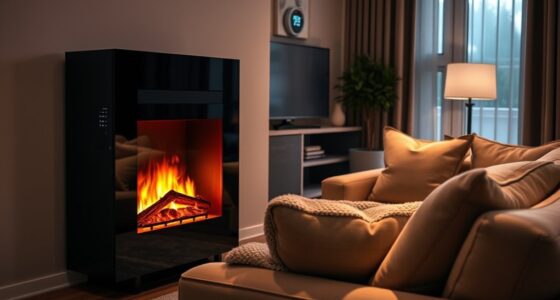
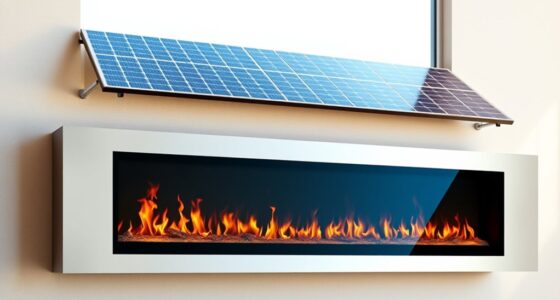
Using an electric fireplace can cause a modest increase in your electric bill, but how much depends on how often and how long you run it. Since electric fireplaces convert nearly all electricity into heat, running them regularly will add some cost. However, if you use it strategically in specific areas, the impact remains manageable. Want to see ways to use it efficiently and keep costs low? Keep going for helpful tips.
Key Takeaways
- Electric fireplaces convert nearly all electricity into heat, generally causing a modest increase in your electric bill.
- Using the fireplace in selected rooms and for limited hours reduces overall energy costs.
- The cost impact depends on wattage, usage duration, and local utility rates.
- Compared to traditional heating methods, electric fireplaces are energy-efficient and can lower overall energy bills.
- Practical use tips, like monitoring usage and operating during colder months, help minimize additional expenses.
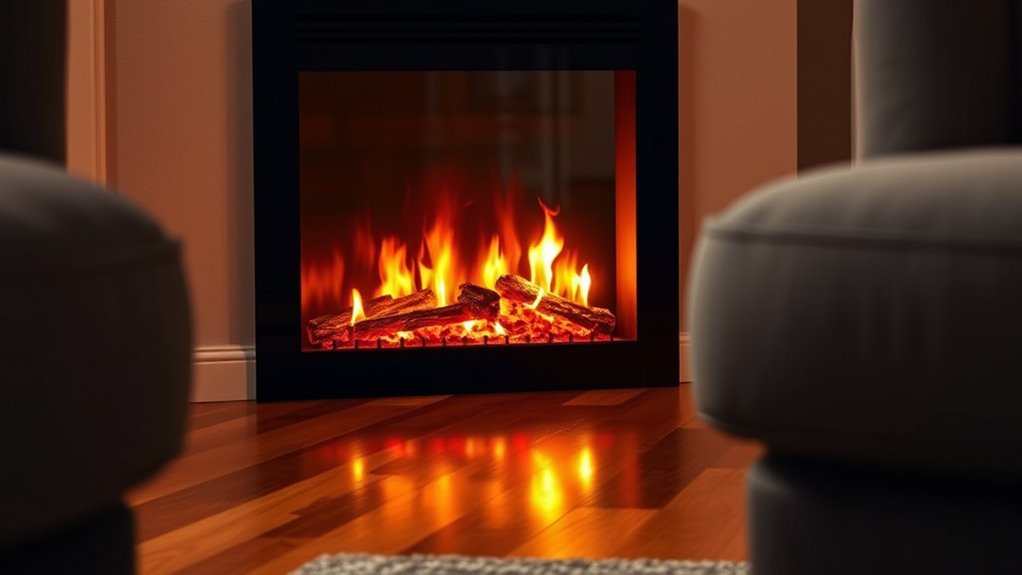
If you’re considering adding an electric fireplace to your home, it’s important to understand how it might impact your electric bill. One of your main concerns is whether this cozy addition will notably increase your energy costs. To get a clear picture, you should look at a cost comparison between electric fireplaces and traditional heating options. Electric fireplaces are generally more energy-efficient than space heaters or central HVAC systems because they convert nearly all the electricity they use into heat, with minimal waste. Unlike wood-burning stoves or gas fireplaces, electric models don’t lose heat through ventilation, which means most of the energy consumed directly warms your living space.
Electric fireplaces are highly energy-efficient, converting nearly all electricity into heat without heat loss through ventilation.
When evaluating energy efficiency, consider that electric fireplaces heat specific areas rather than your entire home. This targeted heating can actually save you money, especially if you’re only using the fireplace in a single room rather than running your central heating system at full blast. Since they operate on standard household outlets and don’t require venting or fuel, electric fireplaces tend to use less energy overall. If you compare their energy consumption to traditional heating methods, you’ll find that electric fireplaces can be quite cost-effective, especially when used strategically. For example, using the fireplace to supplement your main heat source during colder months can keep your overall energy use lower than running a furnace constantly.
However, the actual impact on your electric bill depends on how often you use the fireplace and the settings you choose. Most electric fireplaces list their wattage, which helps estimate how much energy they consume per hour. If your model runs at 1,500 watts and you use it for several hours daily, your electricity costs will go up accordingly. But even then, the overall increase tends to be modest compared to other heating appliances. Plus, since electricity rates vary depending on where you live, it’s worth checking your local utility prices to understand the real cost.
In essence, while adding an electric fireplace will cause some uptick in your electric bill, it’s usually not drastic if you use it wisely. Its energy efficiency, targeted heating capabilities, and relatively low operating costs make it a practical choice for cozying up your space without breaking the bank. Doing a quick cost comparison based on your usage habits can help you determine if the warmth and ambiance it provides are worth the potential spend. Overall, with mindful use, an electric fireplace can be an energy-efficient and budget-friendly addition to your home. Additionally, understanding factors influencing energy use can help you optimize its operation for cost savings.
Frequently Asked Questions
How Much Does an Electric Fireplace Typically Add to Monthly Energy Costs?
An electric fireplace typically adds about $10 to $30 to your monthly energy costs, depending on usage. To keep costs low, do a cost comparison with other heating options and use energy monitoring tools. Turning the fireplace on only when needed and setting a timer helps manage expenses. Overall, electric fireplaces are an energy-efficient choice that won’t substantially hike your bills if used wisely.
Do Different Electric Fireplace Models Have Varying Energy Efficiencies?
Yes, different electric fireplace models vary in energy efficiencies. You should compare their efficiency ratings and conduct a cost comparison to find the most economical option. Higher efficiency models use less electricity to produce the same heat, helping you save money over time. By choosing an energy-efficient model, you can enjoy the cozy ambiance without markedly increasing your electric bill. Always check the efficiency ratings before making a purchase.
Can Using an Electric Fireplace Reduce Heating Bills in Winter?
Imagine you’re living in a Victorian mansion—an electric fireplace can definitely help cut your winter heating bills. By providing additional warmth, it reduces reliance on your central system. The cost comparison shows significant savings, especially if you use it in well-insulated rooms. Plus, its insulation effects keep heat localized, making it an efficient way to stay cozy without skyrocketing energy costs.
What Is the Average Wattage Consumption of Electric Fireplaces?
You’ll find that electric fireplaces typically consume between 750 to 1500 watts, depending on size and heat settings. During operation, they use a moderate amount of electricity, which can impact your bill. Proper fireplace maintenance guarantees efficiency, and installation costs vary based on the model and setup. To keep your expenses low, choose energy-efficient models and manage heat settings wisely, balancing comfort with cost savings.
Are There Energy-Saving Settings Available on Electric Fireplaces?
Yes, many electric fireplaces offer energy-saving features like thermostat control, allowing you to set and maintain a comfortable temperature without wasting energy. These settings automatically adjust the heat output, helping you save on your electric bill. You can also find models with timers and adjustable flame brightness, further reducing unnecessary energy use. By utilizing these features, you guarantee your electric fireplace remains cozy while keeping your electricity costs in check.
Conclusion
So, yes, an electric fireplace can raise your electric bill, but it’s often a small price for the cozy ambiance it creates. You might find it’s not just about warmth, but also the comforting glow during chilly nights. Sometimes, it’s the little things—like a flickering flame—that turn a house into a home. In the end, the warmth and comfort you gain might just outweigh the extra cost, making every cozy moment worth it.