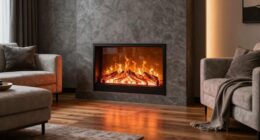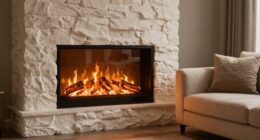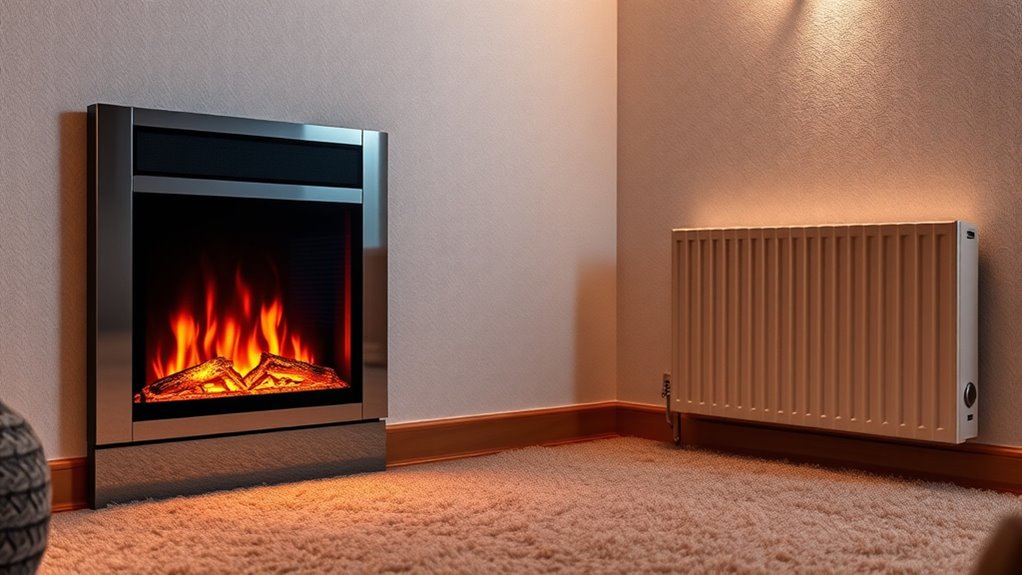
If you’re comparing efficiency and cost, baseboard heaters are generally more budget-friendly and energy-efficient for heating individual rooms because they convert electricity directly into heat and can be easily turned off when not needed. Electric fireplaces, while stylish and adding ambiance, tend to consume more power and have higher installation costs, especially if professional wiring is required. To find out which option best fits your needs and budget, explore how each can work for your space.
Key Takeaways
- Baseboard heaters are typically more energy-efficient for direct room heating due to their straightforward electrical-to-heat design.
- Electric fireplaces often consume more electricity because they run visual flames and additional heating features continuously.
- Installation costs for baseboard heaters are lower and simpler, often DIY, while electric fireplaces usually require professional setup.
- Electric fireplaces offer aesthetic appeal and ambiance but may lead to higher operational costs compared to efficient baseboard heaters.
- For cost-effective heating, baseboard heaters are generally more economical, whereas electric fireplaces prioritize style over energy savings.
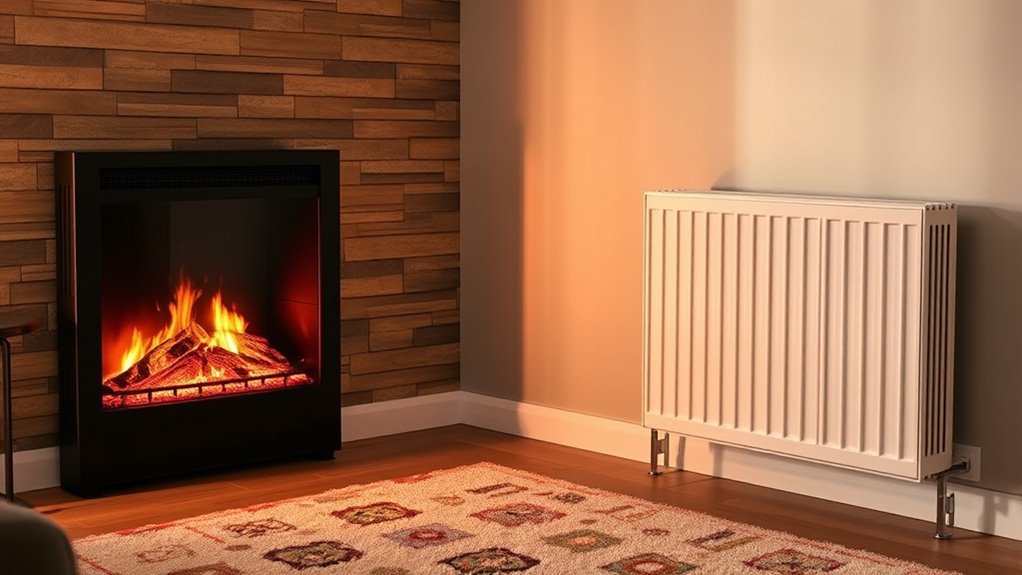
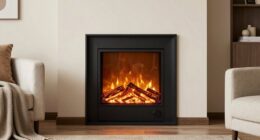
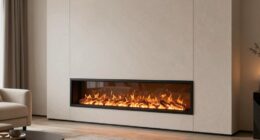
When choosing a heating option for your home, understanding the differences between an electric fireplace and a baseboard heater can help you make an informed decision. Both options provide electric heat, but they differ considerably in terms of energy savings and installation costs. Electric fireplaces are often seen as stylish additions that mimic traditional fireplaces, but they can be less efficient in terms of energy consumption. They tend to use more electricity because they generate visual flames and sometimes include additional features like heat fans or infrared heat, which can increase your energy bills if used extensively. On the other hand, baseboard heaters are straightforward electric units that deliver heat directly into a room. They are typically more energy-efficient because they convert electricity directly into heat without extra features that consume more power.
When it comes to installation costs, baseboard heaters usually have the advantage. Installing them is relatively simple and inexpensive, especially if your home already has the necessary electrical wiring in place. You can often install these units yourself or hire a handyman for a minimal fee. Because they are wall-mounted and don’t require venting or complex setup, their installation costs are generally lower than those of electric fireplaces. Electric fireplaces, however, can be more costly to install. If you’re opting for a built-in or fireplace mantel model, you might need to hire a professional to handle the electrical wiring and ensure proper placement. Some models also require additional features like a dedicated circuit, which adds to the upfront costs. These installation expenses can make an electric fireplace a pricier choice initially, even though they may add aesthetic value to your space.
In terms of energy savings, baseboard heaters tend to be more cost-effective for heating specific rooms. They heat up quickly and can be turned on or off as needed, helping you avoid wasting energy heating unoccupied spaces. Electric fireplaces, while charming and atmospheric, often run continuously to maintain their visual effects, which can lead to higher energy consumption over time. However, if you choose a model with a built-in thermostat and zone heating capabilities, you can improve its efficiency and save some money on your energy bills. Additionally, modern electric fireplaces are designed with energy-efficient features that can help reduce power usage. Ultimately, your choice depends on your priorities: if you want a stylish, cozy ambiance with a focus on visual appeal, an electric fireplace might be worth the extra energy and installation costs. But if you’re aiming for practical, cost-effective heating for individual rooms, a baseboard heater offers better energy savings and lower installation expenses.

18-inch Freestanding Electric Fireplace, Equipped with 1500W/1650W Electric Wood Fireplace Flame Effect, Featuring Realistic Flames, 3-Second Quick Heating, Remote Control, and Adjustable Lighting
The newly launched upgraded heating fireplace has undergone significant optimizations in terms of operational convenience and lighting adjustment…
As an affiliate, we earn on qualifying purchases.
As an affiliate, we earn on qualifying purchases.
Frequently Asked Questions
Which Option Has a Longer Lifespan?
You’ll find that electric fireplaces generally have a longer lifespan than baseboard heaters. They require less maintenance, which reduces ongoing costs and helps them last longer. Plus, electric fireplaces tend to have a lower environmental impact over time, making them a more sustainable choice. With proper care, electric fireplaces can serve you well for many years, while baseboard heaters might need more frequent repairs and replacements.
How Do Installation Costs Compare Initially?
Initially, electric fireplaces tend to have higher installation costs compared to baseboard heaters. You might spend more on setup because electric fireplaces often require special wiring, venting, or even chimney work, depending on the model. Baseboard heaters are simpler to install, usually just plugging into existing electrical outlets, making their initial expenses lower. So, if you’re budgeting upfront, baseboard heaters are generally more cost-effective to install.
Are There Safety Concerns Unique to Each?
You should be aware that electric fireplaces pose safety hazards like burns from hot surfaces and potential fire risks if not properly maintained. Baseboard heaters, on the other hand, can cause safety concerns such as electrical shocks or overheating if they malfunction. Regular maintenance is essential for both to prevent safety hazards, but electric fireplaces also require caution around moving parts and electrical components, making safety considerations unique for each.
Can Both Be Used as Primary Heating Sources?
You can use both as primary heating sources, but it depends on your home’s size and insulation. Electric fireplaces offer good energy efficiency for ambiance and supplemental warmth, but may not be ideal for large spaces. Baseboard heaters provide consistent heat but can be less energy-efficient over time. Consider maintenance requirements—electric fireplaces need minimal upkeep, while baseboards might require periodic cleaning. Choose the option that best fits your energy needs and comfort preferences.
How Do Aesthetic Options Vary Between Them?
Did you know that electric fireplaces offer over 20 decorative designs? You’ll find a wide variety of color options and realistic flame effects, making them a stylish centerpiece. In contrast, baseboard heaters focus on function over form, usually blending into your walls with minimal decorative appeal. If aesthetics matter, electric fireplaces provide more options to match your decor, while baseboard heaters keep a simple, unobtrusive look.
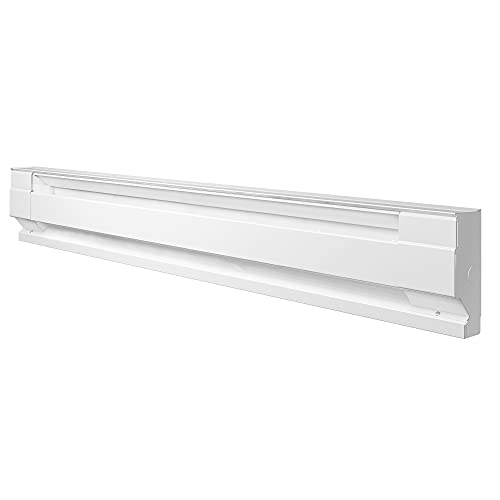
Cadet F Series 48" Electric Baseboard Heater (Model: 4F1000W, Part: 09954 ), 3415/2560 BTU, 240/208 Volt, 1000/750 Watt, White
Powerful: At 1000/750 Watts and 240/208 Volts, this baseboard heater provides powerful heat to small to medium-sized rooms.
As an affiliate, we earn on qualifying purchases.
As an affiliate, we earn on qualifying purchases.
Conclusion
Choosing between an electric fireplace and a baseboard heater ultimately depends on what warms your heart and home. If you crave cozy ambiance and style, an electric fireplace might feel like a warm hug on a chilly day. But if you prefer simple, cost-effective heating, a baseboard heater could be your trustworthy sidekick. Whichever you pick, remember, your choice has the power to turn your space into a sanctuary of comfort—more essential than ever in the coldest moments.
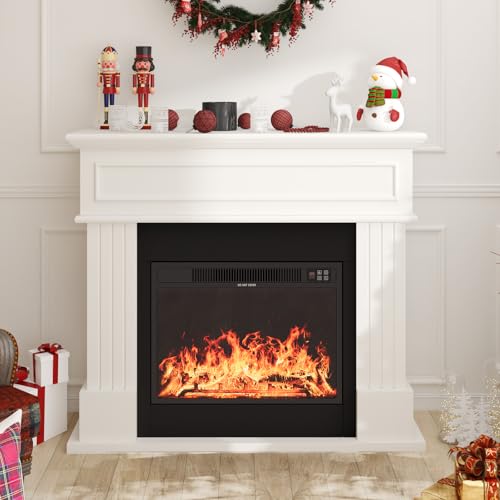
OneBlis 43" Electric Fireplace with Mantel, Freestanding Electric Fireplace Heater TV Stand with 23" Insert, Remote Control, Ajustable Flame and Timer, Fire Place Insert Heater for Living Room, White
Inviting Electric Fireplace Ambiance: Built with detailed artificial logs, this electric fireplace instantly brings a snug and welcoming…
As an affiliate, we earn on qualifying purchases.
As an affiliate, we earn on qualifying purchases.
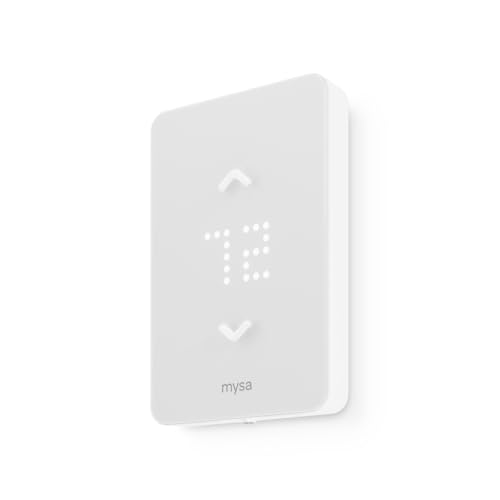
Mysa Smart Thermostat LITE – Line Voltage Electric Baseboard Heater Thermostat 120V/240V | DIY Install | HomeKit, Alexa, Google | Wi-Fi Programmable | App Control
WIFI CONNECTED SMART THERMOSTAT FOR 120V-240V electric baseboard heaters, fan-forced heaters, wall heaters, and convector units.
As an affiliate, we earn on qualifying purchases.
As an affiliate, we earn on qualifying purchases.