TL;DR

Get home appliances delivered free with Prime
- Fast, free delivery on millions of items
- Prime Video, Amazon Music and more included
- Member-only deals all year
A smart thermostat controls heating through temperature readings and schedules, with some models adding app access, occupancy sensing, or room sensors. Check compatibility with your system and wiring first, then compare control options and the full cost; savings depend on your home and habits, so no percentage is guaranteed.
A thermostat in the hallway can say the house is warm while your bedroom still feels like a chilly stone cellar. Smart thermostats for heating can make schedules easier to manage, but the right choice depends on what your heating system can control and how your home is used.
This guide explains what a smart thermostat does, how to check compatibility, and when room sensors or radiator valves may help. You’ll also see what to count in the total cost and why an app alone does not promise a lower bill.
Think of the thermostat as the heating system’s conductor: it can cue the boiler, furnace, or heat pump, but the music depends on the instruments and the room. A clear fit between your equipment and your routine matters more than a long feature list.
Check your heating type, wiring, zones, and control method before buying a thermostat.
A thermostat measures its own location; room sensors or smart radiator valves can help with uneven temperatures.
Use schedules to match heating to occupancy, while following heat-pump-specific advice on temperature setbacks.
Add sensors, installation, and subscription fees to the device price when comparing costs.
Treat lower energy use as a possible result of better control, not a guaranteed savings percentage.
What a Smart Thermostat Can Control in Your Home
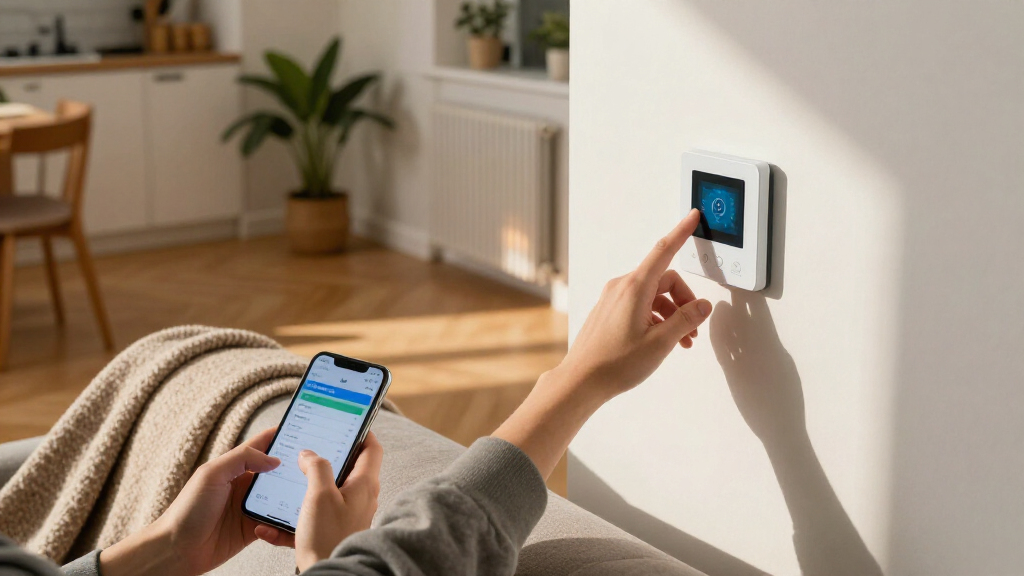
A smart thermostat controls a heating system using temperature readings and a schedule, with some models adding an app, occupancy sensors, or learning features. It can lower the set temperature overnight or while you’re away, then warm the home before you return. The exact controls depend on the thermostat and heating equipment.
For example, imagine you leave for work at 8 a.m. and return at 6 p.m. A schedule can avoid holding the living room at your preferred evening temperature all afternoon. With app access, you can adjust the setting if your plans change; without it, the programmed schedule still may work, depending on the model.
“Smart” does not always mean the thermostat learns your habits. Some connected models simply let you change schedules from your phone. Others infer routines over time, while occupancy features may use motion or phone location. Those signals can be convenient, but they may miss a quiet person reading on the sofa or mistake a phone left at home for someone being present.
Before you buy, ask what the device controls locally and what needs an internet connection. A heating control should remain understandable at the wall, especially when the Wi-Fi drops on a cold evening. Check whether manual settings and schedules continue during an outage.
Products Worth Considering

LEVOIT Vital 200S-P Smart Air Purifier for Large Rooms

Philips Hue Starter Kit with Bridge Pro and 4 A19 E26 Smart Bulbs

Philips Hue Essential Starter Kit – Bridge and 4 E26 Smart Bulbs
As an affiliate, we earn on qualifying purchases.
Check Heating Compatibility Before You Compare Features
A smart thermostat works only when it matches your heating system, wiring, and control method. Boilers, furnaces, heat pumps, electric resistance systems, and district heating controls can use different signals, so a product that fits one home may not fit yours.
Start by identifying your system and the existing wall control. Look up the thermostat maker’s compatibility guidance and compare it with your equipment documentation. If you have multiple heating zones, proprietary controls, or uncertain wiring, ask a qualified heating professional before ordering. A thermostat that cannot use your system’s control capabilities may run it in a basic on-and-off mode instead of the more advanced control you expected.
For instance, a homeowner with a boiler and one simple wall thermostat may find a suitable replacement straightforward. A neighbor with a heat pump, backup heat, and separate upstairs and downstairs zones has a more involved setup. Both may want phone control, but they should not assume they need the same device or installation.
Installation varies, too. Some products replace a simple wall control; others need a receiver, wiring changes, or configuration at the boiler. Electrical and heating-system work can pose safety risks. Follow the manufacturer’s instructions, switch off power where the instructions require it, and use a qualified professional when wiring or system terminals are unclear.
Use Sensors and Valves to Fix Cold Rooms
Room sensors and smart radiator valves can help when the thermostat’s reading does not match the temperature in rooms you use. A thermostat measures conditions where it sits; one in a sunny hall may shut off heating while a shaded bedroom stays cold.
Say you work from a home office at the back of the house. The hallway reaches its target quickly, but the office remains cool because it has a drafty window. A compatible room sensor can let the system account for the office temperature, while a smart radiator valve can manage heat flow through that room’s radiator. These devices can improve room-by-room control, but they add purchase and setup costs.
A thermostat and a smart radiator valve are not interchangeable. The thermostat generally calls for heat from the system or a zone; the valve regulates an individual radiator. They may work together, but you need to check which devices communicate and how they respond when one room asks for heat.
Ask how the system uses sensor readings before you pay extra. Some systems let you prioritize one room at a time; others average several readings or use sensors only at certain times. For a family that gathers in the living room at night, room prioritization may be useful. For a home with fairly even temperatures, extra sensors may add complexity without much benefit.
Build a Schedule Around Comfort and Your Heating System
A heating schedule can reduce unnecessary heating by changing temperatures when your household does not need the same level of warmth. The useful setting depends on the building, local weather, comfort needs, and heating equipment; one schedule does not suit every home.
Try this practical sequence as a starting point, then follow your system’s guidance:
- Write down your routine. Note when rooms are occupied, such as a kitchen used at breakfast and a living room used after work.
- Set modest time changes. Schedule lower temperatures during predictable empty periods and overnight if that suits your home.
- Watch how the home responds. If a room takes too long to warm or comfort suffers, adjust the timing or setpoint.
- Check system-specific advice. Heat pumps can respond differently from conventional boilers; follow the manufacturer’s and installer’s recommendations on setbacks.
For example, a household that leaves at 8:30 a.m. and returns around 5:30 p.m. might schedule a lower daytime setting, then give the home time to warm before people arrive. A heat pump may call for smaller changes than a boiler in some homes, so avoid assuming a deep overnight drop is always best.
These controls can make a routine easier to follow, but they cannot repair poor insulation or fix an incorrectly configured heating system. A draft under the front door still lets warmth escape, whatever the app says.
Estimate the Full Cost and Treat Savings as Possible
A smart thermostat may reduce heating use when it helps you avoid heating an empty home or maintain a lower temperature when appropriate, but it cannot guarantee a bill reduction. Your result depends on previous controls, building heat loss, insulation, weather, energy prices, heating equipment, and the way people use the system.
Count the full purchase and running cost before choosing: the thermostat itself, optional sensors or valves, professional installation, and any subscription fees. For a homeowner who already follows a careful schedule, a premium learning feature may add little value. For someone who often forgets to turn down the heat before leaving, simple automation could be more useful.
Be cautious with advertised savings percentages. Manufacturer estimates may rely on specific homes or assumptions and may not predict your household’s result. A thermostat also cannot make an inefficient boiler efficient or stop heat escaping through thin walls. In one real-world kind of comparison, two identical thermostats could produce different outcomes in a well-insulated flat and a drafty detached house because they start with different levels of heat loss.
Some products connect with energy providers or electricity-price signals, particularly for electric heating and heat pumps. Availability depends on your country, utility, and product. Treat that as a possible extra, not a feature you can assume will work everywhere.
Check Privacy, Connectivity, and Long-Term Support
Connected features can depend on an account, an internet connection, and cloud services, so check what still works if any of those disappear. Some thermostats keep local schedules and manual controls during an outage, but behavior varies by model.
Imagine your broadband goes down on a winter evening. If the thermostat still follows its schedule and responds at the wall, you can keep the heating routine running. If remote access stops, you may need to change settings locally. Read the product details for offline behavior before buying rather than finding out during an outage.
App and voice controls can involve device data and account permissions. Review privacy settings and decide whether location access or occupancy detection is worth enabling. A household that wants automatic adjustments may accept those permissions; someone who prefers fewer connected features may choose a schedule-based model with local controls.
Smart-home compatibility also deserves a specific check. Matter support is appearing in some products and ecosystems, but it does not mean every thermostat feature works with every app, region, or heating system. Check the exact devices and functions you plan to use. Also review update policies and cloud dependence so you know whether core heating controls continue if a service changes.
Frequently Asked Questions
Will a smart thermostat work with my heating system?
It depends on the heating equipment, wiring, zones, and control protocol. Check the manufacturer’s compatibility guidance and your system documentation before buying; seek a qualified installer’s advice if the setup is unclear.
Can I install a smart thermostat myself?
Some models are designed to replace a straightforward wall control, while others need wiring changes, a receiver, or boiler configuration. Follow the product instructions and use a qualified professional if you are unsure about wiring or system terminals.
Will a smart thermostat lower my heating bill?
It may help if it makes it easier to avoid heating empty rooms or follow a suitable schedule. Savings vary with the home, equipment, weather, previous controls, and household habits, so no universal percentage applies.
Do smart thermostats need Wi-Fi?
Remote app access and many connected features need an internet connection. Whether schedules and manual control continue during an outage depends on the model, so check its offline behavior before purchase.
What is the difference between a thermostat and a smart radiator valve?
A thermostat usually controls the heating system or a zone based on temperature readings. A smart radiator valve adjusts heat flow through an individual radiator. Compatible products can work together, but they do different jobs.
Should I turn the heat down overnight if I have a heat pump?
That depends on the heat pump, home, and comfort needs. Large or frequent temperature setbacks may not suit some systems, so follow the heat pump maker’s instructions and your installer’s recommendations.
Conclusion
Choose a smart thermostat by starting with your heating system and the rooms you need to keep comfortable. Then compare schedules, sensors, installation needs, privacy settings, and total cost. The best fit is the one that works reliably with your equipment and makes a sensible routine easier to keep.
Remember the hallway reading: it can look warm while your bedroom stays cold. Match the control to the rooms where life actually happens, and your heating system has a better chance of keeping pace.