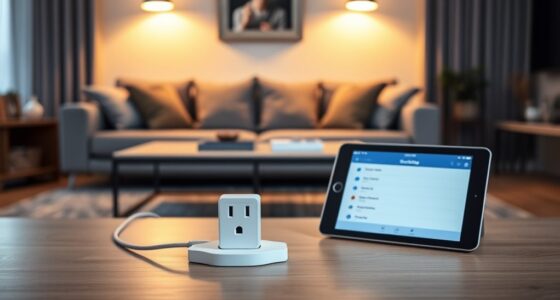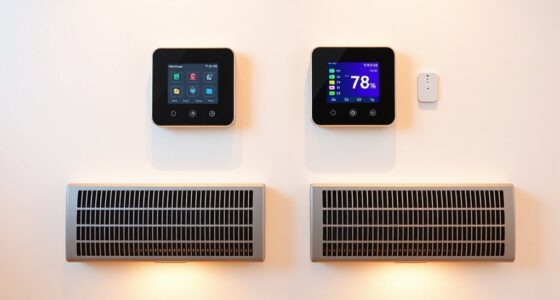
Adjusting your thermostat settings directly influences your energy consumption and utility bills. Lowering the temperature during occupancy and raising it when away can save you money on heating costs, while smart devices help optimize these adjustments automatically. Fine-tuning your schedule and responding to weather changes reduce unnecessary HVAC use. For detailed tips on balancing comfort and savings, keep exploring how proper thermostat management can make a big difference.
Key Takeaways
- Lowering thermostat settings during occupancy reduces heating costs and overall energy consumption.
- Raising temperature settings when unoccupied decreases cooling expenses and saves energy.
- Smart thermostats optimize scheduling and adapt to habits, minimizing unnecessary HVAC use.
- Real-time weather responsiveness prevents waste by adjusting settings based on current conditions.
- Proper programming and automation lead to significant long-term energy savings and environmental benefits.
Have you ever wondered how your thermostat settings impact your energy bills? If you’re looking to cut costs and improve efficiency, understanding the role of smart thermostats can make a big difference. These devices are designed to optimize your home’s temperature settings, helping you achieve better energy savings without sacrificing comfort. Unlike traditional thermostats, smart thermostats learn your schedule, adjust automatically, and give you the ability to control your heating and cooling remotely. This means you can avoid unnecessary energy use when you’re away or asleep, which translates directly into lower bills. By setting your thermostat intelligently with a smart device, you’re not just guessing what’s best—you’re making data-driven decisions that conserve energy and money in the long run.
Smart thermostats optimize your home’s temperature, saving energy and money through intelligent, remote control and adaptive scheduling.
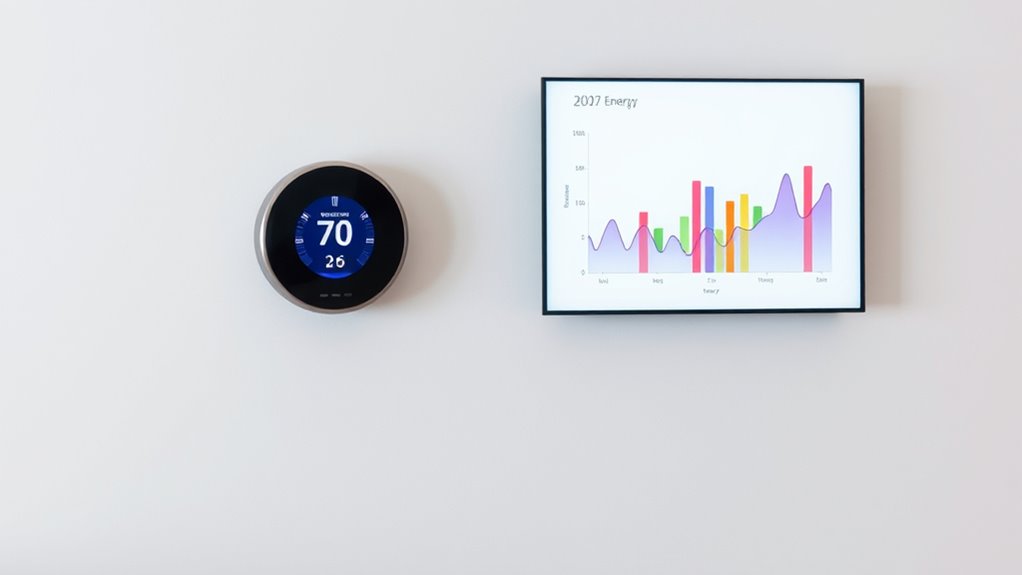
When you rely on a smart thermostat, you can program it to lower or raise your home’s temperature during specific times of the day. For example, setting the thermostat lower during the day when you’re at work or at night while sleeping can considerably reduce energy consumption. The device adapts over time, learning your habits and adjusting its schedule for maximum efficiency. This continuous optimization prevents your HVAC system from running longer than necessary, which is a common culprit behind high energy bills. In addition, many smart thermostats feature energy reports that show you how much energy you’re saving, giving you a clear picture of your progress. With this insight, you can fine-tune your settings further to maximize savings.
Another advantage of using a smart thermostat is its ability to respond to real-time weather changes. If a cold front hits unexpectedly, your device can adjust your heating accordingly without your manual input. Conversely, if the temperature rises unexpectedly, it can dial back cooling to prevent waste. This dynamic response ensures your home stays comfortable while minimizing energy waste. Plus, many smart thermostats are compatible with home automation systems, allowing you to integrate them with other energy-saving devices or routines. This interconnected setup creates a more efficient household, ultimately lowering your overall energy consumption. Additionally, understanding technical aspects of emailing such as data management and automation can help you optimize your energy reports and notifications effectively.
In essence, a smart thermostat empowers you to take control of your energy use. By setting it to optimize comfort and efficiency, you not only reduce your environmental footprint but also see tangible savings on your utility bills. These devices make it easier than ever to adopt smarter habits, ensuring your home stays comfortable while you save money. So, investing in a smart thermostat isn’t just about convenience; it’s a smart move toward more sustainable living and financial savings.
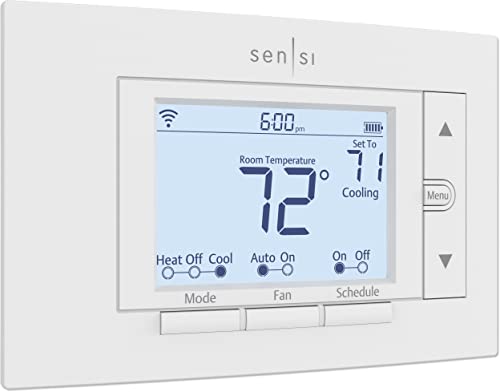
Sensi Smart Thermostat, 100 Years Of Expertise, Wi-Fi, Data Privacy, Programmable, Easy DIY Install, Works With Alexa, Energy Star Certified, Mobile App, ST55
PRIVACY PROTECTION*: Sensi won’t sell your personal information to third parties
As an affiliate, we earn on qualifying purchases.
As an affiliate, we earn on qualifying purchases.
Frequently Asked Questions
How Does Outdoor Weather Influence Optimal Thermostat Settings?
Outdoor weather greatly influences your ideal thermostat settings. When seasonal temperatures drop, you should lower your thermostat to save energy while staying comfortable, adjusting for outdoor climate changes. Conversely, on warmer days, you can raise the thermostat slightly to reduce cooling costs. Monitoring outdoor climate helps you find a balance, ensuring your indoor environment remains cozy without wasting energy, especially as seasonal temperature fluctuations occur throughout the year.
Are Programmable Thermostats More Energy-Efficient Than Manual Ones?
Programmable thermostats are more energy-efficient than manual control models, saving up to 10-12% on heating and cooling costs. Imagine waking up to a perfectly warm home, then adjusting the temperature automatically during the day—no need for constant user adjustments. With programmable units, you set your schedule once, and they handle the rest, reducing energy waste and keeping your home comfortable effortlessly.
What Is the Ideal Temperature for Energy Savings and Comfort?
For ideal energy savings and comfort, you should set your thermostat to around 68°F during winter and 78°F in summer. This temperature balance helps you avoid excessive energy use while maintaining comfort. To further optimize comfort, consider adjusting the temperature slightly when you’re home or asleep, and program your thermostat accordingly. This way, you enjoy a comfortable environment without wasting energy.
How Often Should I Calibrate My Thermostat for Accuracy?
Your thermostat’s accuracy is vital—you don’t want it to be off by a mile! You should calibrate your thermostat at least once a year to guarantee proper calibration frequency. Check for any drift in temperature readings, especially if you notice uneven heating or cooling. Regular calibration maintains thermostat accuracy, saving energy and keeping your home comfortable. Don’t forget—an accurately calibrated thermostat is your best ally for efficiency!
Can Smart Thermostats Learn My Schedule to Reduce Energy Use?
Yes, smart thermostats use machine learning to learn your schedule and preferences over time. They analyze your habits and automatically adjust temperature settings for ideal comfort and energy savings. With schedule customization, you can set specific routines, and the thermostat adapts accordingly. This personalized approach helps reduce energy consumption without sacrificing comfort, making your home more efficient and eco-friendly.
Sensi Smart Thermostat, 100 Years Of Expertise, Wi-Fi, Data Privacy, Programmable, Easy DIY Install, Works With Alexa, Energy Star Certified, Mobile App, ST55
PRIVACY PROTECTION*: Sensi won’t sell your personal information to third parties
As an affiliate, we earn on qualifying purchases.
As an affiliate, we earn on qualifying purchases.
Conclusion
By fine-tuning your thermostat settings, you gently steer your energy use toward a more balanced and efficient path. Small adjustments can make a subtle yet meaningful difference, helping you save energy without feeling like you’re sacrificing comfort. Embrace these simple changes as a quiet way to support your home’s harmony and protect the environment. After all, the tiniest shifts often lead to the most rewarding results—so why not start today?

New! Honeywell Home Smart Thermostat, Conventional/Heat Pump Compatibility, WiFi Thermostat for Home, X2S, Gray
CONTROL: Connect to WiFi and control from anywhere using the First Alert app – Matter Certified and also…
As an affiliate, we earn on qualifying purchases.
As an affiliate, we earn on qualifying purchases.

Google Nest Learning Thermostat (4th gen) + Nest Temperature Sensor (2nd gen) – Silver
Nest’s smartest, most advanced thermostat yet, the Google Nest Learning Thermostat (4th gen) is a beautiful, brilliant way…
As an affiliate, we earn on qualifying purchases.
As an affiliate, we earn on qualifying purchases.