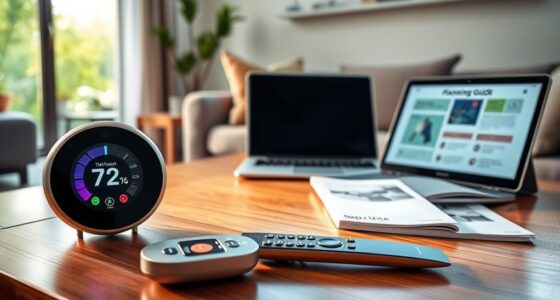

Understanding your space heater’s wattage helps you manage energy use and avoid surprise electricity bills. A higher-wattage heater warms faster but uses more power, while lower-wattage models are more energy-efficient. By knowing the wattage and how it affects operating costs, you can choose a heater suited to your space and budget. Keep exploring to learn tips on optimizing your heater’s efficiency and saving energy effectively.
Key Takeaways
- Wattage indicates the heater’s power consumption; higher wattage means more energy use and heat output.
- A 1,500-watt heater consumes 1.5 kWh per hour, directly impacting your electricity bill.
- Modern heaters with thermostats and adjustable settings help optimize energy efficiency and control costs.
- Understanding power-to-heat conversion rates allows better management of heater energy use and savings.
- Selecting the right wattage heater based on space size ensures effective heating without excessive energy consumption.

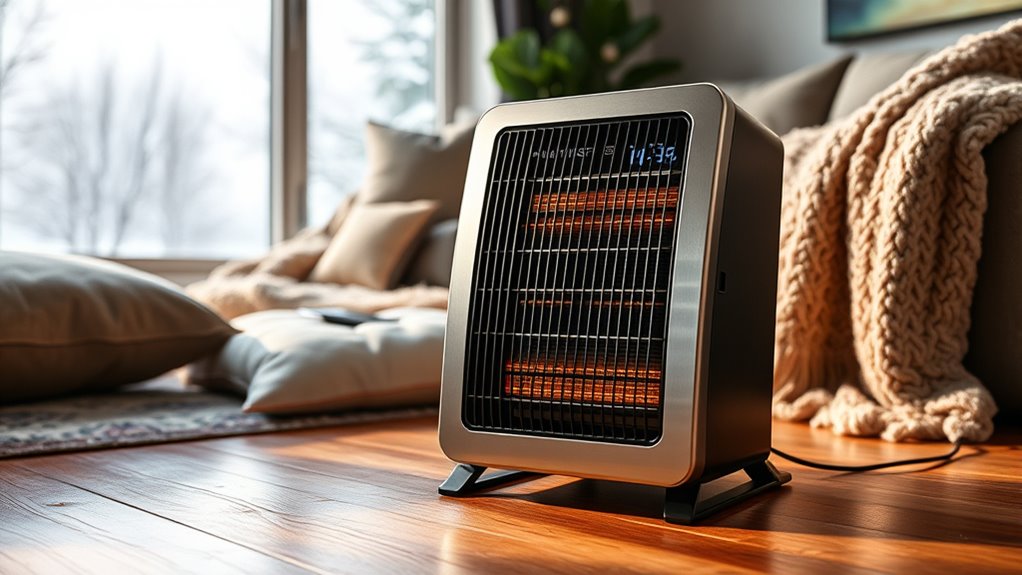
When choosing a space heater, understanding its wattage and energy consumption is vital to guarantee you’re heating efficiently without overspending. This knowledge helps you select a unit that provides enough warmth without wasting electricity or driving up your energy bills. If you’re interested in portable heating options, knowing how much power a heater uses can make a significant difference in how often and how long you run it. Higher wattage heaters typically produce more heat, but they also consume more energy, which can lead to higher costs over time. Conversely, lower-wattage models might be more energy-efficient, offering a balance between comfort and savings.
Many portable heating devices advertise their wattage upfront, so it’s important to pay attention to these numbers. For example, a heater rated at 1,500 watts will use more electricity than one rated at 750 watts. When you operate a 1,500-watt heater for an hour, it consumes 1.5 kilowatt-hours (kWh) of energy, translating directly into your electricity bill. Understanding this relationship helps you estimate how much you’ll spend based on your heating needs. If you only need to heat a small space, a lower-wattage model might be more cost-effective and energy-efficient. For larger areas, a higher-wattage heater might be necessary, but you should also consider how often you’ll run it to avoid excessive energy use.
A 1,500-watt heater uses 1.5 kWh per hour, affecting your electricity bill.
Energy efficiency isn’t just about choosing a heater with a lower wattage; it’s also about how well the heater converts electricity into usable heat. Modern portable heating units often feature features like thermostats and adjustable settings, allowing you to control the temperature precisely. This means you can avoid running the heater at full blast unnecessarily, saving energy and extending the unit’s lifespan. When shopping for a space heater, look for those with good energy efficiency ratings and adjustable controls. This ensures you’re not only getting the warmth you need but also doing so in a way that minimizes power consumption.
Additionally, understanding the power-to-heat conversion rate of your heater can help you optimize its use and maximize energy savings. Ultimately, understanding the wattage and energy use of your space heater empowers you to make smarter choices. You can tailor your heating habits to balance comfort with cost savings, especially if you opt for models designed for energy efficiency. Whether you’re using portable heating in a small room or heating a larger space, knowing how much power a heater consumes helps you avoid surprises in your electricity bills. It also allows you to run your heater more responsibly, ensuring you enjoy comfort without sacrificing energy efficiency or breaking the bank.

EUHOMY 50 Inch Electric Fireplace Wall Recessed and Wall Mounted with Adjustable Flame Color, Fireplace Heater with Remote Control, Linear Fireplace with Timer, Touch Screen, Log & Crystal, 750/1500W
Package Inclusions & 2-Year Technical Support: : The EUHOMY electric fireplace is equipped with 1* carbon log, 1*...
As an affiliate, we earn on qualifying purchases.
Frequently Asked Questions
How Often Should I Replace My Space Heater?
You should replace your space heater every 8 to 10 years, depending on its heater durability and usage. Regularly check for signs of wear, such as strange noises, decreased efficiency, or electrical issues, which indicate it’s time for a replacement. Keeping up with replacement frequency guarantees safe operation and ideal heating performance, preventing potential hazards and saving you money on energy costs in the long run.
Can Space Heater Wattage Vary by Brand?
Think of space heater wattage like car horsepower—brand differences can cause variability. Yes, wattage varies by brand, with some models packing more power, like a sports car, and others being more modest. This wattage variability affects heating efficiency and energy use. For example, a well-known brand might offer a heater with a higher wattage, providing faster warmth, while budget brands might have lower wattage, taking longer to heat a space.
Do Energy-Saving Modes Reduce Wattage Significantly?
Energy-saving modes do reduce wattage, but the reduction isn’t usually significant. These features optimize power consumption by adjusting heat output and fan speed, helping you save energy over time. To understand their impact, check the power consumption comparison between normal and energy-saving modes. Keep in mind, while they lower wattage, the overall savings depend on usage habits and the heater’s efficiency.
Is Higher Wattage Always Better for Heating?
Higher wattage isn’t always better for heating because it can reduce energy efficiency and increase safety risks. Instead, look for a heater with appropriate wattage for your space, ensuring safe operation and efficient energy use. A more powerful heater may heat quickly, but it also consumes more energy and could pose safety concerns. Always consider safety features and energy efficiency ratings to find the best balance for your needs.
How Does Room Size Affect Heater Wattage Choice?
You should choose a heater wattage based on your room size, as bigger rooms need higher wattage to heat effectively. Don’t assume more watts always mean better; overestimating can waste energy. Measure your room’s square footage and select a heater with appropriate wattage—generally 10 watts per square foot. This ensures efficient heating without excess energy use, keeping you comfortable and saving money.
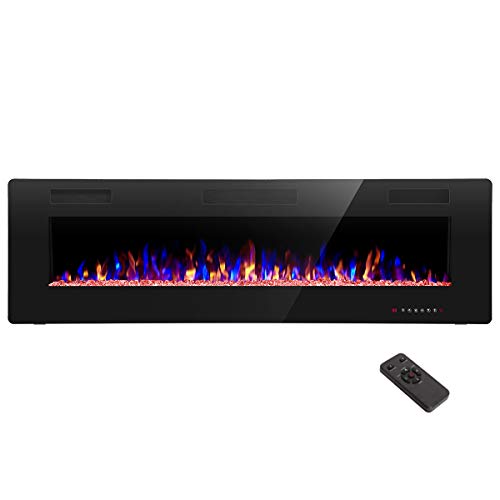
R.W.FLAME 60" Recessed and Wall Mounted Electric Fireplace, Low Noise, Fit for 2 x 6 Stud, Remote Control with Timer, Touch Screen, Adjustable Flame Color and Speed, 750-1500W
Attractive and Practical Design: 3.86"D x 60"W x 18.11"H,The thickness of the new style is only 3.86 inches...
As an affiliate, we earn on qualifying purchases.
Conclusion
Think of your space heater as a small sun inside your home, its wattage a heartbeat that warms your space. The energy it consumes is the pulse that keeps the glow alive. By choosing the right wattage, you control the flame’s dance—balancing comfort and cost. Remember, each setting is a step in your journey toward cozy warmth, where understanding its power lets you harness the light, shaping a home filled with gentle, steady heat.

Touchstone Smart Electric Fireplace-The Sideline 50" Wide-in Wall Recessed - 30 Realistic Ember Color/Flame Options - 1,500W Heater w/Thermostat - Log & Crystal Hearth Options - Alexa/WiFi Enabled
APPEARANCE: The Sideline electric fireplace is designed for recessed in-wall mounting. Creating a cozy atmosphere of a traditional...
As an affiliate, we earn on qualifying purchases.

Westinghouse 60 Inch Electric Fireplace Heater, Compatible with Alexa & Google Home, Wall Mount or in-Wall Recessed Fireplace Insert, 24 Hour Timer, Color Changing Flames, 750W/1500W Indoor Heater
CUSTOMIZE APPEARANCE: Up to 144 total color combinations for flames and embers, 5 independent brightness levels, and 5...
As an affiliate, we earn on qualifying purchases.