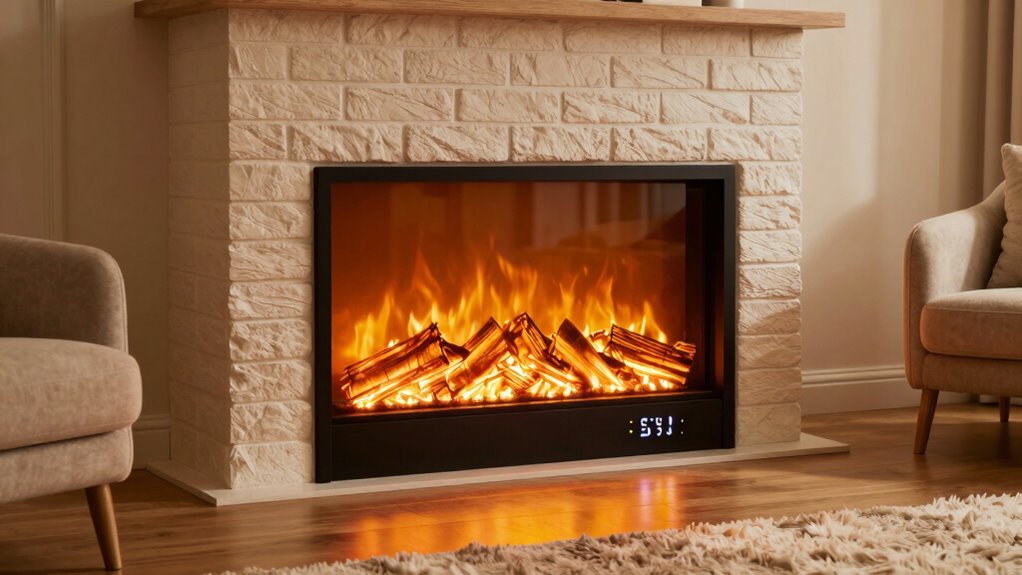
Your electric fireplace wattage directly affects your monthly bills because it shows how much energy the unit consumes to produce heat. Higher wattage fireplaces use more electricity, which can increase your costs, especially if you keep it running often. Choosing a model with adjustable settings and proper wattage for your space helps save money. To learn more about how wattage impacts your energy use and bills, keep exploring the details below.

Get home appliances delivered free with Prime
- Fast, free delivery on millions of items
- Prime Video, Amazon Music and more included
- Member-only deals all year
Key Takeaways
- Higher wattage fireplaces consume more electricity, leading to increased monthly energy bills.
- Selecting wattage appropriate for room size improves energy efficiency and reduces costs.
- Adjustable settings and thermostats help control wattage use and optimize monthly expenses.
- Proper placement and insulation enhance heating efficiency, minimizing unnecessary energy consumption.
- Regular maintenance ensures the fireplace operates efficiently, preventing wasteful energy use and lowering bills.
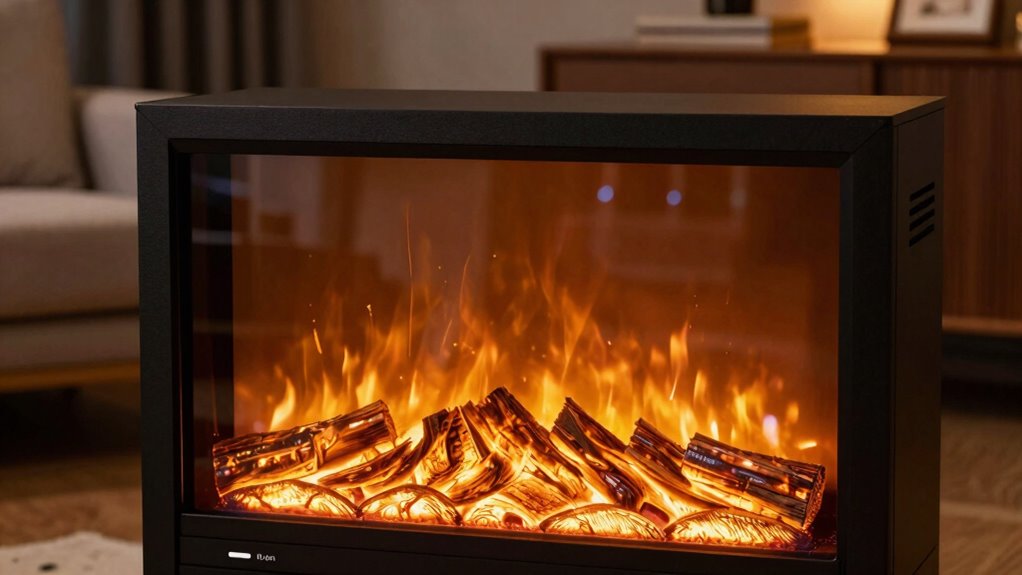
Understanding the wattage of an electric fireplace is essential because it directly influences how much heat the unit produces and how much energy it consumes. When you’re evaluating different models, knowing the wattage helps you determine how much you’ll spend on your monthly bills. Higher wattage fireplaces tend to generate more heat, making them suitable for larger rooms or colder climates. However, they also draw more electricity, which can substantially impact your energy costs. Conversely, lower wattage units might be more energy-efficient, especially if you only need to heat a small space or want to keep your bills low.
Wattage affects heating power, energy use, and costs—choose wisely for safety and efficiency.
Safety considerations play a key role when choosing an electric fireplace with the right wattage. A unit that’s too powerful for your space could overheat or cause safety concerns, especially if it’s placed near flammable materials or if there’s inadequate ventilation. On the other hand, a lower wattage fireplace may struggle to heat your room effectively, leading you to run it longer or at higher settings, which might negate some of its energy-saving benefits. Ensuring the wattage aligns with your room size and your safety needs helps you avoid these issues and creates a safer environment for your household. Additionally, understanding the electricity consumption of your chosen model can help you plan your monthly energy usage and costs more accurately. Proper installation and placement also contribute to maximizing efficiency and safety, ensuring your fireplace functions optimally without overexerting its capacity. Being aware of energy efficiency features can also help you select a model that balances performance with cost savings.
Energy efficiency is another important factor linked to wattage. While a higher wattage fireplace might seem appealing for its quick heating ability, it usually consumes more energy, translating into higher monthly bills. If you’re looking to reduce your energy costs, consider models with adjustable heat settings or built-in thermostats. These features allow you to control the wattage used during operation, making your heating more efficient. You’ll find that consistently using the lowest effective wattage for your needs helps you save money without sacrificing comfort. Additionally, selecting a fireplace with smart controls can further optimize energy use by allowing you to customize operation schedules and settings remotely.
Ultimately, your goal should be to find a balance between adequate heating, safety, and energy efficiency. Keep in mind that the wattage isn’t the only factor influencing your bills; insulation, room size, and how often you run the fireplace also matter. If you’re mindful of these elements, you can choose a unit that heats your space efficiently while keeping your monthly costs manageable. By understanding what electric fireplace wattage means for your energy expenses, you’ll be better equipped to select a model that offers comfort, safety, and savings—all tailored to your specific needs. Additionally, proper maintenance of your electric fireplace can help ensure it operates at optimal efficiency while reducing unnecessary energy consumption.
Products Worth Considering

Blueair Blue Pure 211i Max Air Purifier for Large Rooms

Philips Hue White and Color Ambiance A19 Smart Bulb Starter Kit, 2-Pack

Ring Alarm 8-Piece Kit (2nd Gen) Home Security System
As an affiliate, we earn on qualifying purchases.
Frequently Asked Questions
How Does Room Size Affect Electric Fireplace Wattage Needs?
Room size directly influences the wattage your electric fireplace needs. Larger rooms require higher wattage to heat effectively, especially if the room has poor insulation. Proper fireplace placement can also optimize efficiency, ensuring heat distributes well. If your room is small and well-insulated, a lower wattage fireplace may suffice. Conversely, bigger or less insulated spaces demand more power to stay warm, impacting your energy bills.
Can Using a Higher Wattage Fireplace Save on Heating Costs?
Using a higher wattage fireplace doesn’t necessarily save you money; it often increases energy costs. A proper cost comparison shows that selecting the right wattage for your room size is more efficient. If you choose a fireplace with too high wattage, you’ll pay more without added comfort. Focus on wattage selection that matches your space to balance warmth and cost-effectiveness, ultimately saving you money in the long run.
Are There Energy-Efficient Electric Fireplaces Available?
Yes, energy-efficient electric fireplaces are available, with some models boasting up to 90% efficiency. Did you know that proper fireplace maintenance can boost its energy savings by preventing heat loss? To maximize savings, follow energy-saving tips like lowering the temperature when you’re away and ensuring your unit is clean and well-maintained. Choosing an energy-efficient fireplace helps you enjoy warmth while reducing your monthly bills and environmental impact.
How Often Should I Run My Electric Fireplace to Save Money?
You should run your electric fireplace only when you need extra warmth to maximize fuel efficiency and save money. Limit usage during colder days or evenings, and use a timer or thermostat to control heat output. A smart approach involves comparing costs with other heating options, doing a cost comparison regularly, and adjusting your usage accordingly. This way, you optimize warmth without wasting energy or inflating your bills.
What Safety Considerations Relate to High-Wattage Electric Fireplaces?
High-wattage electric fireplaces can generate significant heat, so safety is essential. Did you know that overheating risks increase if you use a safety outlet not rated for the fireplace’s wattage? Always make sure your outlet matches the fireplace’s wattage requirements, and avoid overloading circuits. Regularly inspect the unit for signs of overheating or damage, and never leave it unattended for long periods to prevent fire hazards.
Conclusion
Understanding your electric fireplace’s wattage helps you gauge how much it’ll cost to keep cozy, much like knowing the fuel needs of a trusty steed before a long journey. Keep in mind, higher wattage means more warmth but also a bigger dent in your bill—so choose wisely. With a little foresight, you can enjoy the comfort of a roaring fire without turning your home into a modern Tower of Babel.