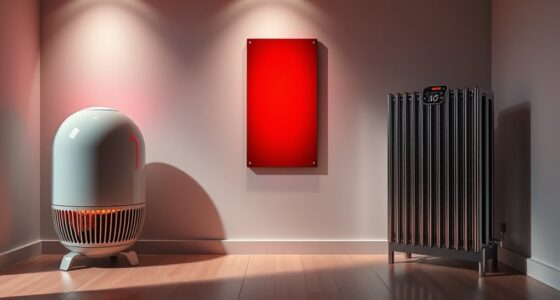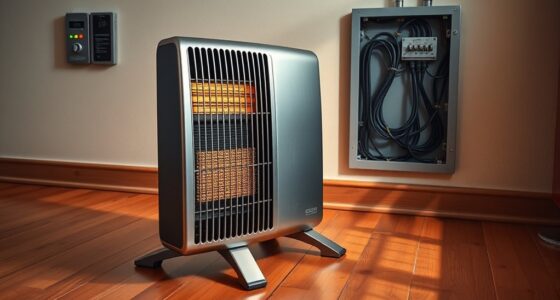
To compare infrared and ceramic heaters effectively, you need to understand their different technologies and how to calculate your room’s heating needs. Many myths, like infrared heaters only suitable for small spaces or ceramic ones are always more energy-efficient, are false. Proper calculations based on your room size and insulation are essential for choosing the right heater and ensuring efficiency. Keep exploring to discover how these details help you make smarter heating choices.
Key Takeaways
- Accurate room measurements and wattage calculations are essential to choose the right heater size for efficiency.
- Infrared heaters provide immediate, focused warmth, while ceramic heaters distribute heat gradually for broader comfort.
- Myths about efficiency and suitability for large spaces are false; understanding heater type performance is crucial.
- Proper placement and heat pattern understanding optimize comfort and prevent energy waste.
- Safety features and correct sizing significantly impact long-term cost, safety, and effective heating.
Differences in Heating Technologies and How They Work
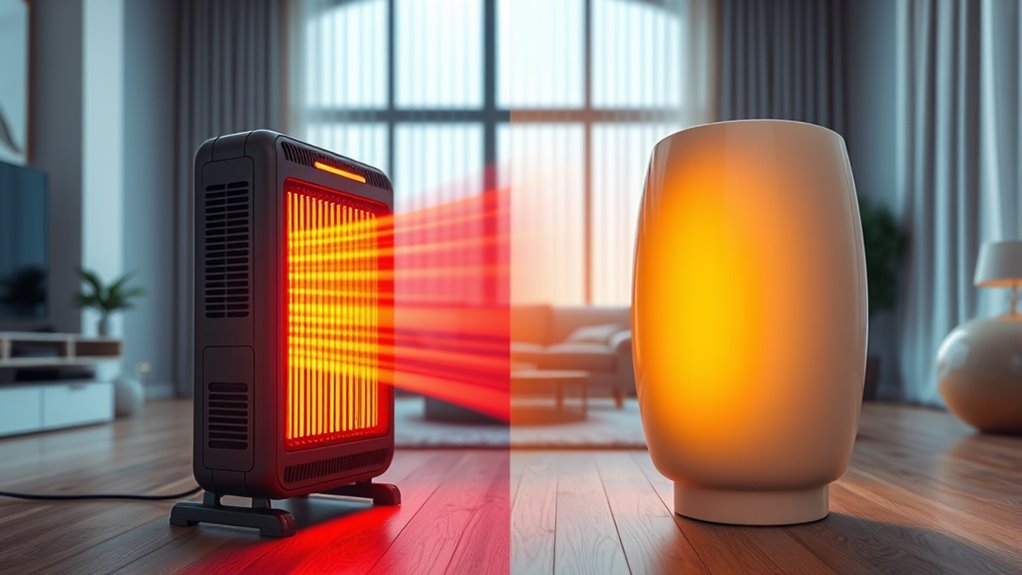
Infrared and ceramic heaters use different technologies to generate heat, which affects how they warm a space. Infrared heaters rely on infrared emission, where they emit infrared rays that directly warm objects and people in the room. This process mimics natural sunlight and provides instant warmth. In contrast, ceramic heaters use ceramic conduction, where electrical energy heats ceramic plates that then transfer heat to the surrounding air. This method creates a more even, steady heat distribution but takes slightly longer to feel. Infrared emission heats objects directly, reducing heat loss, while ceramic conduction heats the air, making the space feel warmer over time. Understanding these differences helps you choose the right heater for your needs.
Common Myths About Infrared and Ceramic Heaters
Many people believe that infrared and ceramic heaters are equally efficient and interchangeable, but this isn’t true. This myth debunking stems from common heating misconceptions that overlook their distinct technologies. Infrared heaters heat objects directly, providing instant warmth, while ceramic heaters warm the air over time. Believing they work the same can lead to inefficient choices for your space.
Infrared and ceramic heaters differ significantly in technology and efficiency, so they’re not interchangeable.
- Infrared heaters are only suitable for small areas, which isn’t accurate.
- Ceramic heaters are always more energy-efficient, which isn’t true.
- Infrared heaters don’t produce heat, just light, which is a misconception.
- Ceramic heaters are safer than infrared, but both require proper safety measures.
- Both types are equally noisy, which heating misconceptions often suggest.
Understanding these myths helps you make smarter, more informed decisions about your heating options.
Additionally, knowing the distinct technology behind each heater can help you choose the right one for your specific needs.
Calculating Power Needs Based on Room Size

To guarantee your heater effectively warms the space, you need to calculate its power requirements based on the room size. This involves energy calculations that consider the square footage and insulation quality. Start by measuring the room’s length and width to determine the total area. As a general rule, you’ll need about 10 watts of power per square foot for well-insulated rooms, and up to 15 watts for poorly insulated spaces. Proper room sizing ensures you select a heater with the right capacity, preventing under- or over-heating. Keep in mind that larger rooms require more energy, so accurate measurements are essential. Additionally, considering factors like heating efficiency can help optimize your heater choice for better energy savings and comfort. By doing these calculations, you’ll find a heater that efficiently meets your needs without wasting energy.
The Importance of Energy Efficiency and Operating Costs
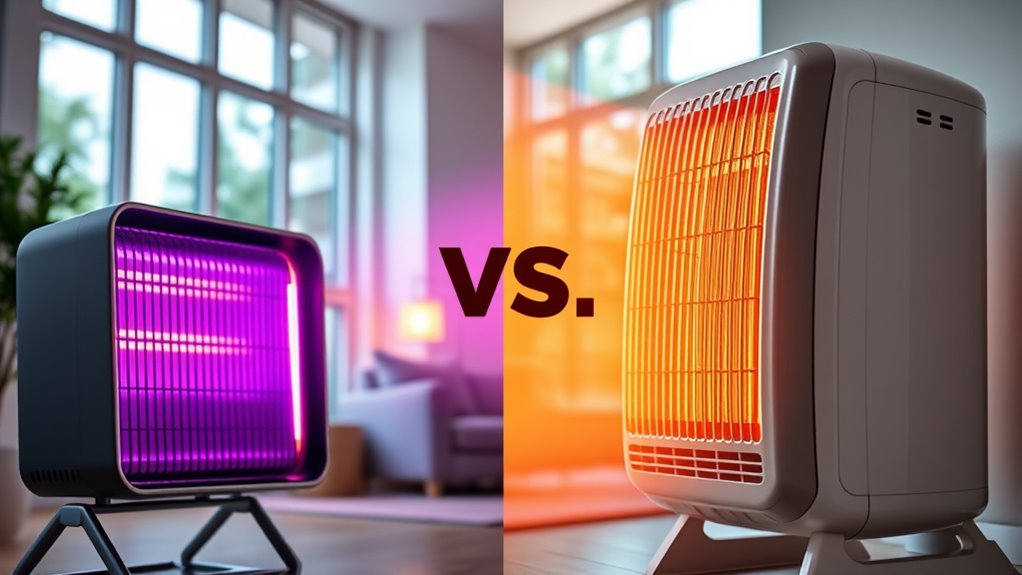
Understanding energy efficiency can notably reduce your heating costs over time. Choosing the right heater impacts your long-term energy use and overall expenses. Let’s explore how cost savings and energy impact your decision. Incorporating geothermal heat pumps can further enhance efficiency, leveraging Earth’s stable temperature for sustainable heating and cooling.
Cost Savings Potential
Choosing the right heater can considerably impact your energy bills, as efficiency directly affects operating costs. A clear cost comparison between infrared and ceramic heaters reveals potential savings over time. Infrared units often use less energy, lowering your utility bills. Additionally, their maintenance costs are generally minimal, saving you money on repairs and replacements.
Consider these factors:
- Lower energy consumption reduces monthly expenses
- Faster heating means less energy waste
- Durability decreases long-term replacement costs
- Simpler design cuts down on maintenance needs
- Efficient heat distribution minimizes wasted energy
Long-term Energy Impact
Over the long term, energy efficiency plays a crucial role in determining how much you’ll spend on heating. Choosing an energy-efficient heater reduces your operating costs and minimizes maintenance expenses since less strain is placed on the unit. Infrared heaters tend to be more efficient because they directly heat objects and people, rather than the air, leading to lower energy consumption. This efficiency not only saves you money but also lessens your environmental impact by reducing carbon emissions. Conversely, ceramic heaters may consume more energy over time, increasing costs and environmental footprint. By prioritizing energy efficiency, you’ll keep your long-term expenses manageable and contribute to a healthier environment. Making informed choices now ensures sustainable savings and a smaller ecological footprint.
Measuring Heat Distribution and Comfort Levels
Understanding how heat spreads and affects your comfort is key when choosing a heater. You’ll want to contemplate the patterns of heat distribution, surface temperature differences, and how warm you actually feel. These factors determine how effectively a heater creates a cozy, even environment. Additionally, considering the automation technologies involved can help optimize heating efficiency and comfort levels.
Heat Spread Patterns
Heat spread patterns are essential for evaluating how effectively infrared and ceramic heaters distribute warmth across a space. By understanding these patterns, you can assess comfort levels and determine which heater suits your environment. Infrared heaters often produce focused, direct heat, emphasizing infrared aesthetics that blend seamlessly into your decor. Ceramic heaters tend to distribute heat more evenly, creating a broader warmth spread. Additionally, the heat distribution pattern influences how well a space feels uniformly warm, impacting overall comfort and energy efficiency. Key points to contemplate include:
- The directionality of heat flow
- Coverage area and uniformity
- Impact on comfort and perceived warmth
- How quickly heat dissipates
- Durability and aesthetic integration
Knowing these factors helps you choose a heater that provides consistent warmth, enhances your space’s look, and maintains ceramic durability over time.
Surface Temperature Variations
Measuring surface temperature variations provides critical insight into how uniformly a heater distributes warmth and how comfortable the space feels. By checking the surface temperature at different points, you can identify uneven heat spread caused by poor heater placement or design flaws. Consistent surface temperature across the heater indicates effective heat distribution, leading to more comfortable environments. If certain areas are cooler or hotter, adjusting heater placement can improve overall comfort and efficiency. Keep in mind that surface temperature impacts perceived warmth and safety; excessively hot surfaces may cause discomfort or risk. Regularly monitoring these variations helps you optimize heater positioning, ensuring even heat flow and consistent comfort throughout your space. Accurate measurements allow for informed adjustments, maximizing your heater’s performance. Additionally, understanding the importance of proper maintenance can prevent malfunctions and ensure safe operation.
Perceived Warmth Levels
Perceived warmth levels play a crucial role in how comfortable a space feels, often influencing your overall satisfaction with a heater. Your sense of perceived warmth depends on factors like heat distribution, the type of heater, and individual sensitivity. Subjective comfort varies from person to person, making it essential to take into account how heat is experienced rather than just measured. Crochet styles for locs can also create a cozy atmosphere that influences perceived warmth. Uniform heat distribution enhances perceived warmth. Infrared heaters often create immediate, direct warmth. Ceramic heaters tend to warm the air evenly over time. Surface temperature impacts perceived comfort but isn’t the sole factor. Personal preferences influence how warm you feel, regardless of actual temperature.
Safety Features and Long-Term Investment Considerations
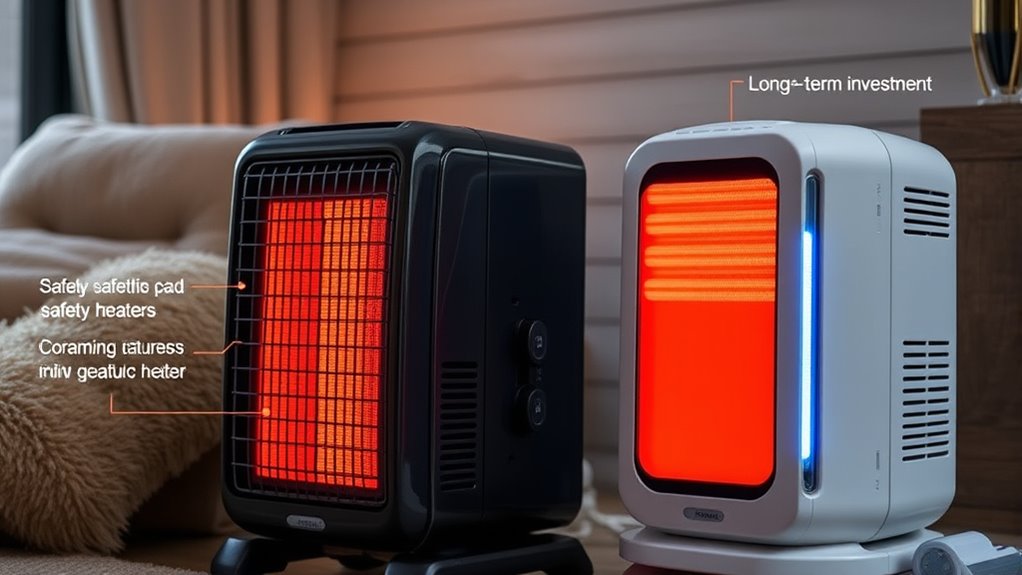
When choosing between infrared and ceramic heaters, understanding their safety features is essential for making a smart long-term investment. Both heater types offer safety features like tip-over protection, overheat shutoff, and cool-to-touch surfaces. These features help prevent accidents and ensure durability over time. Consider how each heater’s safety measures align with your environment and usage habits. Additionally, implementing fraud detection techniques can help protect your investments from potential security threats.
Real-World Scenarios: Choosing the Right Heater for Your Space
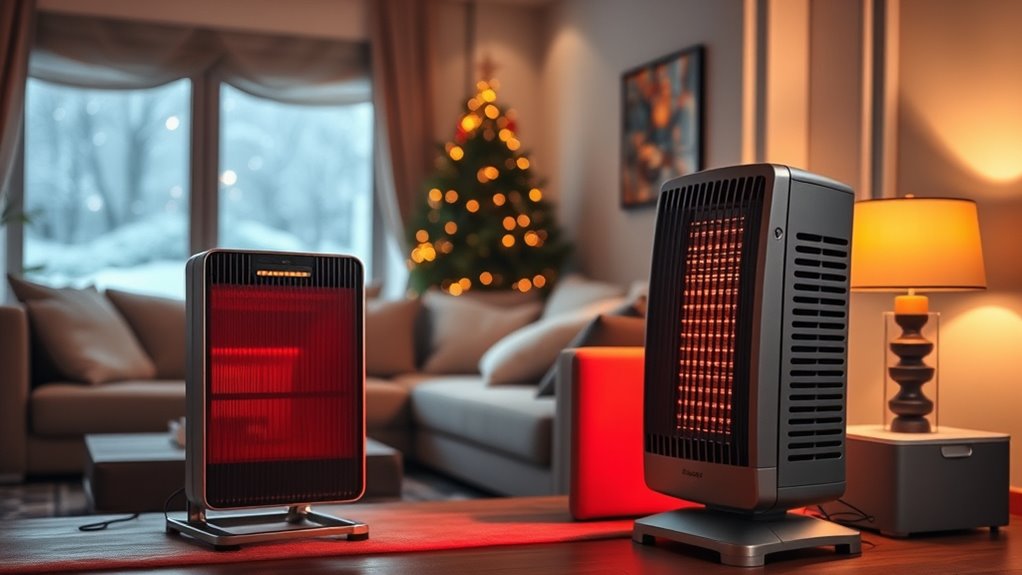
Choosing the right heater depends largely on your specific space and how you plan to use it. Consider factors like room size, insulation, and desired comfort. If you want precise control, a heater with a smart thermostat can optimize energy use and maintain consistent warmth. For quiet environments like bedrooms or offices, prioritize units with low noise levels to avoid disruption. For larger spaces or outdoor use, ceramic heaters often provide rapid heating and durability. If portability matters, lightweight models are ideal. Think about your budget and long-term energy costs—infrared heaters tend to be more efficient for spot heating, while ceramic models suit whole-room coverage. Evaluating these scenarios helps assure you pick a heater that matches your needs perfectly.
Frequently Asked Questions
Which Heater Type Is More Environmentally Friendly?
You’ll find infrared heaters more environmentally friendly because they typically have a higher energy efficiency, meaning they use less electricity to produce the same amount of heat. This reduces your carbon footprint since less energy consumption results in fewer emissions from power plants. Ceramic heaters can be efficient too, but generally, infrared models are better for the environment if you’re aiming to minimize your impact.
How Do Infrared and Ceramic Heaters Impact Indoor Air Quality?
Imagine your home’s air quality as a delicate balance scale. Infrared and ceramic heaters impact this balance through air quality factors and heater emissions. Infrared heaters emit minimal particles, like a whisper in a crowded room, helping maintain cleaner air. Ceramic heaters, while generally safe, can produce minor emissions during operation. You can keep indoor air healthier by selecting heaters that produce fewer emissions and guarantee proper ventilation.
Are There Health Risks Associated With Infrared or Ceramic Heaters?
You might wonder if infrared or ceramic heaters pose health concerns. Generally, these heaters are safe when used properly, but there are allergen risks if dust or pet dander accumulate around them, potentially triggering allergies. Infrared heaters emit infrared radiation, which is safe at typical levels, but prolonged exposure to high heat can cause skin dryness. Always maintain good ventilation and keep the heater clean to minimize health risks.
Can These Heaters Be Used Safely Outdoors?
Yes, you can use infrared or ceramic heaters outdoors, but don’t underestimate the importance of outdoor safety. Weather resistance is key; verify your heater is rated for outdoor use to withstand elements like rain and wind. Without proper protection, these heaters could malfunction or pose safety risks. Always check the manufacturer’s guidelines, and keep heaters sheltered or in covered areas to enjoy safe, cozy outdoor warmth.
Do Different Room Layouts Affect Heater Performance?
Yes, different room layouts can affect heater performance. Your room arrangement and furniture placement influence how heat circulates. For example, large furniture pieces or clutter can block airflow, making the heater less effective. To optimize performance, position your heater in an open area, away from obstructions, and consider how furniture layout impacts heat distribution. Adjusting these factors guarantees better warmth and energy efficiency in your space.
Conclusion
Choosing between infrared and ceramic heaters isn’t just about facts; it’s about finding the perfect fit for your space. By understanding their differences, busting myths, and doing the right calculations, you’re steering your comfort ship true north. Remember, the right heater isn’t just a purchase—it’s an investment in warmth and safety. So, why settle for less when you can make an informed choice that keeps you cozy, efficient, and confident?