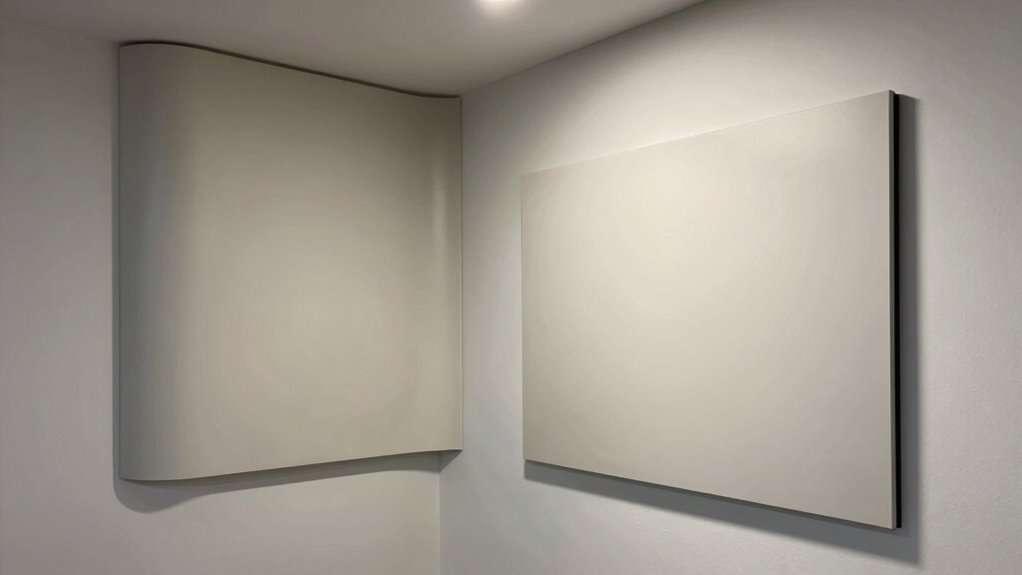

Corner installations require careful planning and specialized hardware to fit tightly into angled spaces, making them more complex to install and conceal. Flat-wall setups are generally simpler, easier to access, and involve straightforward hardware, making maintenance simpler. While corner fixtures can turn awkward spaces into functional or aesthetic highlights, flat-wall fixtures help create a clean, open look that enhances room size. If you keep exploring, you’ll discover even more key differences to help make your project a success.
Key Takeaways
- Corner installations require specialized planning, brackets, and concealment techniques, making them more complex than flat-wall setups.
- Flat-wall fixtures are easier to install, offering straightforward access and simpler hardware requirements.
- Corner fixtures maximize space utilization in tight areas, while flat-wall setups create a clean, open look.
- Concealment is more critical in corner installations to hide unsightly elements; flat walls allow easier cover-up.
- Aesthetic impact varies: corner fixtures can serve as focal points, whereas flat-wall fixtures promote minimalism.
Are you unsure whether to install your fixtures in the corner or directly against the flat wall? Deciding between these two options influences how your space looks, feels, and functions. Corner installations often present unique challenges and opportunities that differ from flat-wall setups. When considering your choices, think about concealment techniques and space optimization. These factors can considerably impact the overall aesthetic and usability of your room.
Corner installations tend to require more planning because they involve fitting fixtures into tight or awkward angles. This can make concealment techniques more critical; you want your fixtures to blend seamlessly into the corner, avoiding cluttered or unfinished appearances. Using specialized corner brackets or custom covers helps hide unsightly elements, making the installation look clean and intentional. Additionally, corner setups can maximize room corners that might otherwise go unused, allowing for innovative storage solutions or decorative features. This approach enhances space utilization by turning often overlooked areas into functional or visual assets. Incorporating artistic elements in corner installations can further elevate the overall aesthetic, making them focal points rather than just functional features. Proper planning and design can help you create a cohesive look that integrates well with your overall decor. Moreover, understanding the types of fixtures suitable for corner versus flat-wall installations can influence your final decision.
Corner fixtures require careful planning and concealment techniques to create seamless, functional, and space-maximizing installations.
On the other hand, flat-wall installations usually offer straightforward access and easier installation processes. They tend to be more forgiving if you’re working alone or have limited tools. When you install fixtures against a flat wall, concealment techniques become simpler—cover plates and trim can easily hide gaps or mounting hardware, giving a sleek, polished look. Flat-wall setups also contribute to space optimization by creating clear lines and open areas, making rooms appear larger and more organized. This setup is ideal if you prioritize simplicity and a minimalistic aesthetic, as it keeps fixtures flush with the wall, reducing visual clutter. Considering installation complexity can help you choose the best approach for your skill level and project timeline.
However, the choice isn’t just about convenience or aesthetics. You should also consider the function of each fixture. Corner installations can be advantageous for certain appliances or fixtures that benefit from being tucked away or integrated into a corner, therefore freeing up central space. Conversely, fixtures installed against flat walls are easier to access for maintenance or adjustments, which can save you time and effort in the long run. Additionally, understanding the visual flow of your space can guide your decision, ensuring the installation complements the room’s overall design.
In essence, your decision hinges on how you want to utilize your space. Corner installations, with their tailored concealment techniques, can help you optimize corners and hide unsightly elements, transforming awkward areas into assets. Flat-wall installations offer simplicity, ease of access, and a clean look that can make your room feel more spacious. By weighing these factors carefully, you can choose the installation method that best aligns with your design goals and functional needs.

12-Pack Premium Stainless Steel Corner Brackets for Wood Frame, Universal Metal Hardware Corner Braces with Screws, Wooden Furniture Corner Connectors Such as Drawers, Cabinets, Tables and Chairs
PREMIUM MATERIAL: Each corner bracket is made of thickened stainless steel with strict protective treatment, rustproof and waterproof,…
As an affiliate, we earn on qualifying purchases.
As an affiliate, we earn on qualifying purchases.
Frequently Asked Questions
What Tools Are Essential for Corner Installations?
For corner installations, you need essential tools for effective corner finishing and proper tool selection. Grab a corner trowel or finishing knife to shape and smooth the joints, a measuring tape to guarantee accurate alignment, and a level to keep everything straight. A utility knife helps with trimming, while a sponge or damp cloth is useful for cleaning excess material. These tools make your corner installation precise and professional-looking.
How Do Wall Materials Affect Installation Methods?
Think of wall materials as the terrain you’re maneuvering. If your walls have textured surfaces, you’ll need more flexible installation techniques to adapt to unevenness. Smooth, flat walls allow for straightforward methods, but textured or delicate materials demand careful handling and specialized tools. Material flexibility influences your approach, making some installations easier or more complex. Adjust your methods to match the wall’s texture and material properties for a seamless finish.
Are There Safety Precautions Specific to Corner Installs?
Yes, there are specific safety precautions for corner installs. You should prioritize corner safety by carefully measuring corner measurements to guarantee proper fit and stability. Use appropriate safety gear like goggles and gloves to protect yourself from sharp edges and debris. Be cautious with tools around corners, as they can be more awkward to handle. Always double-check your measurements and secure materials properly to prevent accidents during installation.
How Long Does Each Installation Type Typically Take?
Corner installations usually take about 1-2 days, while flat-wall setups can be completed in a single day. Notably, installation timelines vary considerably depending on material types—tile, stone, or drywall—each requiring different preparation and setting times. Material variations influence your project’s duration, so plan accordingly. Your specific setup, complexity, and experience level also affect how long each installation type takes, ensuring you get a tailored estimate.
Can Existing Wall Damage Impact Installation Quality?
Existing wall damage can definitely impact installation quality. If you don’t conduct a damage assessment and guarantee wall integrity beforehand, the installation might not be secure or look right. Cracks, holes, or weak spots could cause issues with adhesion or stability. It’s essential to evaluate the wall thoroughly and repair any damage before starting, so the installation remains durable and looks professional.

4 Pairs Interlocking Flush Mount Bracket Picture Hanging Hooks Stainless Steel Heavy Duty Photo Frame Hook Large Picture Hanger Hanging Buckle Furniture Connector Headboard Wall Mounting Hardware
QUALITY MATERIAL – The interlocking hanging buckle is made of stainless steel with smooth surface, rustproof and durable.
As an affiliate, we earn on qualifying purchases.
As an affiliate, we earn on qualifying purchases.
Conclusion
So, next time you’re faced with choosing between corner and flat-wall installations, remember: one’s a daring adventure around tight corners, and the other’s a lazy Sunday stretch along a plain wall. Whichever you pick, just be glad you don’t have to do both—unless you’re secretly craving that sweet chaos. Either way, you’re now a pro at knowing what makes each installation tick. Happy mounting! Or, you know, just wing it—no judgment here.

SDS Interior Corner Connector for Heat Cover – Galvanized Steel White Coupler for Seamless Connection of Two Inner Corner Baseboard Heater Covers, White (Pack of 1)
Coupler Accessory: For use with our premium baseboard heater covers; This baseboard corner block is great for combining…
As an affiliate, we earn on qualifying purchases.
As an affiliate, we earn on qualifying purchases.

HOOBRO Corner Shelf Stand, Industrial 5-Tier Corner Bookshelf with Metal Frame, Plant Display Shelf, Small Bookcase for Small Spaces, Bedroom, Living Room, Rustic Brown BF33CJ01
Structure is Firm: The corner shelf is made of high-quality particleboard and solid metal frame, ensuring great stability…
As an affiliate, we earn on qualifying purchases.
As an affiliate, we earn on qualifying purchases.