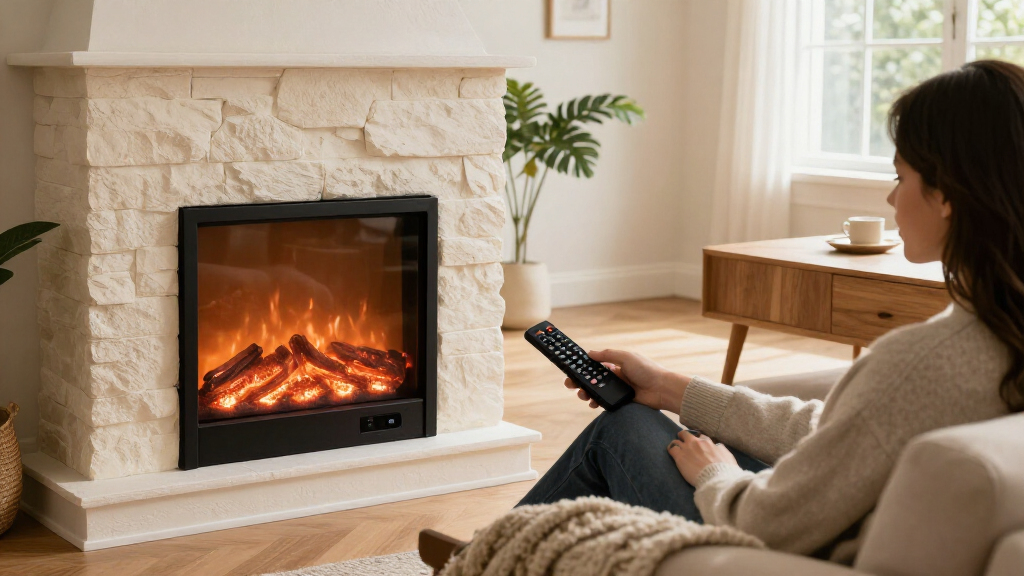
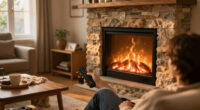
Set up and use your electric fireplace remote to control the flame effect, heat, temperature, and timer. This guide is for people with a newly installed fireplace or a remote that needs setup. Allow 15-30 minutes; you will need only the remote, its manual, and batteries if they are not already installed.

Get home appliances delivered free with Prime
- Fast, free delivery on millions of items
- Prime Video, Amazon Music and more included
- Member-only deals all year

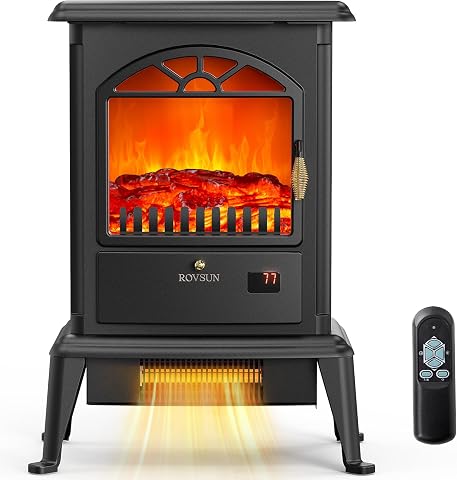
ROVSUN Freestanding Electric Fireplace Stove Heater with Remote, 7 Flame Colors and 4 Brightness Levels
- ✔ Power: 1500W
- ✔ Heating coverage: Up to 400 sq. ft.
- ✔ Heating type: Infrared quartz
Bonnlo 22.4-Inch Freestanding Electric Fireplace Heater with Remote
- ✔ Power source: AC
- ✔ Heating modes: 1,000W and 1,500W
- ✔ Thermostat range: 62°F–90°F

R.W.FLAME 25-Inch Electric Fireplace Heater with Remote, Adjustable Flames, and Log Set
- ✔ Model: S230B
- ✔ Power source: Corded electric
- ✔ Heating settings: 500W and 1,500W; 5,100 BTU listed output
Difficulty: Beginner | Time: 15-30 minutes
What You’ll Need
Tools & Materials:
- Electric fireplace and its remote control
- Fireplace manual or the manufacturer’s setup instructions
- Batteries of the type specified for the remote, if needed
Knowledge:
- Basic use of household controls
- Ability to identify the fireplace’s power switch and power connection
Use the manual for your exact model. Button names, pairing steps, temperature units, and timer ranges vary. Keep the fireplace on a stable surface or installed as directed, with its air intake and outlet clear. Do not open the fireplace housing or alter its wiring to set up the remote.
ROVSUN Freestanding Electric Fireplace Stove Heater with Remote, 7 Flame Colors and 4 Brightness Levels
For shoppers who want a remote to do more than switch the heater on and off, the ROVSUN is our strongest all-round pick. Its remote-controlled settings include temperature adjustment, a timer, seven flame colors, and four brightness levels. That breadth makes it easier to prioritize a visible flame effect or supplemental warmth depending on the moment, and the flame can run without heat. Compared with Bonnlo, ROVSUN spells out more flame variation; compared with the R.W.FLAME, it lists broader stated coverage and a lighter body.The tradeoff is that its 400-square-foot coverage is a stated limit, not a promise of uniform room heating. At 1,500W, it needs an AC outlet, and the listed noise level is approximately 40 dB. Its freestanding iron-and-glass construction needs no assembly, while overheat and tip-over protection address two practical safety concerns. We would choose it for flexible ambiance and straightforward supplemental heat, but skip it if we need a cordless unit or a primary heating solution for a large area.
Pros:
- Seven flame colors and four brightness levels.
- Flame effect works with or without heat.
- Remote, adjustable temperature, and 0–12-hour timer.
- Freestanding iron-and-glass unit requires no assembly; overheat and tip-over protection.
Cons:
- Coverage is stated for spaces up to 400 square feet, so larger rooms may exceed its intended reach.
- Requires an AC power connection.
- Noise level is approximately 40 dB, rather than specified as quieter than that.
Best for: Buyers who want the most specified flame-color and brightness adjustments, plus remote temperature and timer controls for supplemental heat.
Not ideal for: Anyone needing cordless operation, a primary heater for a large open area, or a stated noise level below 40 dB.
Bottom line: The ROVSUN is our best overall choice when we want a remote that controls both useful heating settings and a wide range of flame looks.
“The ROVSUN is our best overall choice when we want a remote that controls both useful heating settings and a wide range of flame looks.”
Bonnlo 22.4-Inch Freestanding Electric Fireplace Heater with Remote
The Bonnlo makes the most sense when heat adjustment matters as much as flame control. Its 1,000W and 1,500W modes give us a lower setting to choose from before stepping up to full output, and the thermostat spans 62°F to 90°F. The remote and 0–12-hour timer add useful control from a seat or bedside. Its stated coverage matches ROVSUN at up to 400 square feet, while its specified noise level is below 40 dB.Compared with ROVSUN, Bonnlo gives us two clearly identified heating modes but does not list the same range of flame colors and brightness choices. Compared with R.W.FLAME, it is substantially lighter by the supplied specifications and includes tip-over shutoff alongside overheat protection. We should note the remote requires AAA batteries, and the product is specified for indoor use. Choose it for adjustable supplemental heat and timed operation; if elaborate flame customization is the priority, ROVSUN or R.W.FLAME provides more detail on appearance controls.
Pros:
- Two heat modes: 1,000W and 1,500W, with a 62°F–90°F thermostat.
- Remote control and 0–12-hour timer.
- Stated coverage up to 400 square feet and operation below 40 dB.
- Overheat protection and automatic shutoff when tilted more than 45°.
Cons:
- Remote requires AAA batteries.
- Specified for indoor use and requires AC power.
- Flame customization details are less extensive than the ROVSUN and R.W.FLAME listings.
Best for: Buyers seeking two heat modes, thermostat adjustment, a timer, and a stated 400-square-foot coverage in a lightweight freestanding unit.
Not ideal for: Shoppers who want a clearly specified range of flame colors and brightness settings or need outdoor use.
Bottom line: Bonnlo is a practical pick when we value stepped heat control and timed operation over a long list of flame-effect adjustments.
“Bonnlo is a practical pick when we value stepped heat control and timed operation over a long list of flame-effect adjustments.”
R.W.FLAME 25-Inch Electric Fireplace Heater with Remote, Adjustable Flames, and Log Set
If we care about tailoring the appearance of both the flames and the logs, the R.W.FLAME offers the most explicitly described visual controls. Its remote-operated settings adjust flame color, log color, brightness, and speed, so we can tune the display rather than settling for a single preset. Separate flame and heating controls add flexibility, and the 500W and 1,500W settings give us two output levels. That makes it a more appearance-focused alternative to Bonnlo’s clearly specified heat modes and ROVSUN’s broader stated coverage.Its cathedral-style design gives this freestanding model a traditional presence, but that comes with a practical tradeoff: at 32 pounds, it is much heavier than the roughly 12-pound ROVSUN and Bonnlo. Its listed heating coverage is also lower, at up to 300 square feet, and the supplied description mentions overheating protection but not tip-over protection. We would choose it for adjustable flame-and-log styling in a smaller room. For lighter portability or a larger stated coverage area, the other two are better fits.
Pros:
- Remote adjusts flame color, log color, brightness, and speed.
- Separate flame and heating controls.
- 500W and 1,500W heat settings; stated output of 5,100 BTU.
- Freestanding iron-and-glass design with overheating protection.
Cons:
- Stated heating coverage is up to 300 square feet, less than the 400-square-foot claims for the other two.
- At 32 pounds, it is heavier than either ROVSUN or Bonnlo.
- Requires corded electric power; tip-over protection is not specified in the supplied details.
Best for: Buyers who want to adjust flame and log colors, brightness, and speed in a traditional freestanding fireplace design.
Not ideal for: Anyone prioritizing a light unit, stated coverage above 300 square feet, or specified tip-over protection.
Bottom line: R.W.FLAME is the choice when adjustable flame and log presentation matter more than lighter weight or broader stated coverage.
“R.W.FLAME is the choice when adjustable flame and log presentation matter more than lighter weight or broader stated coverage.”
As an Amazon Associate we earn from qualifying purchases.
Before You Start
Turn the fireplace off before installing or changing remote batteries. Use only the battery type and orientation shown in the battery compartment or manual. Keep batteries away from children and dispose of old ones according to local guidance. If the cord, plug, or fireplace looks damaged, unplug the unit if safe and contact the manufacturer or a qualified technician before use.
Step-by-Step Instructions
Step 1: Check the fireplace and remote
Find the model name or number on the fireplace label and match it to the manual. Confirm that the remote is supplied for that model. Locate the fireplace’s main power switch and any standby control; some models need to be switched on at the unit before the remote can operate them.
Tip: A universal or replacement remote may require model-specific pairing or may not support every function. Check the compatibility information before proceeding.
Check: You have the correct manual and know where the fireplace’s main power control is.
Step 2: Install or check the batteries
Open the remote’s battery compartment. Insert fresh batteries of the specified type, matching the plus and minus symbols. Close the compartment fully. If batteries are already installed, check their orientation and replace them if they are old or leaking; avoid touching leaked material with bare hands.
Tip: Do not mix old and new batteries or different battery types. If the manual specifies rechargeable or non-rechargeable batteries, follow that instruction.
Check: The battery compartment is closed, and the remote’s display or indicator responds when you press a button, if your model has one.
Step 3: Connect and power on the fireplace
Make sure the fireplace’s air openings are unobstructed. Plug it directly into the outlet type specified in the manual, unless the unit is permanently wired. Turn on its main switch or standby control. Wait for any startup sequence to finish before pressing remote buttons.
Tip: Do not cover the heater outlet or place objects against the fireplace. Follow the manual’s clearance instructions, especially around curtains, furniture, and other items that can block airflow.
Check: The fireplace shows a power or standby indicator, or its control panel responds without an error.
Step 4: Pair the remote if the model requires it
Check the manual for a pairing procedure. If pairing is required, follow its exact button sequence, timing, and distance instructions. Some remotes work without pairing and operate as soon as the fireplace is powered on; do not hold random buttons in an attempt to pair them.
Tip: Pairing controls differ by model. If the manual is missing, look up the manufacturer’s instructions using the exact model number before trying a reset.
Check: The fireplace acknowledges the pairing command, or the manual confirms that this remote does not need pairing.
Step 5: Test the flame effect by itself
Point the remote toward the fireplace’s receiver and press the flame or light control once. Use the same control to cycle through available flame colors or brightness levels. Keep the heater off during this first test if your model allows separate flame and heat controls.
Tip: Remove objects that block the path between the remote and receiver. Some models use radio signals and do not need direct aiming, but the manual will say so.
Check: The flame effect turns on, changes setting, and turns off in response to the remote.
Step 6: Choose and test a heat setting
Press the heat or heater button to select the desired setting. If the remote offers a thermostat, set a temperature within the model’s permitted range. Keep a safe distance from the outlet and do not touch the heater grille. Allow a few minutes for warm air to become noticeable; many fireplaces delay heat or fan operation briefly.
Tip: The flame effect can often run without heat, but confirm this in your manual. Use the unit’s built-in thermostat and overheat protection as directed; never use an external timer or smart plug to cut power unless the manufacturer permits it.
Check: The heat indicator appears or warm air flows after the normal startup delay. The flame setting remains as expected.
Step 7: Set the timer and turn the unit off
If you want automatic shutoff, select a timer duration listed in the manual and confirm the display or indicator shows the setting. Watch for the unit to shut off at the selected time if you are testing the timer. To stop operation manually, use the remote’s power button, then switch off the main control if the manual recommends it.
Tip: A timer may control heat, flame effects, or both. Check what your model’s timer actually stops before relying on it while you are away or asleep.
Check: The remote switches the fireplace off, and any timer indication behaves as described in the manual.
Common Mistakes to Avoid
- Using the remote before turning on the fireplace’s main switch. — Check the unit’s power or standby control first; the remote may not wake a fireplace that is switched off at the unit.
- Installing batteries backward or using the wrong type. — Match the battery symbols and type printed in the compartment or specified in the manual.
- Assuming every button works the same way across models. — Refer to the model-specific manual, especially for pairing, timer behavior, and separate flame and heat controls.
- Blocking the heater outlet or leaving the heater on near items that can obstruct airflow. — Keep the required clearance around the unit and check that air openings remain clear during use.
Troubleshooting
Problem: The fireplace does not respond to the remote.
Solution: Confirm the unit’s main switch is on, fit fresh correctly oriented batteries, and aim toward the receiver from the distance specified in the manual. Remove obstructions and retry. If pairing is required, repeat the documented procedure.
Problem: The flame works, but the heater does not produce warm air.
Solution: Check that heat is enabled and the thermostat is set above the room temperature. Clear the air openings and wait through the normal startup delay. If an overheat warning appears, switch the unit off, let it cool for the time stated in the manual, and follow its reset instructions.
Problem: The timer or temperature setting seems incorrect.
Solution: Check whether the display uses hours or minutes and whether temperature is shown in Celsius or Fahrenheit. Consult the manual for the range and what the timer controls; re-enter the setting slowly and confirm its indicator.
Problem: The remote works only at very close range.
Solution: Replace the batteries and clean the remote’s emitter and the fireplace receiver area with a dry, soft cloth. Remove anything blocking the signal. If range stays short, check the manual for interference guidance or contact the manufacturer.
What Success Looks Like
The fireplace responds to the remote’s power and flame controls, and the heat setting produces warm air after the model’s normal delay. The timer behaves as described in the manual, the air openings stay clear, and no error indicator or unusual smell appears. Turn the unit off and contact the manufacturer if it overheats, sparks, smells burnt, or repeatedly shuts down.
Next Steps
Store the remote where you can reach it without placing it on the heater or blocking airflow. Check the batteries periodically and replace them when response becomes inconsistent. Keep the manual and model number for future pairing or service. If a control continues to fail after the troubleshooting steps, contact the manufacturer or a qualified technician with the model number and a description of the symptom.
Frequently Asked Questions
Can I use the flame effect without heat?
Many electric fireplaces support flame-only operation, but controls vary. Use the flame button and leave the heater off if your manual confirms separate operation.
Do I need to pair every electric fireplace remote?
No. Some remotes work immediately, while others need a model-specific pairing sequence. Check the manual before attempting pairing or resetting.
Why does the heater take a while to start?
Some units delay the fan or heat output during startup. Wait the time specified in the manual and check the heat indicator. If warm air does not start after that period, verify the thermostat and airflow.
Can I leave the fireplace running while I sleep?
Follow the manufacturer’s instructions for unattended use. If you use a timer, confirm whether it shuts off heat, flame effects, or both. Keep clearances and airflow requirements in place.