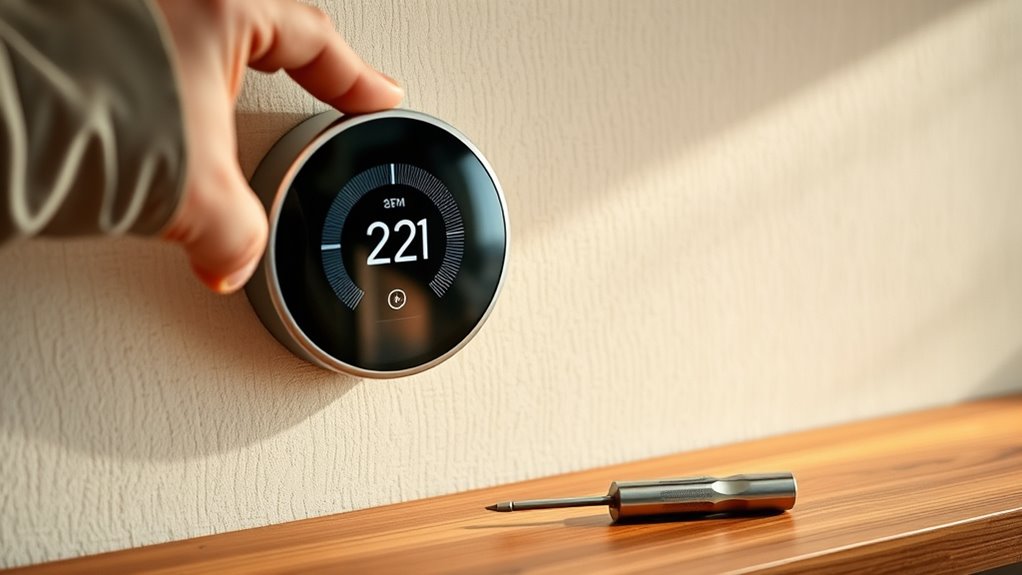
To calibrate your electric fireplace thermostat, start by locating and cleaning the thermal sensor near the heating element or air intake to guarantee accurate readings. Next, access the calibration mode through the control panel or manually adjust the sensor if needed, using a trusted thermometer for comparison. Make small adjustments to align the displayed temperature with actual room temperature. If you’d like step-by-step guidance and tips on maintaining calibration, there’s more to explore.
Key Takeaways
- Locate and inspect the thermal sensor near the heating element or air intake for dust or damage.
- Use a reliable thermometer and calibration tools to compare actual temperature with the fireplace display.
- Access calibration mode via the control panel or manually adjust the sensor if no mode exists.
- Make small adjustments to the sensor position or calibration settings to align temperature readings accurately.
- Verify your calibration regularly and keep the sensor clean to maintain heating efficiency and accuracy.
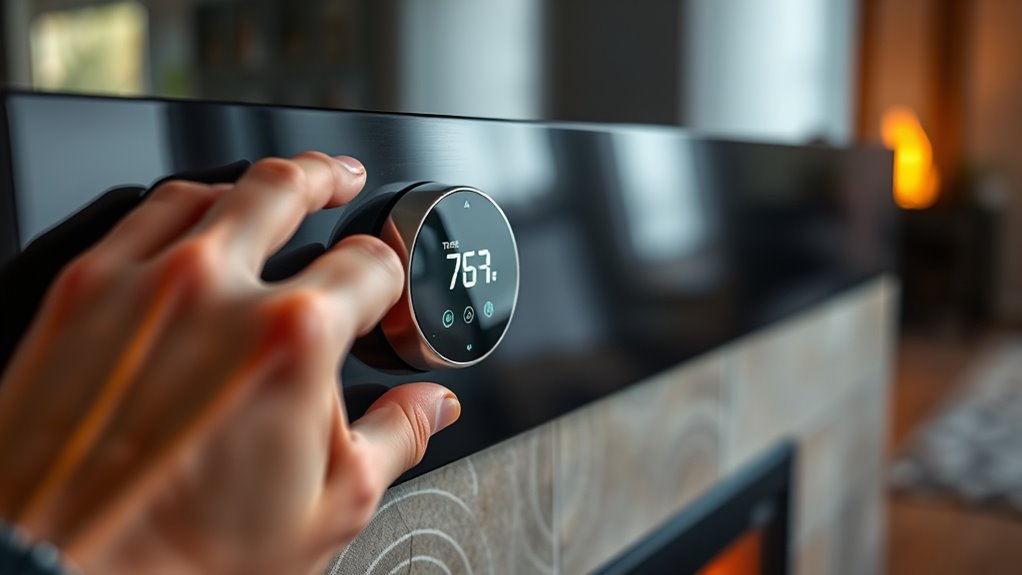
If your electric fireplace isn’t maintaining consistent temperatures, calibrating the thermostat can make a noticeable difference. Over time, the thermal sensor inside your unit might drift out of alignment, causing inaccurate readings and uneven heating. To fix this, you’ll need to use proper calibration tools and understand how to adjust the sensor for ideal performance. Start by locating the thermal sensor, which is typically near the heating element or air intake. Once identified, inspect it for dust, debris, or any signs of damage, as these can influence its accuracy. If it looks dirty or obstructed, gently clean it with a soft cloth. When you’re ready to calibrate, ensure your fireplace is unplugged for safety.
Calibrate your electric fireplace’s thermal sensor for consistent, accurate heating performance.
Using calibration tools—these are often included with the appliance or available from the manufacturer—will help you make precise adjustments. Many electric fireplaces have a calibration mode accessible through the control panel or a combination of button presses. If your model lacks a dedicated calibration setting, you’ll usually need to manually adjust the thermal sensor. This can involve gently bending or repositioning the sensor, or in some cases, replacing it altogether if it’s faulty. Before making any physical adjustments, consult your user manual to confirm the correct procedure for your specific model.
Once you’ve entered calibration mode, use your calibration tools to compare the temperature reading on the display with a trusted thermometer. Place the thermometer near the sensor to get an accurate reading. If the fireplace’s temperature display is higher than the actual temperature, you’ll need to adjust the thermal sensor downward, and vice versa. Some units allow for fine-tuning via digital controls, while others require mechanical adjustments. Be precise—small adjustments can considerably improve accuracy. After making your adjustments, exit calibration mode, and turn the fireplace back on. Monitor it over the next few hours to see if the temperature stabilizes at your preferred setting.
It’s a good idea to keep a record of your calibration process, noting how much you adjusted the sensor to reach the desired temperature. This helps if you need to recalibrate later or if someone else operates the fireplace. Regular maintenance, like cleaning the thermal sensor and verifying calibration periodically, ensures your electric fireplace heats efficiently and safely. Proper calibration not only enhances comfort but also extends the lifespan of your appliance by preventing unnecessary strain on the heating components. Additionally, understanding the thermal sensor and its role can help you troubleshoot heating issues more effectively. Remember, patience and attention to detail are key—small tweaks can lead to consistent, reliable warmth in your space.
electric fireplace thermostat calibration tools
As an affiliate, we earn on qualifying purchases.
As an affiliate, we earn on qualifying purchases.
Frequently Asked Questions
How Often Should I Calibrate My Electric Fireplace Thermostat?
You should calibrate your electric fireplace thermostat whenever you notice inconsistent temperature readings or if the thermostat accuracy seems off. Typically, calibration frequency depends on usage and environment, but checking it once a year is a good rule of thumb. Regular calibration helps maintain ideal comfort and energy efficiency, ensuring your thermostat provides accurate temperature control and prevents unnecessary heating or cooling.
Can I Calibrate My Thermostat Without Professional Help?
Yes, you can perform a DIY adjustment to improve your thermostat accuracy. Start by turning off your electric fireplace and locating the thermostat sensor. Carefully follow your model’s instructions to adjust the calibration screw or dial, if available. While it’s possible to do this yourself, make certain you handle components gently and test the thermostat afterward to confirm it’s maintaining accurate temperature control. If unsure, consulting a professional is always a safe choice.
What Tools Are Required to Calibrate the Thermostat?
Calibrating your thermostat is like tuning a fine instrument. To do this, you’ll need a screwdriver for thermostat adjustment and a thermometer to check the actual temperature. Follow calibration procedures carefully, adjusting the thermostat to match the thermometer’s reading. Make sure you turn off your fireplace before starting. These tools guarantee your thermostat accurately controls your heat, giving you cozy comfort without guesswork.
How Do I Know if My Thermostat Is Misreading Temperatures?
You can tell if your thermostat is misreading temperatures by comparing its reading to a reliable thermometer nearby. If there’s a temperature discrepancy of more than a few degrees, your thermostat’s accuracy might be off. To check, set your fireplace to a specific temperature and see if it reaches or maintains that level. Consistent deviations suggest the need for calibration to make sure your thermostat provides accurate readings.
What Are Common Signs of a Faulty Thermostat?
You might notice your thermostat is faulty when the temperature accuracy suddenly seems off, causing unexpected heating or cooling. Coincidentally, you could experience temperature inconsistencies, with your fireplace not maintaining the set level. These signs suggest your thermostat isn’t reading accurately, leading to discomfort and higher energy bills. If you see these issues, it’s time to check your thermostat’s calibration or consider replacing it to restore proper function.
thermal sensor for electric fireplace
As an affiliate, we earn on qualifying purchases.
As an affiliate, we earn on qualifying purchases.
Conclusion
Now, with your thermostat calibrated, imagine the gentle warmth wrapping around you like a cozy blanket on a chilly evening. Every flicker of your electric fireplace becomes a comforting glow, responding perfectly to your touch. Feel the satisfaction of knowing your space stays just the right temperature, turning your home into a haven of warmth and tranquility. With this simple adjustment, you’ve transformed your living space into a cozy retreat you can enjoy all season long.
electric fireplace temperature calibration kit
As an affiliate, we earn on qualifying purchases.
As an affiliate, we earn on qualifying purchases.
digital thermometer for fireplace
As an affiliate, we earn on qualifying purchases.
As an affiliate, we earn on qualifying purchases.