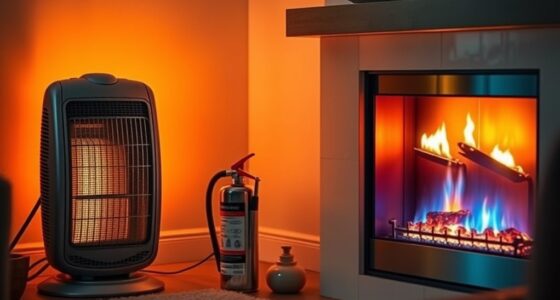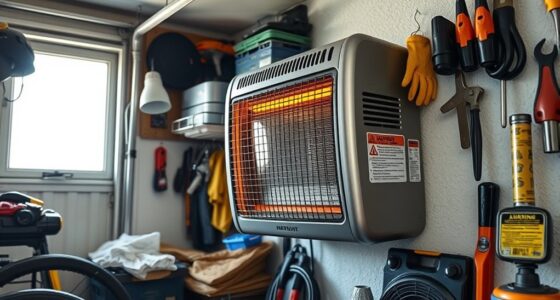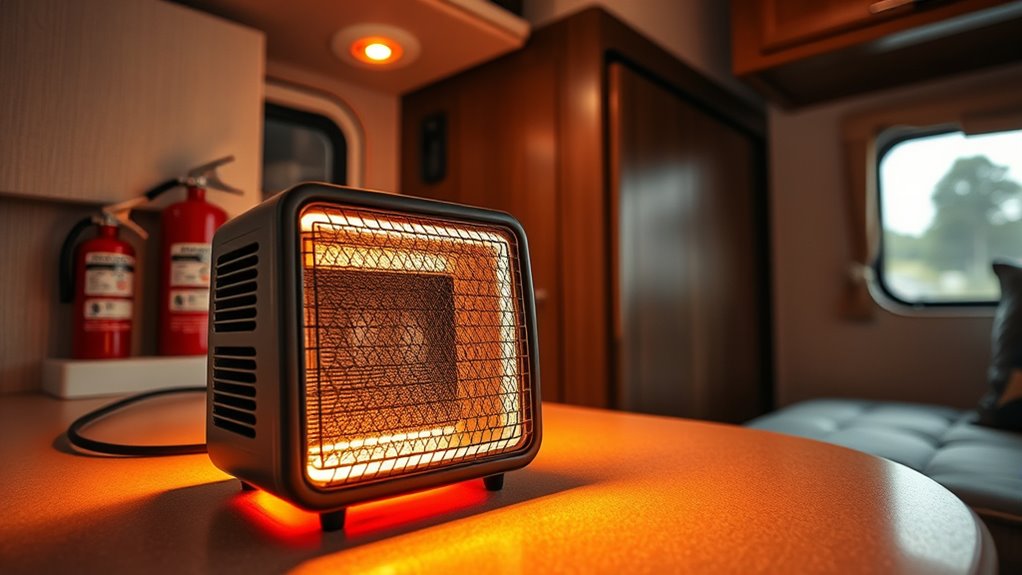
To safely use heaters in your RV, guarantee proper ventilation to prevent dangerous fume buildup and carbon monoxide accumulation. Keep flammable materials away, operate heaters on level ground, and never leave them unattended. Use carbon monoxide detectors and regularly maintain your equipment. Always follow manufacturer instructions and turn off heaters when sleeping or leaving the RV. If you continue, you’ll discover important safety tips to keep you warm and protected on your travels.
Key Takeaways
- Ensure proper ventilation by opening windows or vents when operating fuel-based heaters.
- Install and regularly test a carbon monoxide detector to detect dangerous gas buildup.
- Keep flammable materials away from heaters and operate them on level ground to prevent tipping.
- Turn off heaters during sleep or absences and perform routine maintenance and inspections.
- Follow manufacturer guidelines and never operate heaters in enclosed spaces without adequate airflow.
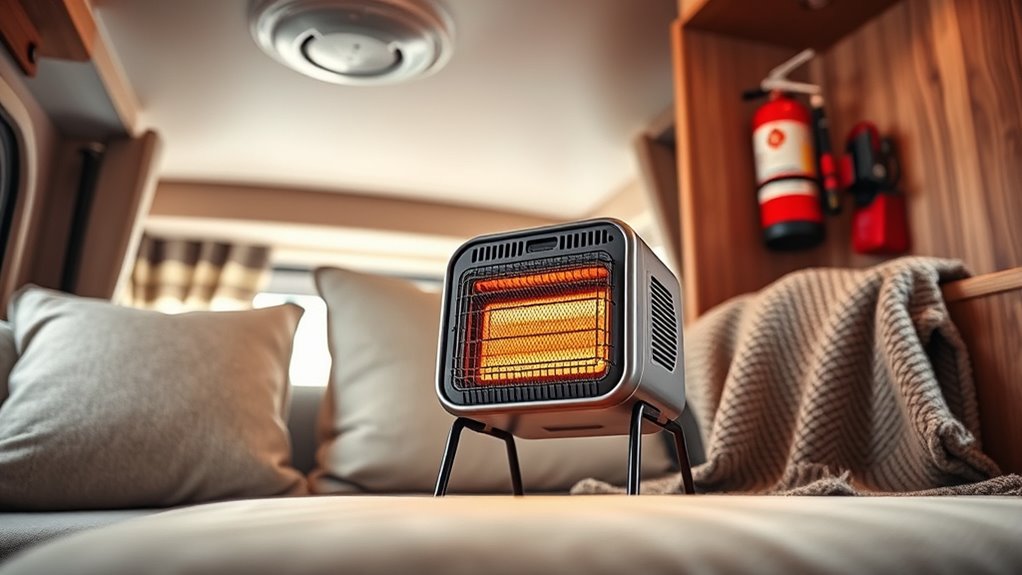
Using heaters in your RV can keep you warm and comfortable, but it’s crucial to prioritize safety. One of the most critical factors is understanding ventilation requirements. Proper airflow is essential to prevent dangerous buildup of fumes and ensure fresh air circulates throughout your space. Many RV heaters, especially fuel-based models, produce byproducts like carbon dioxide and, more critically, carbon monoxide. Without adequate ventilation, these gases can accumulate quickly, creating serious health risks. Ensuring windows and vents are open or functioning correctly allows fresh air to enter and stale air to escape, reducing the risk of dangerous concentrations of these gases. Always follow the manufacturer’s guidelines for ventilation, and never operate a heater in an enclosed space without proper airflow.
Proper ventilation is essential when using RV heaters to prevent dangerous fume buildup and ensure safe, fresh air circulation.
Carbon monoxide risks are particularly insidious because this colorless, odorless gas can cause severe health issues or even death if it accumulates. When using any type of heater—whether propane, kerosene, or electric—you have to be vigilant about this danger. For fuel-powered heaters, make sure your RV is equipped with a carbon monoxide detector, and test it regularly to guarantee it’s working. Never ignore the alarms; if it sounds, turn off the heater immediately and exit the RV to breathe fresh air. If you’re using a vented heater, confirm that the venting system is intact and free of obstructions, as any blockage can cause dangerous gases to leak back into your living space. Additionally, monitoring indoor air quality can help detect potential issues early before they become hazardous.
In addition to ventilation requirements, it’s essential to understand the specific safety instructions for your heater model. Always operate heaters on level ground to prevent tipping, and keep flammable materials at a safe distance. Never leave a heater running unattended, and ensure it’s turned off when you sleep or leave the RV. Regular maintenance also plays a role; inspect your heater and ventilation system periodically for signs of wear or damage. This proactive approach helps prevent leaks, blockages, or malfunctions that could compromise safety.
Ultimately, being aware of ventilation needs and understanding the carbon monoxide risks associated with RV heaters can considerably enhance your safety. Proper ventilation not only prevents dangerous gas buildup but also maintains good indoor air quality. By following safety protocols, using detectors, and maintaining your equipment, you can enjoy the comfort of a warm RV while minimizing the risk of accidents or health hazards. Prioritizing these safety measures ensures that your travels remain safe, cozy, and worry-free.

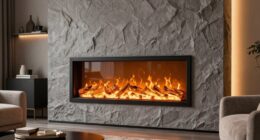
EUHOMY 50 Inch Electric Fireplace Wall Recessed and Wall Mounted with Adjustable Flame Color, Fireplace Heater with Remote Control, Linear Fireplace with Timer, Touch Screen, Log & Crystal, 750/1500W
Package Inclusions & 2-Year Technical Support: : The EUHOMY electric fireplace is equipped with 1* carbon log, 1*...
As an affiliate, we earn on qualifying purchases.
Frequently Asked Questions
Can I Leave the Heater on Overnight Unattended?
You shouldn’t leave the heater on overnight unattended because heater safety is vital. It can pose fire risks or cause carbon monoxide buildup if not monitored properly. For overnight heating, always make certain your heater has safety features like automatic shut-off and use it in a well-ventilated area. It’s best to turn it off before sleeping or when you’re not around to prevent accidents and keep everyone safe.
What Is the Safest Type of Heater for RV Use?
Imagine you’re camping in cold weather, and you opt for a small electric heater. A portable electric heater is often the safest choice because it eliminates fire risks associated with open flames or combustible fuels. When considering electrical heater safety, look for models with automatic shut-off features and proper ventilation. Always follow manufacturer instructions, keep it away from flammable materials, and never leave it unattended overnight for maximum safety.
How Often Should I Inspect My RV Heater?
You should inspect your RV heater at least once a month during the colder months. Regular heater maintenance and an inspection schedule help catch issues early, ensuring safe operation. Check for corrosion, leaks, and electrical connections, and clean filters or vents as needed. If you notice any signs of trouble, address them promptly. Staying diligent with your inspection schedule keeps you safe and your heater functioning efficiently throughout the season.
Are There Specific Venting Requirements for RV Heaters?
You wonder if there are venting requirements for your RV heater, and the answer’s yes. Proper venting standards are essential to guarantee safe heater exhaust dissipation. You must install a dedicated vent that directs fumes outside, preventing dangerous buildup inside your RV. Neglecting this could lead to carbon monoxide risks. Always double-check manufacturer instructions and local codes to keep your travels safe and your heater functioning efficiently.
What Should I Do if I Smell Gas Near the Heater?
If you smell gas near the heater, you should immediately turn off the heater and ventilate the RV by opening windows and doors. Avoid using electrical switches or flames, as they could ignite a gas leak. Follow emergency procedures by evacuating everyone from the RV and calling emergency services. Do not attempt to fix the leak yourself; let professionals handle the situation to ensure safety.
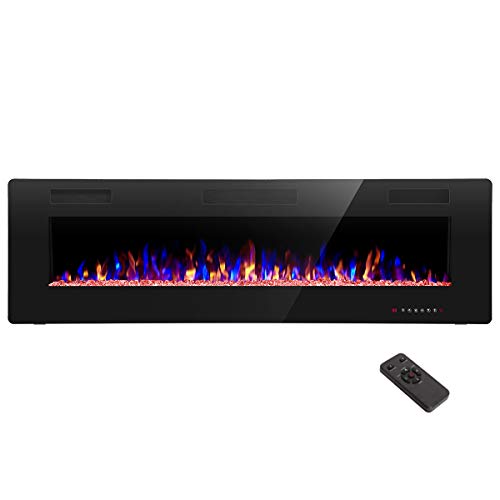
R.W.FLAME 60" Recessed and Wall Mounted Electric Fireplace, Low Noise, Fit for 2 x 6 Stud, Remote Control with Timer, Touch Screen, Adjustable Flame Color and Speed, 750-1500W
Attractive and Practical Design: 3.86"D x 60"W x 18.11"H,The thickness of the new style is only 3.86 inches...
As an affiliate, we earn on qualifying purchases.
Conclusion
Remember, safety should always come first when using heaters in your RV. Regularly inspect your heating equipment and ensure proper ventilation to prevent carbon monoxide buildup. Did you know that RV fires caused by heating equipment account for nearly 30% of all RV fires? Staying vigilant and following safety tips can substantially reduce risks, keeping you warm and secure on your travels. Prioritize safety, and enjoy cozy, worry-free adventures in your RV.

Touchstone Smart Electric Fireplace-The Sideline 50" Wide-in Wall Recessed - 30 Realistic Ember Color/Flame Options - 1,500W Heater w/Thermostat - Log & Crystal Hearth Options - Alexa/WiFi Enabled
APPEARANCE: The Sideline electric fireplace is designed for recessed in-wall mounting. Creating a cozy atmosphere of a traditional...
As an affiliate, we earn on qualifying purchases.

Westinghouse 60 Inch Electric Fireplace Heater, Compatible with Alexa & Google Home, Wall Mount or in-Wall Recessed Fireplace Insert, 24 Hour Timer, Color Changing Flames, 750W/1500W Indoor Heater
CUSTOMIZE APPEARANCE: Up to 144 total color combinations for flames and embers, 5 independent brightness levels, and 5...
As an affiliate, we earn on qualifying purchases.