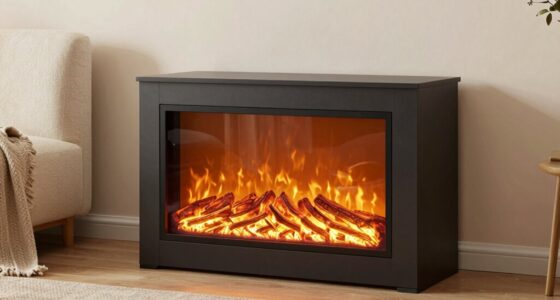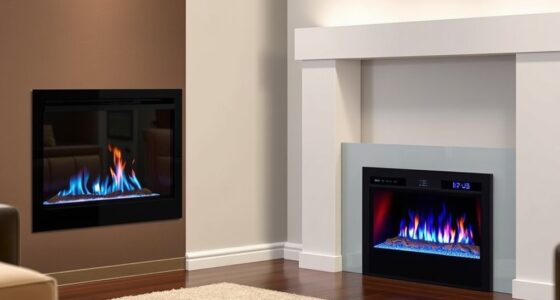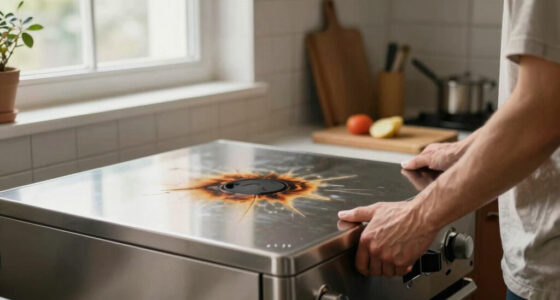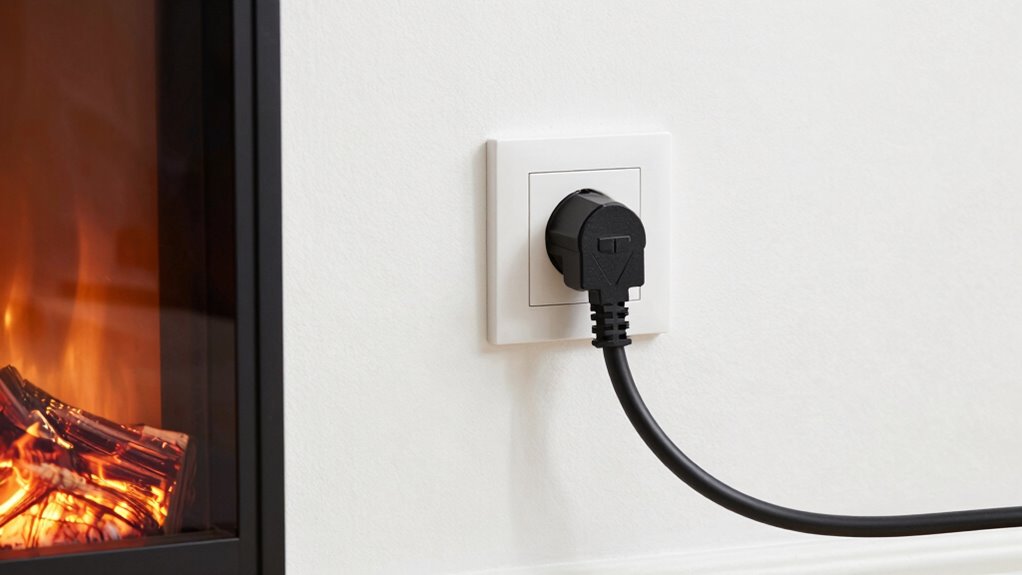

Using a dedicated outlet for your fireplace matters because it provides a stable and appropriately rated power supply, reducing the risk of overloads and electrical fires. It prevents overheating, shorts, and performance issues caused by sharing circuits or using multi-outlet strips. Proper wiring ensures safety, complies with electrical codes, and makes maintenance easier. Keep in mind, understanding these benefits can help you keep your home safe and your fireplace running smoothly—there’s more to take into account if you want to know the details.
Key Takeaways
- Prevents circuit overloads that can cause electrical fires or failures.
- Ensures the fireplace receives a stable, appropriate power supply for safe operation.
- Reduces risk of shorts and overheating associated with shared or multi-outlet circuits.
- Simplifies compliance with electrical codes and safety standards.
- Facilitates easier maintenance and early detection of electrical issues.
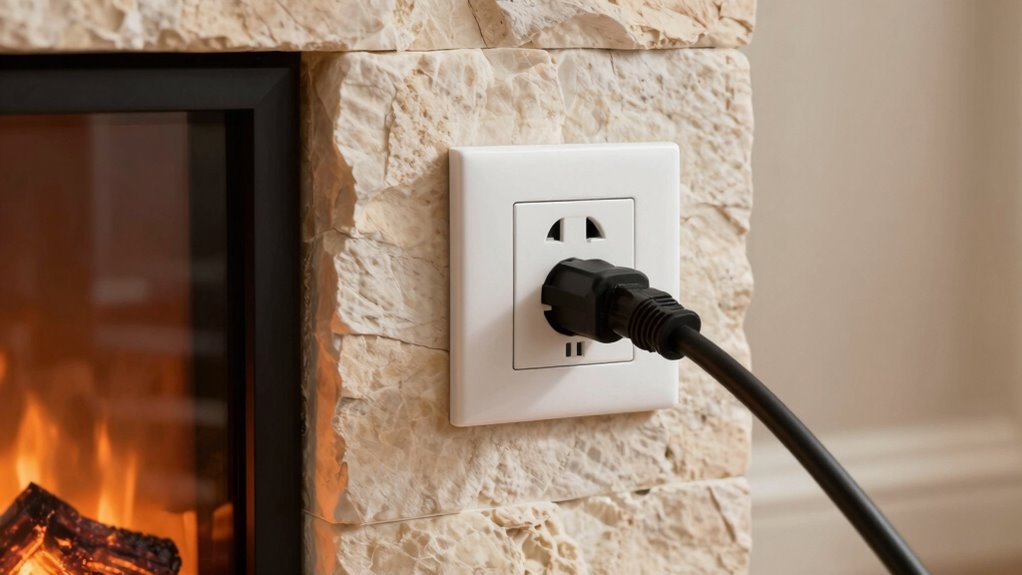
Many homeowners overlook the importance of having a dedicated outlet for their fireplace, but doing so can considerably improve safety and performance. When your fireplace relies on a shared or improperly installed electrical outlet, you risk overloading the circuit, which can lead to electrical failures or even fires. Electrical wiring not designed specifically for your fireplace may not handle the power demands, increasing the chance of a fire hazard. A dedicated outlet ensures that your fireplace receives the appropriate voltage and current, reducing the risk of overheating or electrical shorts.
A dedicated outlet for your fireplace enhances safety, performance, and reduces fire risks.
A properly rated circuit also supports the high refresh rates and consistent power flow needed for safe and reliable operation. Without a dedicated outlet, you might be tempted to plug your fireplace into a multi-outlet strip or a shared circuit. While this may seem convenient, it’s a dangerous mistake. Overloading a circuit can cause the wiring to heat up beyond safe limits, which greatly raises the fire hazard. Fireplaces generate heat and sometimes operate continuously, so they need a stable, reliable power source. Relying on an overloaded or improperly wired outlet puts your home at unnecessary risk, especially if the wiring isn’t rated for high loads. Additionally, understanding the electrical code requirements can help ensure your setup complies with safety standards. Properly installed wiring can also prevent issues such as electrical faults, which could otherwise lead to dangerous situations.
Installing a dedicated outlet is a straightforward way to mitigate these dangers. It involves running electrical wiring from your main panel directly to the fireplace’s location, with an outlet designed to handle the appliance’s power needs. This setup not only enhances safety but also improves the fireplace’s performance. When the electrical supply is consistent and properly maintained, your fireplace operates more efficiently, with fewer interruptions or power fluctuations that could impair its function. Proper circuit capacity is essential to support the high power needs of your fireplace safely. Moreover, selecting the right wiring and outlet type based on electrical standards ensures long-term safety and compliance.
Furthermore, a dedicated outlet helps you comply with electrical codes and safety standards. These regulations are designed to prevent common hazards associated with improper wiring and overloading. By making sure your fireplace has its own circuit, you reduce the risk of electrical fires caused by faulty wiring or accidental shorts. It also simplifies troubleshooting if issues arise, since you won’t need to sort through multiple devices sharing a single outlet. Ensuring proper electrical wiring also contributes to the overall safety and longevity of your electrical system. In addition, regular inspection and maintenance of the electrical connections can help identify potential issues before they become serious hazards.
In essence, investing in a dedicated outlet for your fireplace isn’t just about convenience — it’s a critical safety measure. It minimizes fire hazards linked to electrical wiring problems, ensures your fireplace performs reliably, and helps you enjoy the warmth and ambiance without worry. Taking this step guarantees that your fireplace remains a safe, cozy feature in your home, rather than a potential source of danger caused by inadequate wiring or shared circuits.

DalyLuxa 77 INCH Fireplace TV Stand for 85 Inch TVs, Farmhouse Entertainment Center with 50" Electric Fireplace and Power Outlets, LED Media Console Cabinet for Living Room, Grey
- Electric Fireplace: 51-inch remote-controlled electric fireplace
- Farmhouse Style: Chic rustic farmhouse design
- Ample Storage: Multiple shelves and compartments
As an affiliate, we earn on qualifying purchases.
As an affiliate, we earn on qualifying purchases.
Frequently Asked Questions
Can a Regular Outlet Handle the Power Needs of a Fireplace?
A regular outlet usually can’t handle the power needs of a fireplace. Its electrical capacity and outlet compatibility might not support the high wattage required, risking overload or electrical hazards. You should check the fireplace’s power specifications and compare them with your outlet’s capacity. For safety and proper function, it’s best to install a dedicated outlet designed to meet the fireplace’s electrical demands, ensuring safe operation and preventing potential issues.
What Are the Signs of an Overloaded Outlet?
You’ll notice signs of an overloaded outlet through frequent circuit breaker trips, sparks, or a burning smell. Overload indicators also include outlets feeling warm or hot to the touch, flickering lights, or outlets that are difficult to unplug. These issues suggest the electrical capacity is exceeded, increasing fire risk. If you observe any of these signs, it’s essential to reduce the load and consult an electrician to prevent potential hazards.
How Often Should I Inspect My Dedicated Fireplace Outlet?
Think of your fireplace outlet as a trusted companion guarding your home’s warmth. You should inspect it quarterly, much like checking an essential part of your home’s armor. Follow electrical codes and guarantee proper outlet placement to prevent hazards. Regular inspections catch issues early, avoiding overloads or damage. Keep your fireplace safe by making these checks routine; your home and family will thank you for the care.
Are There Specific Outlet Types Recommended for Fireplace Use?
For fireplace wiring, you should use a dedicated, grounded outlet compatible with high electrical loads. Look for outlets rated for at least 15-20 amps and designed for heavy-duty use, such as a standard NEMA 14-50 or 6-50 outlet. Ensuring outlet compatibility is essential for safety, preventing overloads or electrical hazards. Always consult a professional electrician to verify that your outlet meets your fireplace’s power requirements and safety standards.
What Safety Precautions Should I Take When Installing a Dedicated Outlet?
When installing a dedicated outlet for your fireplace, you should follow the electrical code to guarantee safety and compliance. Hire a licensed electrician to handle the installation, and consider adding surge protection to guard against voltage spikes that could damage your fireplace or electrical system. Always turn off power before working, double-check connections, and verify that the outlet is properly grounded to prevent electrical hazards.

in Wall Cable Management Kit,Recessed Outlet Box for Wall Mount TV, Outlet Relocation Kit for Relocating Unreachable Electrical Outlets,2 AC Outlets,in Wall Extension Cord
- Extended Reach Power Cord: 9.8-foot cord for hard-to-reach outlets
- In-Wall Wiring System: Discreetly routes power behind walls
- Concealed Brush Plate: Maintains seamless, built-in look
As an affiliate, we earn on qualifying purchases.
As an affiliate, we earn on qualifying purchases.
Conclusion
Using a dedicated outlet for your fireplace isn’t just a detail—it’s a safeguard. It guarantees safety, reduces risk, and promotes peace of mind. It keeps your space secure, your family protected, and your mind at ease. When you prioritize a dedicated outlet, you prioritize safety, reliability, and peace of mind. Because in the end, a safe fireplace isn’t just about warmth; it’s about security, confidence, and taking control of your home’s safety.

Sparkfix 15Amp Fireplace Reset Button Switch 30000224 – Replacement Circuit Breaker/Reset Switch for Electric Fireplace Overheat & Safety Protection
- Model Compatibility: Fits Heat Surge and Roll-N-Glow models
- Easy Installation: Simple swap-out with no tools needed
- Restores Safety Function: Replaces faulty reset switch for safety
As an affiliate, we earn on qualifying purchases.
As an affiliate, we earn on qualifying purchases.

Adviace Magnetic Automatic Thermostat Sensor Switch with High temperature Rated Wiring for Fireplace and Stove Blower Fan Kit Applications, Automatic Snap Disc Thermostat Sensor Replacement
- Includes Thermostat and Wiring: Magnetic thermostat with 55.5-inch heat-tolerant wires
- Versatile Fireplace Applications: Suitable for various stove and fireplace blower kits
- Enhanced Design: Added female wires for easier installation
As an affiliate, we earn on qualifying purchases.
As an affiliate, we earn on qualifying purchases.