
If you notice a burning smell, act quickly to identify the source and prevent hazards. Common causes include overheating electrical wiring, malfunctioning appliances, or food burning on your stove. Recognize warning signs like sparks, smoke, or scorched odors around outlets or appliances. Take immediate safety steps such as turning off devices, ventilating the area, and calling professionals if needed. Keep in mind, understanding all possible causes and preventive tips helps you stay safe—continue exploring to learn more.
Key Takeaways
- Identifies common household, kitchen, and garage sources causing burning smells and their typical odors.
- Explains how to recognize electrical and mechanical hazards linked to burning odors.
- Outlines immediate safety steps including ventilation, fire extinguisher use, and evacuation procedures.
- Provides preventive maintenance tips for appliances, wiring, insulation, and regular inspections.
- Details quick diagnosis and actions for specific causes like overheating wires, burnt materials, or mold-related odors.
Common Sources of Burning Odors in Your Home

You might notice a burning smell in your home without immediately knowing its source, but many common household items and appliances are often responsible. Overheated home insulation can emit a smoky odor if it’s damaged or exposed to excessive heat. Faulty wiring or malfunctioning appliances can also cause burning smells, especially if they overheat or short circuit. Smoke detectors, while essential for safety, can sometimes produce a burnt odor if they’re malfunctioning or exposed to dust and debris. Additionally, forgotten food on a stove or a heating element left on can create a strong burning smell. Regularly inspecting your home’s insulation and ensuring smoke detectors are clean and functioning properly helps prevent these odors from catching you off guard. Automation in business and home technology can also contribute to unusual smells if devices overheat or malfunction.
Recognizing the Signs of Electrical Fires
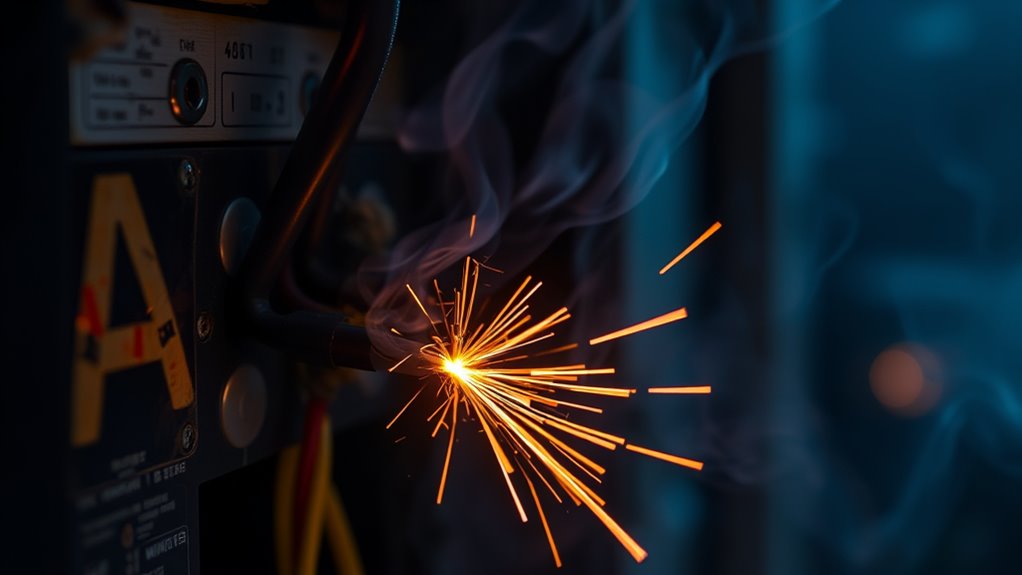
Electrical issues can sometimes produce subtle warning signs before a full-blown fire occurs. One key indicator is the frequent or false triggering of smoke detectors, especially when no smoke or fire is present. You might also notice scorch marks around outlets or switches, which suggest overheating. Unusual sparks, flickering lights, or burning smells near electrical wiring are serious warnings. Keep an eye on frayed or damaged wiring, as exposed conductors can short circuit and ignite. Persistent buzzing or buzzing sounds from outlets or circuit boxes should never be ignored. Regularly inspecting your electrical wiring and testing smoke detectors help you catch these signs early, giving you a chance to address potential hazards before a fire starts. Staying aware of vetted information from trusted sources can also help you better understand and identify potential electrical fire risks. Always prioritize safety if you notice any of these warning signs.
Identifying Burning Smells From Kitchen Appliances
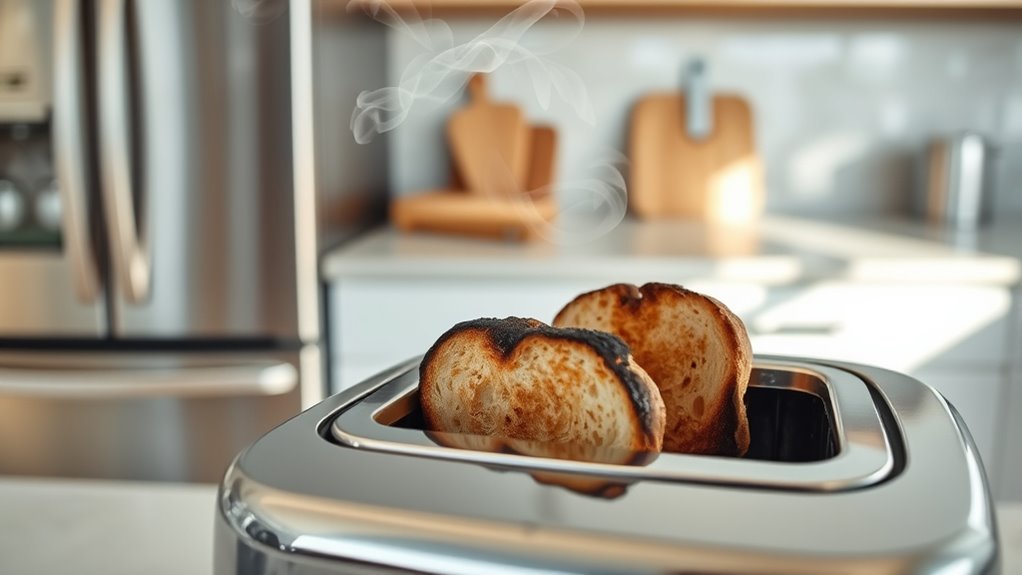
Burning smells from kitchen appliances often serve as early warnings of trouble, signaling that something isn’t functioning properly. If you notice a burnt odor near your oven, dishwasher, or microwave, it could be due to appliance overheating or accumulated debris. Regular air filter maintenance is essential, especially in appliances like range hoods or vent fans, to prevent dust buildup that can cause overheating and burning smells. Pay attention to unusual odors combined with overheating sounds or excessive heat, as these indicate a problem. A persistent burning smell might also suggest that internal components are melting or burning out. Acting quickly by unplugging the appliance and inspecting for visible damage can prevent further damage or fire hazards. It’s also important to stay aware of AI security concerns, which include early detection of potential malfunctions or vulnerabilities that could lead to safety issues. Always stay alert to these signs for a safer kitchen environment.
Troubleshooting Car and Garage Burning Smells
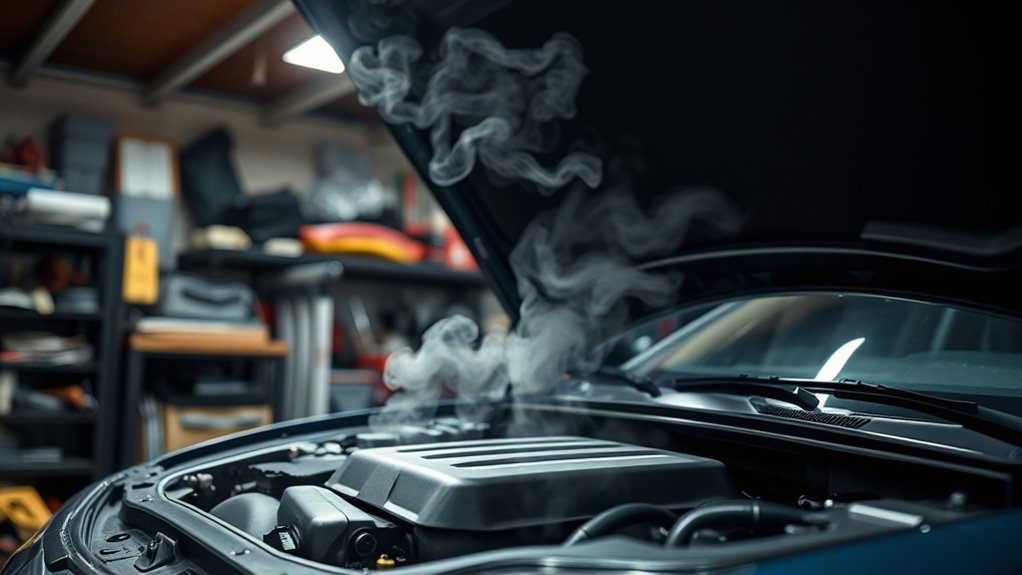
Burning odors in your car or garage can quickly signal underlying issues that need immediate attention. If you notice a smoky smell, check for overheating components like the engine, belts, or wiring. Also, inspect your smoke detectors—if they trigger, it’s a sign of potential fire hazards. Keep a fire extinguisher nearby in case flames or heavy smoke develop unexpectedly. Use this table to troubleshoot common causes:
| Issue | Action |
|---|---|
| Burning smell from engine | Check for oil leaks or overheating parts |
| Smoke detector alarming | Test or replace batteries, inspect for fire |
| Burning smell in garage | Look for electrical shorts or stored chemicals |
| Burning smell from wiring | Turn off power, call a professional |
| Fire hazard present | Evacuate, use fire extinguisher, call 911 |
Address issues promptly to prevent dangerous situations. Additionally, familiarizing yourself with fire safety protocols can help you respond effectively in emergencies.
Safety Precautions When Dealing With Burning Odors
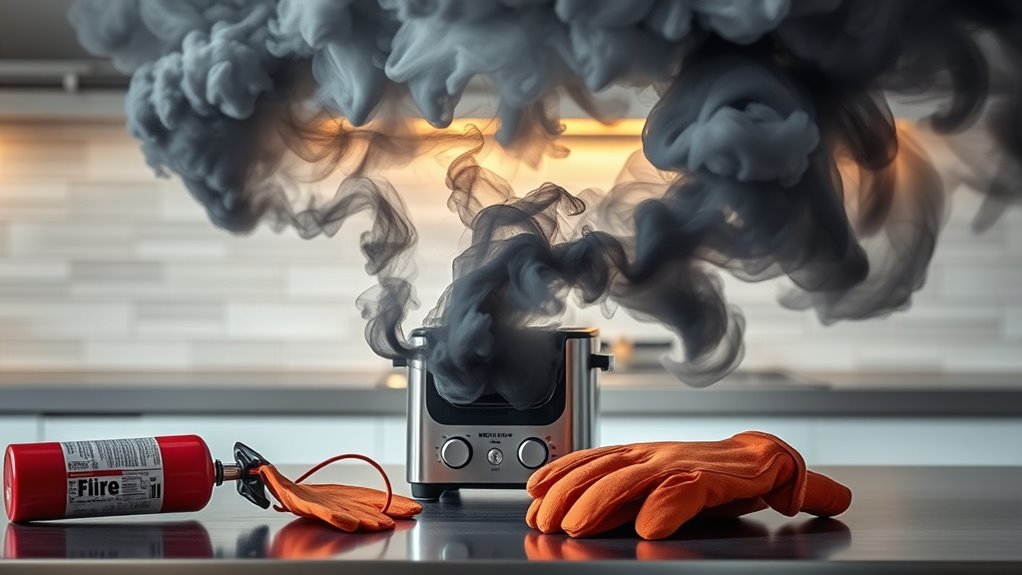
When you notice a burning smell, taking immediate safety precautions can prevent injuries or property damage. Prioritize fire safety by turning off the suspected source if safe to do so, and avoid inhaling the odor directly. Use odor detection techniques to identify the source without risking exposure. Keep a fire extinguisher nearby and know how to use it in case flames flare up. Ventilate the area by opening windows and doors to disperse smoke and reduce inhalation risks. If the smell persists or worsens, evacuate the space and call emergency services. Never ignore a burning odor, as it could signal a hidden fire or electrical issue. Staying alert and acting swiftly are key to protecting yourself and your property.
When to Call in the Professionals
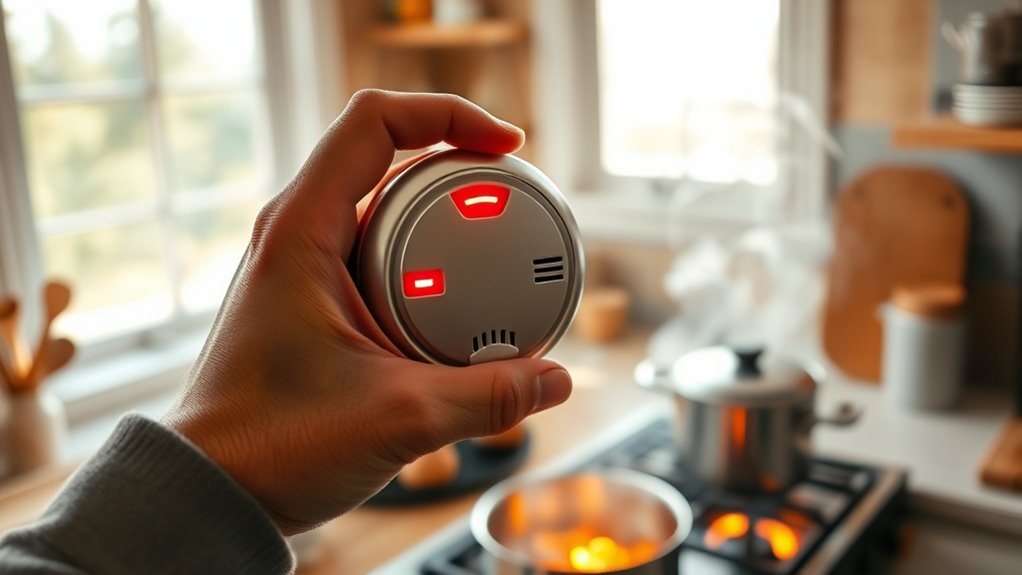
If you notice a strong or persistent burning smell, it’s time to contemplate calling in the professionals. Recognizing serious hazards, like smoke or electrical issues, can prevent dangerous situations. Don’t hesitate to seek help when you’re unsure — your safety comes first. Additionally, understanding proper electrical safety can help you identify potential problems early before they escalate.
Recognizing Serious Hazards
Recognizing when a burning smell indicates a serious hazard is essential for your safety. If you notice a persistent or strong burning odor, it could signal an electrical problem, overheated components, or even an active fire risk. Ignoring these signs jeopardizes fire safety and can lead to dangerous situations. Call in professionals immediately if the smell is coming from appliances, wiring, or if it’s accompanied by smoke or sparks. Proper hazard prevention involves acting quickly to identify potential threats before they escalate. Trust your instincts—if something feels off or unsafe, don’t wait. Addressing serious hazards promptly helps protect your home and loved ones, reducing the risk of fire or injury. Recognizing these warning signs is a crucial step in maintaining a safe environment. Additionally, understanding the role of sound design in alerting you to hazards can be an effective part of safety awareness.
Knowing When to Seek Help
Noticing a persistent or strong burning smell should never be ignored, especially if it comes from appliances or wiring. If the smell persists or intensifies, it’s time to seek help. Don’t hesitate to contact emergency services or emergency contacts listed in your safety plan. Knowing when to call in professionals can prevent fires and injuries. Keep a basic first aid kit nearby for minor burns or injuries until help arrives. Use this quick reference to decide when to seek assistance:
| Situation | Action | Contact |
|---|---|---|
| Burning smell from wiring | Turn off power, call an electrician | Emergency contacts, electrician |
| Smoke or sparks observed | Evacuate, call emergency services | Fire department |
| Appliance overheating | Unplug appliance, seek professional help | Technician, emergency contacts |
| Persistent or unexplained smell | Investigate appliances and wiring for hazards | Professional inspection |
Preventive Measures to Avoid Future Burning Smells
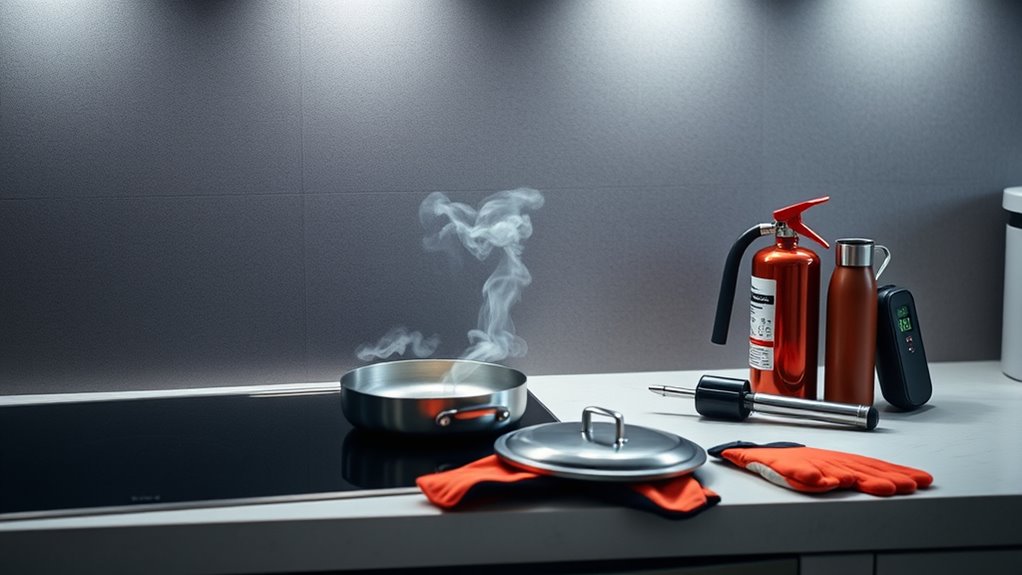
To prevent future burning smells, you should establish regular maintenance routines for your appliances and cooking areas. Clean stovetops, filters, and vents frequently to remove grease and debris that can cause smoke. Proper home insulation helps prevent heat buildup, reducing the risk of burning smells from overheating appliances. Also, ensure good mold prevention practices, as mold can contribute to unusual odors when combined with heat. Regularly check for worn-out wiring or damaged cords to avoid electrical fires. Keep an eye on oven and stove temperatures to prevent overheating. Schedule professional inspections annually to catch issues early. Incorporating these steps helps you avoid future burning smells and keeps your home safe and comfortable. Additionally, examining kitchen appliance components can help identify potential electrical or mechanical issues before they become hazards.
Frequently Asked Questions
Can Burning Smells Indicate Hidden Mold or Chemical Reactions?
Burning smells can indicate hidden mold or chemical reactions, especially if they’re persistent or accompanied by other symptoms. You should also watch for signs of electrical fires, like burning odors near outlets or switches, which pose serious risks. Hidden mold releases musty, smoky scents that worsen in damp areas. If you notice these smells, it’s best to inspect your space promptly and consider professional help to identify and eliminate underlying issues safely.
How Do Seasonal Changes Influence Burning Odor Occurrences Indoors?
Seasonal changes can markedly influence burning odors indoors due to seasonal airflow and temperature fluctuations. You might notice stronger smells during colder months when heating systems run more frequently, causing dust or debris to burn off. In warmer seasons, increased ventilation can spread odors more widely. These fluctuations also affect how indoor air circulates, making it essential to check heating and cooling systems regularly to identify and address the source of burning smells.
Are Certain Household Materials More Prone to Emitting Burning Odors?
Certain household materials are more prone to emitting burning odors because of their odor susceptibility. Items like electrical wiring, plastic containers, and synthetic fabrics tend to heat up or burn more easily, releasing strong odors. You should regularly inspect and maintain these materials to prevent odor issues. Using natural or heat-resistant materials can also reduce the risk of burning smells, keeping your indoor air fresh and safe.
Can Pets’ Behaviors Reveal Underlying Burning Smell Issues?
Pet behaviors can definitely reveal underlying burning smell issues. When you notice your pet pawing, sniffing, or avoiding specific areas, it’s signaling that something’s amiss. These odor signals often stem from airborne pollutants or hidden hazards, prompting pets to act anxiously or oddly. By paying close attention to their reactions and routines, you can detect subtle signs of burning smells, helping you address problems promptly and keep your home safe.
What Are the Long-Term Health Effects of Repeated Exposure to Burning Odors?
Repeated exposure to burning odors can lead to serious long-term health effects. You might experience increased respiratory risks, such as asthma or chronic bronchitis, and neurological impacts like headaches or memory issues. Over time, inhaling these fumes damages your lungs and nervous system. To protect your health, avoid prolonged exposure, improve ventilation, and seek medical advice if symptoms persist. Staying cautious now prevents more severe problems later.
Conclusion
So, next time your home smells like a bonfire gone wrong, remember: ignoring it might turn your cozy space into a smoky disaster zone. Don’t wait for sparks to fly—literally. Take action, investigate those odors, and call in the pros before your house turns into a burn unit. Because, honestly, who doesn’t want to live in a fresh-smelling paradise—minus the fire hazards and smoky surprises? Stay safe, stay smart, and keep that smell where it belongs—away!