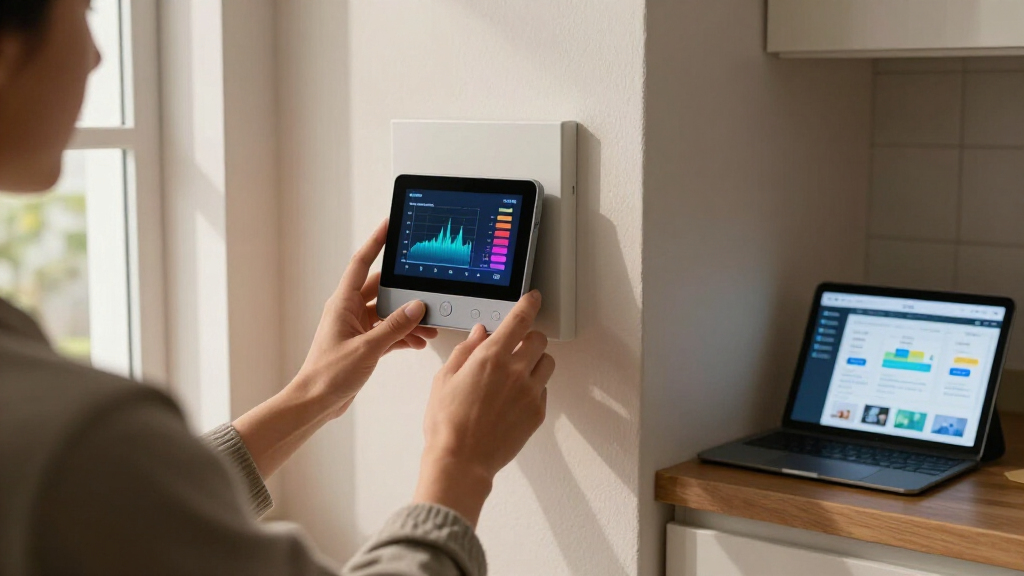

Smart home energy monitors clamp onto your electrical panel and show exactly where every kilowatt-hour goes, in real time and per circuit. After comparing 13 leading models, the Emporia Vue 3 stands out as the best overall pick for its combination of accurate real-time tracking, a polished app, and flexible solar net metering support. The Refoss with Open API and no-cloud operation is the strongest choice for Home Assistant users who refuse to depend on a manufacturer’s servers, while the SIEMENS Inhab justifies its premium price with professional-grade circuit sensors. The main tradeoff in this category is between whole-home simplicity and circuit-level detail: two-CT monitors are cheap and easy, while 16-sensor systems reveal which appliance is actually driving your bill. Cloud dependence versus local control is the second big fork in the road. Read on for the full breakdown of all 13 monitors.

Get home appliances delivered free with Prime
- Fast, free delivery on millions of items
- Prime Video, Amazon Music and more included
- Member-only deals all year
Complete the kit


Key Takeaways
- Circuit-level monitoring is the single biggest value divider: models with 16 sensors (Refoss, Emporia bundle, and both 50A clones) pinpoint appliance-level waste, while 2-CT units like the Eyedro only give whole-home totals unless you sacrifice main-line accuracy.
- Local control support separates the power users from everyone else — only the Refoss Open API model and the two Home Assistant-compatible monitors work fully without cloud dependency, which matters if a company shuts down its servers.
- The Emporia Vue 3 appears three times in this lineup under different SKUs, and the differences matter: the bundled version with 16 sensors and 4 smart plugs delivers far more actionable data than the base real-time usage unit.
- Solar net metering is not universal — only the EdgeAnt 3-clamp monitor and the Emporia Vue 3 properly track bidirectional flow, so solar owners can’t just buy the cheapest monitor on the list.
- Several similarly named generic monitors (the two ’16 50A’ units and the ‘WiFi 3 80A’ model) are near-indistinguishable on hardware, so app quality, API access, and firmware update history should drive the choice between them, not price alone.
| Smart Home Energy Monitor with 3 80A Clamps EdgeAnt |  | Best for Solar Homes | Connectivity: Wireless (2.4 GHz Wi-Fi) | Control Method: Mobile app | Sensors: 3 x 80A clamp-on sensors | VIEW LATEST PRICE | See Our Full Breakdown |
| SIEMENS Inhab Smart Home Energy Monitor with Circuit Sensors |  | Best Premium Ecosystem Pick | Main Sensors: 2 x 200A | Circuit Sensors: 16–50A | Certifications: UL Listed, CE marked | VIEW LATEST PRICE | See Our Full Breakdown |
| Eyedro Smart Home Energy Monitor 200A WiFi/Ethernet |  | Best Wired Reliability | Sensors: Two 200A current sensors | Connectivity: WiFi 2.4 GHz, Ethernet | Power Source: AC adapter | VIEW LATEST PRICE | See Our Full Breakdown |
| WiFi Home Energy Monitor with 3 80A CT Clamps, Circuit-Level Monitoring, Smart App Control |  | Best for Appliance Automation | Input Voltage: 100–240V AC | CT Clamps: 3 x 80A | App Compatibility: Smart Life, Tuya | VIEW LATEST PRICE | See Our Full Breakdown |
| Emporia Vue 3 Home Energy Monitor |  | Best Overall | Certification: UL Listed | Sensors: Sixteen 50A branch sensors | Supported Systems: Single phase, split phase, 2-wire, 3-wire, 3-phase, 4-wire Wye | VIEW LATEST PRICE | See Our Full Breakdown |
| Emporia Vue 3 Home Energy Monitor |  | Best for Beginners | Certification: UL Listed | Supported Systems: Single phase, split phase, 2/3-wire, 3-phase, 4-wire Wye | Sensor Type: Clamp-on CT sensors | VIEW LATEST PRICE | See Our Full Breakdown |
| Smart Home Energy Monitor with 2 200A Circuit Sensors (SEM-Meter) |  | Best Privacy Pick | Installation: Circuit panel with clamp-on sensors | Supported Systems: Single-phase to 240VAC, split-phase 120/240VAC, three-phase to 415Y/240VAC | Sensors: 2 included (200A), expandable to 10 | VIEW LATEST PRICE | See Our Full Breakdown |
| Smart Home Energy Monitor with 16 50A Circuit Sensors |  | Best for Landlords and Shared Homes | Number of Sensors: 16 (50A each) | Supported Voltages: 120/240VAC, 415Y/240VAC (no Delta) | Connectivity: Wi-Fi 2.4GHz, MQTT LAN-only mode | VIEW LATEST PRICE | See Our Full Breakdown |
| Emporia Energy Monitor with 16 Sensors and 4 Smart Plugs Bundle |  | Best Complete Ecosystem | Sensors: 16 circuit sensors | Smart Plugs: 4 Wi-Fi smart plugs included | Compatibility: iOS, Android, Alexa | VIEW LATEST PRICE | See Our Full Breakdown |
| Refoss Smart Home Energy Monitor with 16 60A Circuit Sensors |  | Best Premium Pick | Circuits Monitored: 18 | Branch Sensor Capacity: Up to 60A per branch | Main Sensor Capacity: Up to 200A | VIEW LATEST PRICE | See Our Full Breakdown |
| Meross Smart Home Energy Monitor, Real-Time Power & Cost Tracking |  | Best for Solar Homes | Certification: ETL, UL 61010 | Max Main Circuits: 200A | Branch Circuits: 16 circuits up to 60A | VIEW LATEST PRICE | See Our Full Breakdown |
| Smart Home Energy Monitor with 16 50A Circuit Sensors, Real-Time Power Usage & Electricity Cost Tracking |  | Best Value Multi-Circuit Kit | Manufacturer: Fusion Energy | Branch Sensors: 16 x 50A circuit sensors | Main Sensors: 2 x 200A circuit sensors | VIEW LATEST PRICE | See Our Full Breakdown |
| Refoss Smart Home Energy Monitor with Open API, Home Assistant, No Cloud |  | Best for Home Automation Power Users | Model: EM16P | Main Circuits: 2 circuits, 2–200A each | Branch Circuits: 16 circuits, 1–60A each | VIEW LATEST PRICE | See Our Full Breakdown |
| smart home energy monitor | Connectivity | Dimensions | Warranty |
|---|---|---|---|
| Smart Home Energy Monitor with | Wireless (2.4 GHz Wi-Fi) | 2.3 x 3.5 x 3.69 inches | Amazon 30-day return guarantee |
| SIEMENS Inhab Smart Home Energ | — | — | — |
| Eyedro Smart Home Energy Monit | WiFi 2.4 GHz, Ethernet | 8 x 8 x 3 inches | — |
| WiFi Home Energy Monitor with | WiFi 2.4 GHz | — | — |
| Emporia Vue 3 Home Energy Moni | 2.4 GHz WiFi | — | 1 year |
| Emporia Vue 3 Home Energy Moni | 2.4 GHz Wi-Fi | — | 1 year |
| Smart Home Energy Monitor with | Wi-Fi 2.4GHz, LAN, MQTT | 3.1 x 1.2 x 4.2 inches | 1 year |
| Smart Home Energy Monitor with | Wi-Fi 2.4GHz, MQTT LAN-only mode | 3.1 x 1.2 x 4.18 inches | 1 year |
| Emporia Energy Monitor with 16 | Wi-Fi | — | — |
| Refoss Smart Home Energy Monit | Wi-Fi with external high-gain antenna | — | 2 years |
| Meross Smart Home Energy Monit | WiFi, Open API, Web Control | 4.5 x 3.48 x 1.1 inches | 2 years |
| Smart Home Energy Monitor with | Dual-band WiFi and wired connection | 5.75 x 2.95 x 1.1 inches | — |
| Refoss Smart Home Energy Monit | WiFi, local network only — no cloud | 4.5 x 3.5 x 1.1 inches | — |
More Details on Our Top Picks
Smart Home Energy Monitor with 3 80A Clamps EdgeAnt
For homeowners with rooftop solar, bidirectional measurement is the difference between a monitor that guesses and one that tells the truth, and that’s where this EdgeAnt unit earns its spot. It measures flow in both directions, so solar net metering data — what you produce versus what you pull from the grid — appears alongside consumption in one app. Compared with the Eyedro, which needs a second device to do net metering properly, EdgeAnt handles it out of the box with professional-grade ±2% accuracy. The tradeoff is coverage: with only three 80A clamps, it monitors key circuits rather than the whole panel like the Emporia Vue 3 does with its sixteen sensors. It’s also picky about network and wiring — 2.4 GHz Wi-Fi only, and Delta electrical systems are off the table.
Pros:- Bidirectional measurement for solar net metering without extra hardware
- Professional-grade ±2% accuracy on voltage, current, and power factor
- Real-time tracking with detailed historical data export
- Simple clamp-on sensor installation
Cons:- Only three 80A clamps — not whole-home coverage
- Requires 2.4 GHz Wi-Fi and excludes Delta electrical systems
Best for: Solar homeowners who want production and consumption tracked in one app without buying extra hardware
Not ideal for: Buyers who want whole-panel circuit-level visibility — three clamps only cover a handful of circuits
- Connectivity:Wireless (2.4 GHz Wi-Fi)
- Control Method:Mobile app
- Sensors:3 x 80A clamp-on sensors
- Accuracy:±2%
- Solar Support:Bidirectional measurement, net metering
- Dimensions:2.3 x 3.5 x 3.69 inches
- Warranty:Amazon 30-day return guarantee
Our verdict“The right pick if solar monitoring is the priority; skip it if you want every circuit in the panel tracked.”
SIEMENS Inhab Smart Home Energy Monitor with Circuit Sensors
Siemens brings industrial credibility to this category, and the Inhab reflects it: UL Listed and CE marked, with main sensors rated to 200A and circuit sensors from 16–50A. What sets it apart from value options like the Emporia Vue 3 is the personalized alert system — it flags abnormal activity, not just high usage, which translates to earlier warnings about failing appliances or unusual draws. The catch is friction: it’s built for installation inside the electrical panel, and unlike clamp-and-go units like the EdgeAnt, most buyers will want an electrician for installation. It’s also limited to the USA and Canada, and pricing tends to sit above budget monitors, so the value proposition depends on how much you value the Siemens brand and its safety certifications.
Pros:- UL Listed and CE marked safety certifications
- Anomaly alerts catch abnormal activity, not just high usage
- Monitors both mains (up to 200A) and individual circuits (16–50A)
- Backed by Siemens, a major electrical equipment manufacturer
Cons:- Panel installation typically requires professional help
- Limited to USA and Canada; generally pricier than budget rivals
Best for: Buyers who prioritize certified safety hardware and intelligent anomaly alerts over lowest price
Not ideal for: DIYers on a budget — panel installation and premium pricing make cheaper monitors like the Vue 3 more practical
- Main Sensors:2 x 200A
- Circuit Sensors:16–50A
- Certifications:UL Listed, CE marked
- Compatibility:USA and Canada
- Installation:Inside electrical panel
- App Features:Real-time tracking, personalized and abnormal-activity alerts
Our verdict“A safety-first choice for buyers willing to pay more and hire an electrician for smarter alerts and certified hardware.”
Eyedro Smart Home Energy Monitor 200A WiFi/Ethernet
Most monitors in this roundup are Wi-Fi-only, which makes the Eyedro’s Ethernet option a genuine differentiator — a hardwired connection means no dropped data when your router hiccups, which matters if you’re tracking usage against utility bills. With two 200A sensors, it covers whole-home consumption and solar production, similar in scope to the Emporia Vue 3’s mains monitoring. But the details sting: proper net metering requires a second device, something the EdgeAnt handles natively with its bidirectional measurement. Customer feedback is also mixed, with some users finding setup more complicated than the plug-and-play experience promised. If your router lives near the panel and you value a stable wired feed over granular per-circuit data, this remains a sensible choice — but read the fine print on solar before buying.
Pros:- Ethernet plus WiFi connectivity for a stable, reliable data feed
- Two 200A sensors for true whole-home monitoring
- Supports solar, grid, and net metering applications
- Ships with sensors, cables, and power adapter included
Cons:- Net metering setup requires purchasing a second device
- Mixed customer satisfaction and a steeper setup process than rivals
Best for: Homeowners who want a stable Ethernet-connected whole-home feed and have the router near the electrical panel
Not ideal for: Solar users wanting turnkey net metering — a second Eyedro device is required to do it properly
- Sensors:Two 200A current sensors
- Connectivity:WiFi 2.4 GHz, Ethernet
- Power Source:AC adapter
- Compatibility:North American standards; solar, grid, net metering
- Weight:1.54 pounds
- Dimensions:8 x 8 x 3 inches
- Included:Sensor module, 2 sensors, Ethernet cable, power adapter, quick start guide
Our verdict“A good fit for wired-network homes that prioritize connection stability; solar net-metering buyers should look at the EdgeAnt instead.”
WiFi Home Energy Monitor with 3 80A CT Clamps, Circuit-Level Monitoring, Smart App Control
Most monitors here only watch — this one acts. Beyond tracking up to three circuits via the Smart Life / Tuya app, it adds a 15A relay for remote control and an external temperature sensor with alerts, which means you can monitor a water heater, see its temperature, and switch it off from your phone. Neither the Emporia Vue 3 nor the Eyedro offers that control layer. The tradeoff is scope and effort: installation involves real wiring, so professional help is recommended, and the fixed 50°C alert threshold limits how useful the temperature warnings are for HVAC work. Compared with the EdgeAnt — also a 3-clamp, 80A design — this unit trades solar bidirectional measurement for automation, which is the deciding question between them.
Pros:- Built-in 15A relay for remote on/off control, not just monitoring
- Works with the widely used Smart Life / Tuya ecosystem
- Temperature monitoring with alerts alongside energy data
- Historical usage trends for tracked circuits
Cons:- Installation involves electrical wiring and usually a professional
- Temperature alert threshold fixed at 50°C
- Limited to three circuits rather than whole-home monitoring
Best for: Tuya smart-home users who want to monitor and remotely control specific heavy appliances like water heaters or HVAC circuits
Not ideal for: Whole-home visibility seekers — three circuits can’t cover a full panel, and wiring needs a professional
- Input Voltage:100–240V AC
- CT Clamps:3 x 80A
- App Compatibility:Smart Life, Tuya
- Connectivity:WiFi 2.4 GHz
- Temperature Monitoring:Yes, external sensor
- Max Relay Current:15A
Our verdict“The pick for appliance-level monitoring plus control; choose the EdgeAnt if solar data matters more than remote switching.”
Emporia Vue 3 Home Energy Monitor
This earns the top spot because it solves the coverage problem most rivals create. With sixteen 50A branch sensors plus mains monitoring, it maps nearly the whole panel — the EdgeAnt and the Tuya monitor cover just three circuits each. It’s UL Listed, like the Siemens Inhab, but at a friendlier price and with broader electrical-system support, spanning single-phase through 3-phase 4-wire Wye setups. Solar and net metering are supported natively, which the Eyedro can’t claim without a second device. The compromises are real but manageable: 1-minute resolution data is kept only seven days (hourly data is retained indefinitely), a 3-phase system with earthed neutral needs an extra sensor, and everything depends on a 2.4 GHz Wi-Fi connection staying up.
Pros:- Sixteen 50A branch sensors for near whole-panel coverage
- UL Listed with broad support for single-phase and 3-phase systems
- Native solar and net metering support
- Remote energy management and automation via app
Cons:- 1-minute data retained for only 7 days
- Extra sensor required for 3-phase systems with earthed neutral
- Dependent on 2.4 GHz WiFi for real-time data
Best for: Homeowners who want near whole-panel circuit-level insight, solar tracking, and certified hardware at a mid-range price
Not ideal for: Data analysts who need long-term minute-level history — 1-minute data is kept for only 7 days
- Certification:UL Listed
- Sensors:Sixteen 50A branch sensors
- Supported Systems:Single phase, split phase, 2-wire, 3-wire, 3-phase, 4-wire Wye
- Connectivity:2.4 GHz WiFi
- Data Retention:7 days (1-minute data), indefinite (hourly data)
- Solar Support:Yes, including net metering
- Warranty:1 year
Our verdict“The most complete package for most homes — broad circuit coverage, solar support, and safety certification at a fair price.”
Emporia Vue 3 Home Energy Monitor
For buyers who want whole-home energy data without touching a smart home hub, the Emporia Vue 3 is the friendliest entry point in this lineup. The UL certification is a genuine differentiator — several rival monitors here carry only ETL or no listing at all — and its polished app requires zero technical setup beyond Wi-Fi pairing. Compared with the SEM-Meter monitor (B0H7N13HQ8), which leans on MQTT and assumes comfort with Home Assistant, the Vue 3 works out of the box for anyone with a smartphone. Solar and net metering support is included at no extra cost. The tradeoff is data ownership: minute-level history only lasts 7 days in the cloud, and second-by-second data disappears once you close the app, so long-term analysis is weaker than the Refoss’s 5-year local storage.
Pros:- UL Listed for safety, a step above most monitors in this price range
- Works across nearly every residential electrical system, including 3-phase
- Dead-simple app setup with no smart home platform required
- Built-in solar and net metering support at no added cost
Cons:- Cloud-dependent: 1-second data only logs while the app is open, minute data vanishes after 7 days
- 3-phase systems with neutral require an extra sensor purchase
- No local control option for users avoiding cloud services
Best for: Homeowners who want simple, app-based whole-home monitoring with no hub, coding, or subscriptions
Not ideal for: Data hoarders and privacy-focused users — cloud dependency means limited retention and no LAN-only mode
- Certification:UL Listed
- Supported Systems:Single phase, split phase, 2/3-wire, 3-phase, 4-wire Wye
- Sensor Type:Clamp-on CT sensors
- Connectivity:2.4 GHz Wi-Fi
- Data Retention:Minute data 7 days, hourly data indefinite
- Warranty:1 year
Our verdict“Buy the Vue 3 if you want reliable whole-home monitoring the same afternoon you install it; skip it if long-term data history or offline operation matters to you.”
Smart Home Energy Monitor with 2 200A Circuit Sensors (SEM-Meter)
This monitor’s defining feature is LAN-only operation — it can run entirely without cloud or app access, pushing data over MQTT to whatever system you trust. That makes it the natural choice over the Emporia Vue 3 for anyone uneasy about their energy usage living on someone else’s servers. Compared with the 16-sensor version (B0D6VZQBPF), this two-clamp model focuses on whole-home totals rather than circuit-level detail, and both clamps handle a robust 200A, so it covers the mains of most North American homes. Within 1% accuracy is a strong claim at this price. The catch: setup assumes you know what MQTT is. If phrases like ‘broker configuration’ mean nothing to you, the Vue 3’s guided app will serve you better.
Pros:- True privacy mode with LAN-only operation, no cloud required
- Rated within 1% accuracy, stronger precision than most budget monitors
- Expandable from 2 to 10 sensors for adding appliance-level tracking later
- Handles solar and net metering across single, split, and three-phase systems
Cons:- Setup demands technical familiarity with MQTT and network configuration
- 2.4GHz Wi-Fi only, with no Ethernet fallback unlike the Eyedro
- Sparse documentation and minimal vendor-provided interface
Best for: Home Assistant users and privacy-minded homeowners who want accurate whole-home data kept entirely local
Not ideal for: Non-technical buyers expecting a plug-and-play app experience — configuration requires real networking knowledge
- Installation:Circuit panel with clamp-on sensors
- Supported Systems:Single-phase to 240VAC, split-phase 120/240VAC, three-phase to 415Y/240VAC
- Sensors:2 included (200A), expandable to 10
- Connectivity:Wi-Fi 2.4GHz, LAN, MQTT
- Accuracy:Within 1%
- Dimensions:3.1 x 1.2 x 4.2 inches
- Warranty:1 year
Our verdict“This is the pick for tinkerers who want their energy data to never leave the house; everyone else should look at the app-first Emporia options.”
Smart Home Energy Monitor with 16 50A Circuit Sensors
Where the SEM-Meter (B0H7N13HQ8) watches the whole house, this model spreads 16 individual 50A sensors across individual circuits — the difference between knowing your monthly total and knowing which tenant, floor, or appliance is driving it. That circuit-level granularity is why it stands out for rental properties and shared apartments: you can attribute costs per room or per heavy appliance instead of guessing. Real-time cost tracking in the app turns raw watts into dollar figures, and MQTT LAN mode keeps data private like its two-sensor sibling. The compromise is capacity — 50A per branch sensor rules out clamping the mains (the 2-sensor model handles that job), and Home Assistant familiarity is basically a prerequisite. It also can’t monitor Delta electrical configurations.
Pros:- 16 circuit-level sensors isolate exactly where electricity is being consumed
- Real-time cost tracking converts usage into dollars per circuit
- MQTT LAN-only mode preserves privacy without cloud dependency
- Works with Home Assistant, Android, and Apple ecosystems
Cons:- 50A branch sensors cannot monitor main service lines
- Setup requires MQTT or Home Assistant knowledge
- No Delta electrical system support
Best for: Landlords, property managers, and roommates who need to split or attribute energy costs by circuit
Not ideal for: Homeowners who only need whole-home totals — 16 sensors is overkill and adds install complexity
- Number of Sensors:16 (50A each)
- Supported Voltages:120/240VAC, 415Y/240VAC (no Delta)
- Connectivity:Wi-Fi 2.4GHz, MQTT LAN-only mode
- Compatibility:Home Assistant, Android, Apple
- Dimensions:3.1 x 1.2 x 4.18 inches
- Weight:4.09 pounds
- Warranty:1 year
Our verdict“If you need to know who or what is consuming power — not just how much — this circuit-level monitor earns its place; casual whole-home users should buy the two-clamp version instead.”
Emporia Energy Monitor with 16 Sensors and 4 Smart Plugs Bundle
This bundle pairs Emporia’s 16-sensor monitor with four smart plugs, closing the loop that other products here leave open. Monitoring tells you the water heater is costing $40 a month; the plugs let you schedule and automate it from the same app. Compared with the 16-sensor SEM-Meter (B0D6VZQBPF), which stops at data collection, this kit actually acts on what it learns — and unlike that model, it does so through a friendly app with Alexa support and no MQTT wrangling. Solar net metering support makes it viable for households with panels. The honest drawback: you’re buying deeper into Emporia’s cloud ecosystem, not away from it. Buyers who prioritized the SEM-Meter for its local-only mode won’t find that option here, and newcomers may find pairing 16 sensors plus 4 plugs a lengthy initial setup.
Pros:- 16 sensors deliver circuit-level insight across the whole home
- Four included smart plugs enable remote control and automated schedules
- Solar net metering support built in
- Works with iOS, Android, and Alexa for voice-based management
Cons:- Fully cloud-dependent with no local-only operation mode
- Initial setup of 16 sensors plus 4 plugs can overwhelm smart home newcomers
- Requires reliable Wi-Fi for both monitoring and plug control
Best for: Homeowners who want monitoring and device control in one system, especially those planning schedules and automations to cut bills
Not ideal for: Privacy-first users and Home Assistant enthusiasts — the closed cloud ecosystem conflicts with local-control preferences
- Sensors:16 circuit sensors
- Smart Plugs:4 Wi-Fi smart plugs included
- Compatibility:iOS, Android, Alexa
- Solar Net Metering:Supported
- Connectivity:Wi-Fi
- App:Emporia app with scheduling and automation
Our verdict“This is the best value if you want to act on your energy data, not just read it — as long as a cloud-based ecosystem doesn’t bother you.”
Refoss Smart Home Energy Monitor with 16 60A Circuit Sensors
The Refoss sits at the top of this lineup on hardware alone: 18 monitored circuits, 60A branch sensors with 200A main clamps, and a rare 5-year local data storage horizon. That last spec is the real differentiator — the Emporia Vue 3 keeps minute-level data for a week in the cloud, while Refoss holds years of history on your own network, accessible through a web UI and open API. Solar optimization and appliance fault alerts round out a package aimed at serious energy management. Its two-year warranty doubles the coverage of every Emporia and SEM product here, which signals confidence in the hardware. The flip side of all this capability is complexity: integration expects technical competence, there’s no cloud subscription option for convenient remote access, and panel installation is not a novice task.
Pros:- 18 circuits monitored with 60A branch and 200A main sensor capacity
- 5 years of local data storage beats every cloud-based rival here
- Open API, web UI, and smart home platform integration without any cloud dependency
- 2-year warranty and ETL certification
Cons:- Technical knowledge required for installation and platform integration
- No cloud subscription option limits convenient remote access
- Higher cost and complexity than simpler app-first alternatives
Best for: Data-driven homeowners and smart home enthusiasts who want years of local history, API access, and maximum circuit coverage
Not ideal for: Casual users wanting simple remote check-ins from anywhere — no cloud service means no easy off-network access
- Circuits Monitored:18
- Branch Sensor Capacity:Up to 60A per branch
- Main Sensor Capacity:Up to 200A
- System Compatibility:Single-phase, split-phase, 3-phase 4-wire Wye
- Data Storage:5 years local
- Connectivity:Wi-Fi with external high-gain antenna
- Certification:ETL
- Warranty:2 years
Our verdict“For the serious energy analyst who wants maximum circuits, long-term local data, and open integration, the Refoss justifies its premium — everyone else will be happier with Emporia’s simpler ecosystem.”
Meross Smart Home Energy Monitor, Real-Time Power & Cost Tracking
Of the three monitors in this batch, the Meross Energy Monitor stands out for its solar integration and cost tracking, which the Fusion Energy monitor lacks entirely. If your home has panels on the roof, seeing generation and consumption side by side is what turns raw data into actual savings decisions. Like the Refoss EM16P, it keeps data local — up to five years of storage with no subscription — but Meross pairs that privacy with a friendlier app out of the box, where Refoss leans on Home Assistant for its interface. The tradeoff is real, though: setup lives in the awkward middle ground. It’s more technical than the Fusion clamp-and-go approach, yet less flexible than Refoss’s open API for tinkerers. The app also needs polish, and it only works with US electrical systems.
Pros:- Circuit-level monitoring with solar energy integration in one device
- Five years of local data storage with no cloud subscription
- Broad compatibility across single-phase, split-phase, and 3-phase 4-wire Wye systems
- ETL and UL 61010 safety certification with a 2-year warranty
Cons:- Setup demands technical comfort with electrical panels
- App interface feels dated compared with Emporia’s polished mobile experience
- Locked to US home electrical systems
Best for: US homeowners with solar panels who want generation and consumption tracked together without subscription fees
Not ideal for: Renters or non-US residents — it’s limited to US single-phase and split-phase wiring, and installation requires panel access and some electrical know-how
- Certification:ETL, UL 61010
- Max Main Circuits:200A
- Branch Circuits:16 circuits up to 60A
- Data Storage:Up to 5 years, local
- Connectivity:WiFi, Open API, Web Control
- Compatible Systems:Single-phase 2-wire, split-phase 3-wire, 3-phase 4-wire Wye
- Dimensions:4.5 x 3.48 x 1.1 inches
- Warranty:2 years
Our verdict“Solar homeowners who want local, subscription-free tracking with generation data should pick this over the cloud-dependent alternatives.”
Smart Home Energy Monitor with 16 50A Circuit Sensors, Real-Time Power Usage & Electricity Cost Tracking
This Fusion Energy monitor earns its spot by shipping the most sensor hardware for the money: 16 branch sensors plus 2 200A main sensors in the box. Compare that with the Meross unit, which includes the transformers but expects you to think through circuit allocation yourself, or the Emporia bundles elsewhere in this guide that charge extra for added sensors. Installation is where this kit pulls ahead of both Meross and Refoss — the clamp-on sensors drop into most panels without an electrician-level project. The catch is software. There’s no local API, no MQTT, and no Home Assistant story here, which puts it behind the Refoss EM16P for automation-minded buyers. It also caps out at single-phase and certain three-phase systems, and the instant safety alerts, while genuinely useful, are only as good as a connection you have to keep stable.
Pros:- Most complete sensor bundle in the batch: 16 branch clamps plus 2 main 200A sensors
- Straightforward clamp-on installation in most circuit panels
- Dual-band WiFi and wired connection options for reliable signal
- Instant safety alerts flag abnormal circuit behavior
Cons:- No open API, MQTT, or Home Assistant integration
- Limited to single-phase and certain three-phase electrical systems
- Setup still requires comfort opening your electrical panel
Best for: Budget-conscious homeowners who want full-coverage circuit monitoring hardware without paying premium prices
Not ideal for: Smart home hobbyists running Home Assistant — the lack of open API and local control makes it a dead end compared with Refoss or Meross
- Manufacturer:Fusion Energy
- Branch Sensors:16 x 50A circuit sensors
- Main Sensors:2 x 200A circuit sensors
- Connectivity:Dual-band WiFi and wired connection
- Item Weight:4 pounds
- Dimensions:5.75 x 2.95 x 1.1 inches
- Included Components:SEM-Meter device, sensors, installation hardware
Our verdict“Buyers who want maximum circuit coverage per dollar and don’t care about automation platforms get the best hardware value here.”
Refoss Smart Home Energy Monitor with Open API, Home Assistant, No Cloud
The Refoss EM16P is the clear pick for anyone whose smart home already revolves around Home Assistant. Where the Meross monitor treats local control as a privacy perk, Refoss builds the whole product around it — open API, MQTT, no cloud dependency at all. That means your energy data feeds automations directly: shut off the water heater when solar production dips, or get circuit-level alerts the moment a compressor starts drawing abnormal current. Measurement accuracy of ±1% at 200A beats the typical claims in this category, including the Fusion Energy monitor’s unspecified tolerance. The price of that openness is effort. You’ll spend an evening configuring API access and automations that neither Meross nor Fusion requires, and with no cloud fallback, a local network outage takes your monitoring with it. Skip it if you just want an app with a pretty graph.
Pros:- Full local control with open API and MQTT — zero cloud dependency
- Seamless Home Assistant integration supporting AI-driven automation
- High ±1% measurement accuracy at 200A with long-term data storage
- Circuit-level safety alerts and certified clamp-on installation
Cons:- API and automation setup requires genuine technical skill
- No cloud fallback — a local network failure kills monitoring
- Branch circuits capped at 60A, limiting use on heavy-dedicated circuits
Best for: Home Assistant users and automation hobbyists who want raw MQTT/API access to energy data for custom rules
Not ideal for: Casual users who want a plug-in-and-scroll app experience — the local-only architecture and API setup demand real technical effort
- Model:EM16P
- Main Circuits:2 circuits, 2–200A each
- Branch Circuits:16 circuits, 1–60A each
- Accuracy:±1% (200A), ±2% (low current)
- Connectivity:WiFi, local network only — no cloud
- Protocols:Open API, MQTT, Home Assistant
- Weight:4.24 pounds
- Dimensions:4.5 x 3.5 x 1.1 inches
Our verdict“This is the monitor for tinkerers who want energy data wired directly into their automations — everyone else should choose a simpler option.”
How We Picked
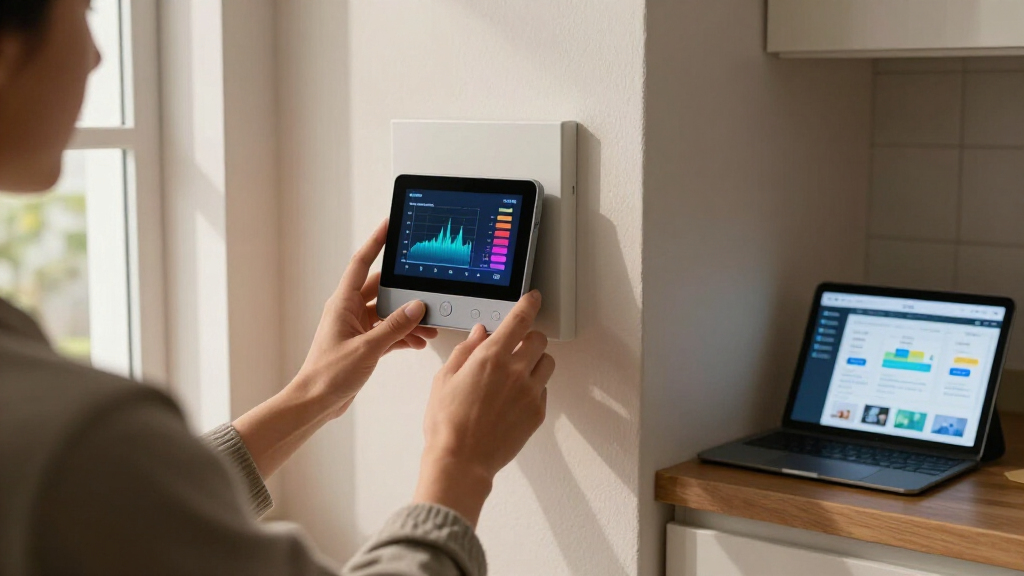
I evaluated these 13 monitors against the criteria that actually change a buying decision: measurement accuracy (CT clamp quality, sampling rate, and whether main-line monitoring sacrifices accuracy when clamps are redistributed to branch circuits), granularity (whole-home versus 8 or 16 circuit channels), software ecosystem (app reliability, history retention, cost tracking, and local API or Home Assistant compatibility), and installation complexity, since most of these require opening the electrical panel and may need an electrician.
Ranking also reflected durability of the ecosystem: a monitor is a long-term investment, so manufacturers with a track record of firmware updates and open APIs ranked above no-name units with near-identical hardware. Value was judged per channel of monitoring rather than by sticker price alone — a $150 unit with 16 reliable sensors often beats a $100 unit with 2. Finally, I weighted special-use fit: solar net metering, no-cloud operation, and smart plug integration each earned specific picks rather than being treated as generic bonuses.
Factors to Consider When Choosing Smart Home Energy Monitors
Before choosing a monitor, it helps to understand what actually separates a useful one from a gadget that gets checked twice and forgotten. These are the factors that shaped my rankings — and the mistakes buyers make most often.Whole-Home vs. Circuit-Level Monitoring
The most common mistake is buying a two-clamp monitor expecting appliance-level insight. Two CTs on your mains tell you total consumption — useful for spotting trends, useless for finding the culprit behind a spike. To know that your garage fridge or home office is the problem, you need branch-circuit sensors, which typically means a 16-channel unit or a bundle that reallocates clamps. The catch is that some monitors require you to remove main-line clamps to monitor circuits, forcing a tradeoff between the big picture and the detail. Check whether the unit monitors both simultaneously — the Emporia and Refoss 16-sensor models do, which is why they rank highly. A reasonable strategy: start with circuit-level hardware even if you only install mains first, because you can add sensors later without replacing the whole unit.
Cloud Dependence and Local Control
Most monitors in this price range route data through the manufacturer’s cloud, which means your historical data lives on someone else’s server and disappears if that company folds or ends support. This has happened before in this category, and it bricks the monitoring experience entirely. If you run Home Assistant or value data ownership, prioritize units with a local API or documented offline mode — the Refoss Open API model is built exactly for this. Cloud-based systems do offer advantages: easier setup, remote access from anywhere, and typically better mobile apps. The mistake to avoid is assuming ‘WiFi’ means ‘local’ — many WiFi monitors are cloud-only under the hood. Read the compatibility documentation, not the marketing copy.
Solar and Net Metering Compatibility
Solar owners need bidirectional measurement, and this is where cheap monitors quietly fail. A standard CT setup can’t distinguish power flowing out to the grid from power coming in, so your ‘consumption’ numbers become meaningless on sunny afternoons. Proper solar support requires either dedicated second-direction clamps or software that computes net usage correctly — the EdgeAnt 3-clamp unit and the Emporia Vue 3 handle this explicitly. Another subtlety: even with correct hardware, clamps must be installed with the right orientation on solar feed lines, which often means hiring an electrician familiar with the specific monitor. If solar is in your future, buy compatible hardware now; retrofitting means replacing the device, not just adding sensors.
Installation Requirements and Electrical Safety
Every monitor in this roundup attaches to your electrical panel, and in most jurisdictions that means working near live bus bars — something many homeowners underestimate. Some units, like the SIEMENS Inhab, are designed around professional installation, while clamp-style monitors like the Eyedro and Emporia are more DIY-friendly but still carry real risk if the main breaker can’t fully de-energize the panel. Budget $100–$250 for an electrician if you’re not completely comfortable; this often exceeds the monitor’s own price. Also check panel space: 16-channel installations need room for sensor wiring and the monitoring unit itself, and cramped or older panels may not accommodate them cleanly. The physical clamp size matters too — 200A mains on some panels need larger aperture CTs than standard kits include.
App Quality, History, and Cost Tracking
The hardware is only half the product — the software determines whether you actually change your energy habits. Look for apps that retain at least a year of history, let you enter your utility’s real tariff (including time-of-use rates), and push alerts when usage anomalies occur. Several budget monitors in this space have apps that only keep 30 days of data or display consumption without converting it to dollars, which undercuts the whole point of monitoring. Alert thresholds are more valuable than dashboards: a notification that your HVAC ran 40% longer than normal catches problems you’d never spot scrolling graphs. Before buying, check recent app store reviews — a great sensor with a broken app is a bad monitor.
Ecosystem Expansion and Smart Plug Integration
Monitoring is most valuable when it leads to control, and some ecosystems close that loop better than others. The Emporia bundle with four smart plugs is the clearest example: you identify a wasteful device on a monitored circuit, then can schedule or remotely switch it off, all in one app. Refoss and Meross both offer broader smart home catalogs, so a monitor purchase can be the start of a unified ecosystem rather than another standalone app. Open API access multiplies this value for Home Assistant users, turning raw sensor data into automations — like charging an EV only when solar production exceeds household load. The mistake to avoid is buying the cheapest monitor now and discovering it can’t integrate with anything you already own; compatibility lists are short reads that prevent long regrets.
Frequently Asked Questions
Can I install a smart home energy monitor myself, or do I need an electrician?
Technically, most clamp-style monitors are DIY-installable — you attach CT sensors around wires and power the unit from a breaker. The real question is whether your panel can be safely de-energized while you work, and on many panels the main lugs and service wires remain live even with the main breaker off. If you have any doubt, hire an electrician; the typical $100–$250 cost is worth it compared to the risk of contact with a 200A service. Professional-grade units like the SIEMENS Inhab generally assume installer help anyway. One practical middle ground: install the mains clamps yourself if your panel layout allows it, then add branch-circuit sensors later — though on most panels, both jobs carry the same exposure risk.
How many circuit sensors do I actually need?
Count your major loads first: HVAC, water heater, dryer, oven, EV charger, and pool equipment typically account for the majority of household consumption and each deserves its own sensor. In a typical home, 8 sensors cover the essentials, while 16 lets you monitor nearly every meaningful circuit plus the mains. The 50A sensor limit on most 16-channel kits is a genuine constraint, though — high-amperage loads like EV chargers or large HVAC units may exceed it, so verify your circuit ratings before choosing a kit. If your heavy loads are few, a smaller kit plus main-line monitoring delivers most of the insight at lower cost. The mistake to avoid is buying a 2-CT unit because it’s cheaper, then realizing you can’t ever answer ‘which device is costing me money?’
Do these monitors work if the internet goes down or the company shuts down?
It depends entirely on architecture. Cloud-dependent monitors — which includes most budget WiFi units — stop recording meaningful data the moment your internet drops, and if the manufacturer discontinues service, the device becomes e-waste. Locally controlled units like the Refoss Open API model and the Home Assistant-compatible monitors keep logging on your local network regardless of the outside world, and your historical data stays on your hardware. This isn’t paranoia: several energy monitor companies have shut down cloud services in the past decade, leaving customers stranded. If you’re investing in 16 sensors and months of usage history, that data has real value for spotting drift in appliance efficiency. Local-first hardware costs roughly the same, so there’s little reason to accept the risk unless a cloud app offers features you specifically need.
Will an energy monitor actually save me money, and how much?
Honest answer: the monitor itself saves nothing — the actions it enables do. Typical households find one or two surprises, like a failing appliance drawing double its rated power, an always-on home theater setup, or a well pump cycling continuously. Those discoveries commonly translate to $10–$50 per month, which pays back a mid-range monitor within a year. Time-of-use rate households benefit most, since circuit-level data shows exactly which loads to shift to off-peak hours. The savings plateau after the first few months once the obvious waste is fixed, so treat this as a diagnostic and habit tool, not a perpetual income stream. Monitors with smart plug bundles or automation integrations extend the value by letting you act on findings automatically.
Are the generic monitors on marketplaces the same as the brand-name ones?
Often the hardware is nearly identical — several units in this category share the same clamp designs and measurement chips — but the experience diverges in software and support. Brand-name options like Emporia and Refoss maintain active firmware updates, respond to app bugs, and document their APIs; generic sellers frequently ship a monitor with an app that’s never updated and a support email that goes unanswered. That difference matters most a year in, when an OS update breaks the app or you want Home Assistant integration that was never built. The generic units aren’t always bad — some are genuinely fine for basic whole-home tracking — but check recent app reviews and community forums before buying. If local control or long-term reliability matters to you, the small price premium for an established brand is one of the better spends in this category.
Conclusion
For most households, the Emporia Vue 3 is the best overall choice: it balances accurate real-time monitoring, circuit-level expansion, solar support, and an app that’s actually maintained. On pure value, the 16-sensor Emporia bundle with smart plugs (or the comparable Refoss 16-channel unit) delivers the most actionable insight per dollar — the smart plug pairing turns data into control immediately. At the premium end, the SIEMENS Inhab earns its price for buyers who want professional-grade sensors and don’t mind installer costs. Beginners who just want to understand their total consumption without opening a can of worms should start with the Meross or the Eyedro 200A — simple, affordable, and low-commitment.
For specific needs: solar owners should stick to the EdgeAnt 3-clamp or Vue 3 for proper net metering, and Home Assistant power users should go straight to the Refoss Open API no-cloud model or the dedicated Home Assistant-compatible monitors — nothing else in this lineup respects local control as fully. Whichever direction you take, prioritize circuit-level hardware and a supported ecosystem over the lowest sticker price; the monitor you can expand and trust for years beats the one you replace in eighteen months.
Cold & flu season Picks
humidifiers
As an affiliate, we earn on qualifying purchases.