
TL;DR
Hunker reports on conversation-first living rooms, a furniture arrangement that turns seating toward one another rather than centering the room on a television. The approach borrows the intimate feel of a conversation pit without requiring a permanent sunken floor.
Hunker has reported on conversation-first living room design, a furniture-based approach that arranges seating toward other people instead of around a television. The layout aims to create the close, social atmosphere associated with conversation pits, while avoiding the construction and permanence of a sunken floor.

Get home appliances delivered free with Prime
- Fast, free delivery on millions of items
- Prime Video, Amazon Music and more included
- Member-only deals all year
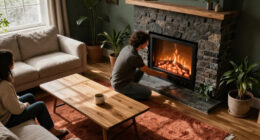
The approach centers on reorienting existing furniture: chairs and sofas face inward, creating a shared area for conversation. Hunker describes the change as one that can be made by rearranging a room, rather than carrying out a renovation. Its report says the design is intended to make socializing easier by turning occupants away from screen-focused arrangements and toward one another.
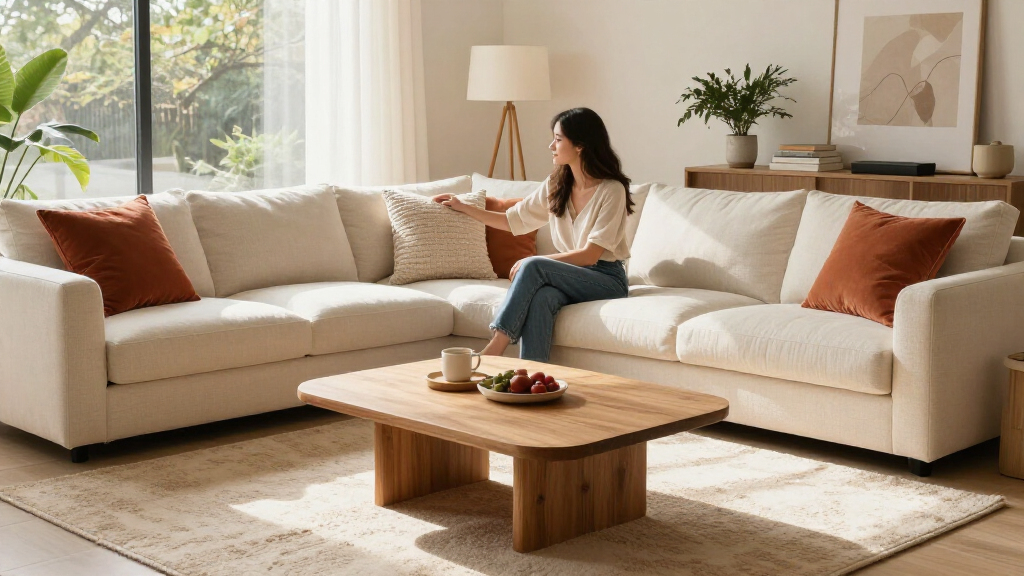
For a practical starting point, the report recommends choosing a central focal point, such as a coffee table or rug, and arranging the seating around it. A table can provide a shared surface for drinks, snacks or games. Armchairs and smaller sofas can be angled into a square or conversational grouping; U-shaped couches and curved sectionals can also create an inward-facing arrangement.
Other pieces, including bookshelves, library tables or a sideboard, can help define the gathering area as a distinct zone. The report presents the plan as flexible: unlike a built-in pit, a furniture arrangement can be adjusted as household needs or room use change. It does not prescribe a particular room size, furniture spacing or layout for every home.
The design offers homeowners and renters a way to test a more people-centered living room without committing to structural work. That matters in rooms already organized around a television: shifting chairs inward can make face-to-face interaction a more natural part of how the space is used, while leaving the arrangement reversible.
There is a practical trade-off. A conversation-focused layout changes the room’s emphasis, but it does not eliminate the need to accommodate watching television, circulation, storage or other household activities. The report’s central point is that the social effect can come from furniture placement rather than a permanent architectural feature. Whether that arrangement suits a particular home depends on its dimensions, furnishings and occupants.
Products Worth Considering

Levoit Core 400S-P Smart Air Purifier for Large Rooms

Levoit Core 600S-P Smart Air Purifier for Large Rooms

Sonos One Two-Room Smart Speaker Set with Alexa, Black
As an affiliate, we earn on qualifying purchases.
From Sunken Pits to Flexible Seating
Conversation pits are sunken living-room seating areas, commonly lined with cushions and arranged around a central table. Hunker says the feature became widely used in the 1950s and has been returning amid interest in living spaces that encourage people to interact. The source frames this as a design trend, not as a measured shift across all homes.
The traditional pit’s defining feature is also a limitation: creating one involves lowering the floor, making it a permanent alteration that can constrain future room layouts. Hunker’s report also notes potential tripping hazards. The conversation-first arrangement borrows the inward-facing seating concept but uses movable furniture, avoiding the need to excavate or rebuild the floor.
“Conversation-first living rooms are all about designing a space that encourages people to connect with one another, rather than focusing everything around a screen.”
— Monika Puccio, furniture expert, in an interview with House Beautiful, as quoted by Hunker
How Well It Fits Each Room
The source does not provide measurements, cost estimates or survey data showing how common conversation-first layouts are or how they affect social interaction. Its claims about coziness and connection describe the design’s aims; the report does not present research demonstrating that every inward-facing arrangement produces those outcomes.
It is also unclear how the layout would work in specific floor plans, especially where a room has limited space or needs to serve several functions. Hunker offers examples of furniture and focal points, but does not set out a standard layout or address accessibility needs in detail. Readers would need to adapt the arrangement to their own room and household.
Try the Layout Before Committing
The report describes no scheduled industry announcement or formal next step. For households interested in the idea, the practical next move is a reversible furniture rearrangement: choose a shared focal point, turn available seating inward and check whether people can move comfortably through the room. The arrangement can then be adjusted to preserve access to screens and other everyday functions.
Because the proposal relies on movable pieces, households can assess how it works through ordinary use before buying new furniture or making structural changes. Hunker’s report does not say whether the trend will continue or how widely homeowners are adopting it; those points remain open.
Key Questions
What is a conversation-first living room?
It is a living-room arrangement in which seating faces inward toward other people, rather than pointing primarily at a television.
Does the design require a sunken floor?
No. The approach uses movable furniture to create a shared seating area, rather than building a traditional sunken conversation pit.
How can someone start arranging the room?
Hunker recommends picking a focal point such as a coffee table or rug, then positioning chairs and sofas around it so people can face one another.
What remains unknown about the trend?
The source provides no data on how widespread the design is or whether it improves social interaction across different households and room layouts.
Source: rss