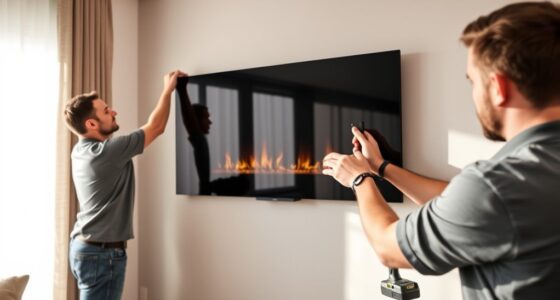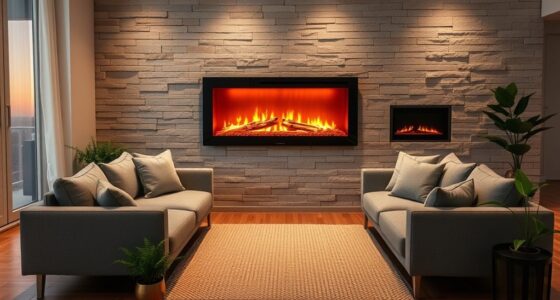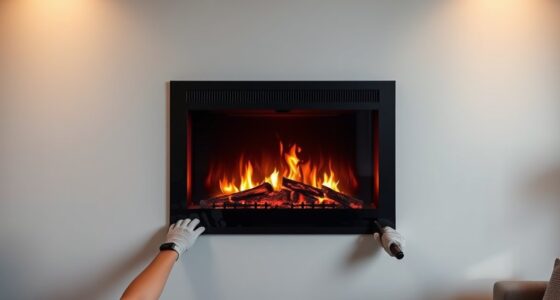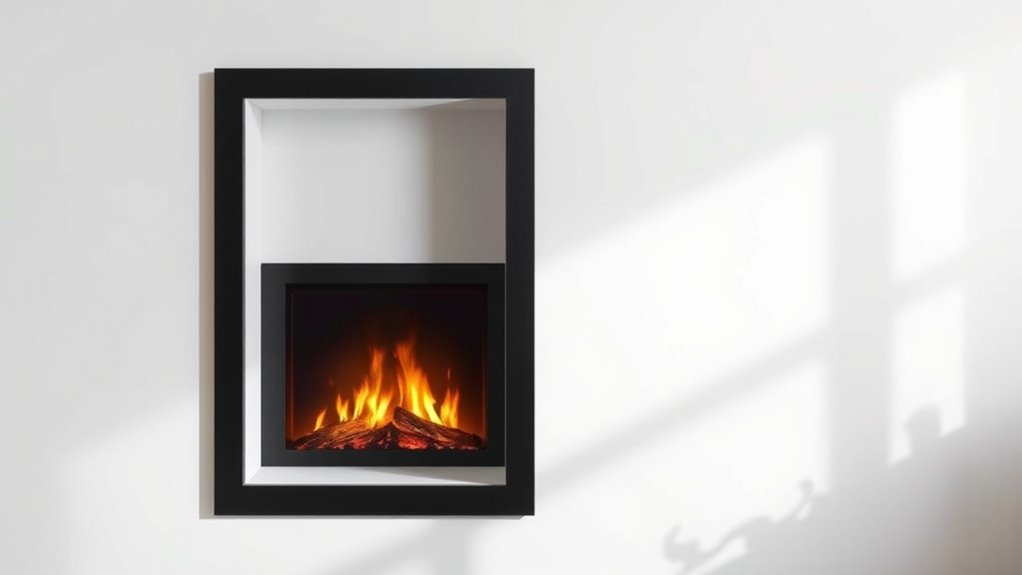
To properly frame your recessed electric fireplace, you need to build a sturdy support structure using durable materials like wood or metal studs, guaranteeing enough space for ventilation and electrical wiring. It must be aligned with the wall surface and maintain clearances from combustibles for safety. Make sure to follow manufacturer instructions and local codes. If you keep exploring, you’ll discover detailed steps to ensure a safe, professional-looking installation.

Get home appliances delivered free with Prime
- Fast, free delivery on millions of items
- Prime Video, Amazon Music and more included
- Member-only deals all year
Key Takeaways
- Use durable materials like wood or metal studs to build a sturdy, properly supported framing structure.
- Follow manufacturer guidelines for framing dimensions, clearances, and ventilation to ensure safety and proper operation.
- Route electrical wiring within the framing securely, complying with local electrical codes and turning off power during installation.
- Maintain adequate clearances from combustible materials and ensure sufficient space for ventilation and airflow around the unit.
- Consult professional installers or electricians and verify compliance with local building codes before framing and installation.
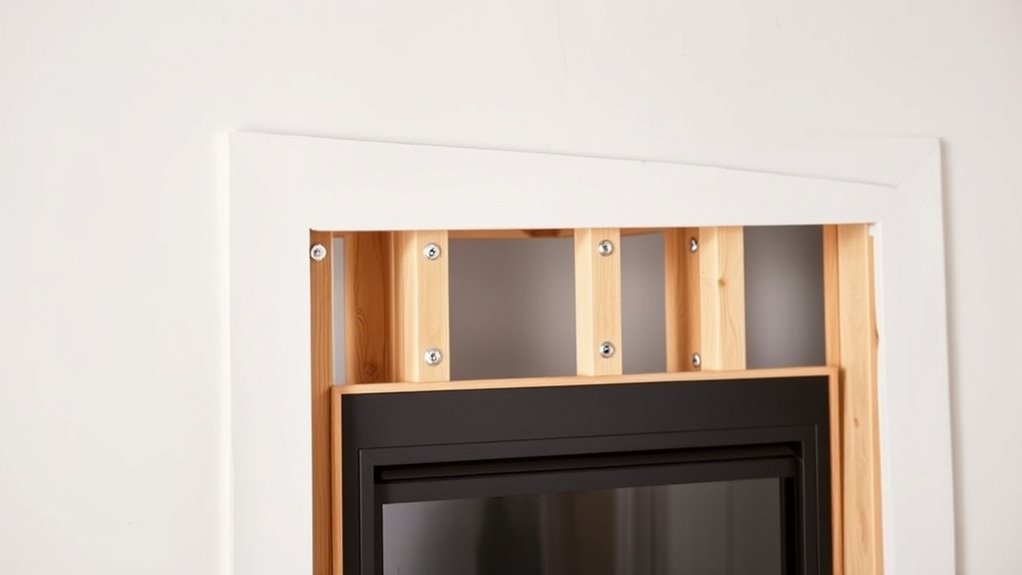
Are you planning to install a recessed electric fireplace? If so, understanding the framing requirements is essential to guarantee a safe and successful setup. Proper framing provides the necessary support, maintains structural integrity, and ensures the fireplace fits seamlessly into your wall. Before beginning, it’s crucial to review the installation guidelines supplied by the manufacturer, as these will specify the exact framing dimensions and materials needed. Following these guidelines helps prevent potential hazards and guarantees that your fireplace operates efficiently.
Start by evaluating your wall’s structure. Most recessed electric fireplaces require framing that is sturdy enough to support the weight and withstand heat exposure. You’ll typically need to build a frame using durable wood or metal studs, depending on your wall type. It’s important to follow the recommended clearances from combustible materials to prevent fire risks. The framing should create a flush surface that aligns with the wall finish, whether drywall, paneling, or other materials. This often involves constructing a box or enclosure that accommodates the fireplace unit, ensuring there’s enough space for proper ventilation and airflow. Additionally, understanding the framing requirements helps ensure your installation is compliant with safety standards and maintains the integrity of your wall structure.
Evaluate your wall’s structure and build a sturdy frame using appropriate studs for a flush, ventilated enclosure.
Safety considerations are paramount during framing. You must guarantee that the electrical wiring is properly routed and that the electrical connections meet local code requirements. It’s advisable to turn off power at the circuit breaker before working on wiring or framing around electrical components. Use fire-resistant or non-combustible materials where necessary, especially near the heating elements. Also, verify that the framing leaves adequate space for the electrical cord or built-in wiring, avoiding pinching or crushing the wiring once the installation is complete. Properly secured framing prevents movement or shifting over time, which could damage the electrical components or compromise safety.
In addition to following installation guidelines, double-check local building codes and regulations. Some areas may have specific requirements for electrical appliances, fire safety clearances, or framing materials. If you’re unsure about any step, consulting a professional electrician or installer can save you time and prevent costly mistakes. Remember that a well-framed installation not only enhances safety but also ensures your electric fireplace functions correctly and looks polished once finished. As long as you prioritize safety considerations and adhere to the manufacturer’s instructions, your recessed electric fireplace will become a beautiful, safe feature in your home.
recessed electric fireplace framing kit
As an affiliate, we earn on qualifying purchases.
As an affiliate, we earn on qualifying purchases.
Frequently Asked Questions
Can I Install a Recessed Electric Fireplace in a Non-Combustible Wall?
Yes, you can install a recessed electric fireplace in a non-combustible wall. This allows you to enhance your fireplace aesthetics safely, as non-combustible walls provide proper heat resistance. Just make certain you follow the electrical wiring guidelines for safety and compliance. Proper framing and insulation are essential to prevent heat transfer and maintain an attractive, functional look. Always consult local codes and a professional if needed.
What Are the Minimum Clearance Requirements for Safety?
Think of your electric fireplace like a delicate dance partner; maintaining proper space keeps the safety rhythm. You should keep at least 3 inches of clearance from framing materials to guarantee fire safety. This gap prevents heat buildup and protects surrounding walls. Always follow manufacturer guidelines and local codes, as improper framing or insufficient clearance can lead to hazards. Prioritize safety to enjoy your fireplace worry-free.
Are Special Framing Materials Needed for High-Humidity Areas?
Yes, you should use moisture-resistant framing materials in high-humidity areas to prevent damage and guarantee safety. These materials help with humidity control and reduce the risk of warping or mold growth around your recessed electric fireplace. Opt for treated or corrosion-resistant lumber, and consider sealing or applying a protective coating. Proper framing ensures your fireplace remains safe, functional, and looks good over time, even in moisture-prone environments.
How Does Insulation Impact the Framing Requirements?
Did you know that proper insulation can reduce heat loss by up to 30%? Insulation types like foam or fiberglass greatly influence framing techniques for recessed electric fireplaces. You need to make certain your framing accommodates insulation to prevent thermal bridging and moisture buildup. Using the right framing techniques, such as vapor barriers and proper spacing, helps maintain safety, efficiency, and durability of your fireplace installation, especially in areas prone to temperature fluctuations.
Do Local Building Codes Vary for Recessed Electric Fireplace Installation?
Yes, local building codes can vary for recessed electric fireplace installation. You need to follow fire safety guidelines and guarantee proper electrical wiring to prevent hazards. Check your area’s codes to see specific requirements, such as clearance distances, framing methods, and electrical connections. Failing to comply could lead to safety issues or code violations. Always consult local authorities or a professional installer to ensure your installation meets all necessary standards.
As an affiliate, we earn on qualifying purchases.
Conclusion
By following these framing requirements, you’ll guarantee your recessed electric fireplace fits perfectly and operates safely—like the right puzzle piece snapping into place. Proper framing is essential to prevent heat issues and maintain a sleek, professional look. Remember, taking the time to get it right now is like planting a seed for a worry-free, cozy fireplace experience later. With attention to detail, you’ll create a beautiful, functional focal point that warms your space and your heart.
electric fireplace ventilation enclosure
As an affiliate, we earn on qualifying purchases.
As an affiliate, we earn on qualifying purchases.
fire-resistant framing materials
As an affiliate, we earn on qualifying purchases.
As an affiliate, we earn on qualifying purchases.
Cold & flu season Picks
humidifiers
As an affiliate, we earn on qualifying purchases.