TL;DR
Electric fireplaces create a flame effect with light, often using LEDs, and many models can add supplemental heat without burning fuel or needing a chimney. Before choosing one, compare its heat output, wattage, dimensions, flame-only settings, and installation needs; a typical 1,500-watt portable unit provides about 5,100 BTUs per hour.
A fire can make a living room feel warmer before the thermostat moves at all. With an electric fireplace, you can get the flicker and glow without carrying in logs or sweeping ash, but the heater still draws electricity and needs careful placement.

Get home appliances delivered free with Prime
- Fast, free delivery on millions of items
- Prime Video, Amazon Music and more included
- Member-only deals all year
This guide explains what electric fireplaces are, how much warmth a typical unit can add, and which details matter when you compare styles. You’ll also get a simple way to estimate running cost and a practical checklist for choosing an installation that fits your room.
Many portable electric fireplaces provide about 5,100 BTUs per hour at 1,500 watts, which is supplemental heat.
Estimate cost by multiplying kilowatts by runtime and your local electricity price; a 1,500-watt unit uses 1.5 kWh per hour at full power.
Check whether the unit supports flame-only operation if you want the glow without added heat.
Measure the room and compare clearances, heat direction, noise, and installation requirements before buying.
Use a qualified electrician when installation requires new wiring or hardwiring, and follow local code and permit requirements.
What an Electric Fireplace Gives You Without a Chimney
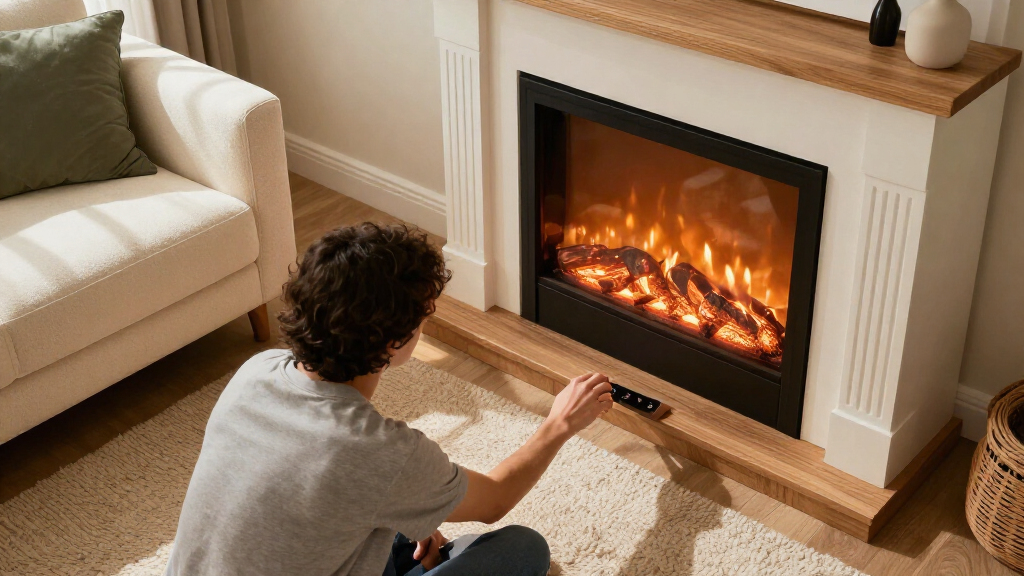
An electric fireplace creates the appearance of flames with light effects, often using LEDs and reflective elements; many models also blow warmth into the room with a fan. Since the unit does not burn wood or gas, it produces no combustion emissions in the room and does not need a chimney or gas line. That makes placement and upkeep simpler than with a fuel-burning fireplace, though the unit still needs electricity and room for safe airflow. Its heater and vents need space around them, and the effect of heat is limited by the appliance’s output and your room’s layout.
The range of formats makes these fireplaces easier to fit into different homes. A plug-in freestanding stove can work when you want flexibility or cannot alter a wall; an insert can reuse a compatible masonry opening; a slim wall-mounted unit can save floor space. Built-in models can create a clean feature wall, but that look can mean construction and electrical work, so the visual payoff comes with more planning and cost. Think through how permanent you want the installation to be before choosing a format.
For instance, a renter could use a portable model that plugs into a suitable outlet and take it along when they move, while a homeowner planning a renovation might prefer a recessed linear fireplace. The renter gains flexibility but may need to accept a visible cord and a unit that occupies floor space. The recessed option can look more integrated, but it requires a suitable wall and careful coordination with electrical work. In both cases, the flames with light can provide atmosphere even when the heater is off, if that model offers a flame-only setting.
Think of the effect like a small stage set: the logs, ember bed, color, and brightness shape the scene, while the heater handles a separate job. Separating those jobs helps set expectations: an attractive flame does not indicate stronger heat, and a powerful heater may not have the flame appearance you prefer. Visual quality varies, so product photos alone may not tell you whether the flame effect looks convincing from your sofa. If the look matters as much as warmth, consider viewing the unit from the distance and angle where you’ll actually use it.
Products Worth Considering

Google Nest Learning Thermostat (3rd Generation) with 2 Temperature Sensors, Stainless Steel

Philips Hue Smart Light Starter Kit with Bridge and 4 White and Color A19 Bulbs

Samsung 55-Inch QN70H Neo QLED 4K Smart TV (2026)
As an affiliate, we earn on qualifying purchases.
How Much Warmth a Living Room Model Can Add
Electric fireplaces for living rooms can add supplemental warmth, particularly near the unit, but a typical portable model is not a replacement for central heating. Many draw about 1,500 watts at their highest setting and provide roughly 5,100 BTUs per hour. That output is useful for taking the chill off a nearby seating area, but it does not guarantee an even temperature throughout a large or open-plan room. Actual comfort depends on insulation, ceiling height, outdoor temperature, and whether the room is open to other spaces.
Imagine a drafty living room with tall ceilings and a doorway to an unheated hall. A small heater may make the sofa area feel cozier without warming the whole connected space evenly. In a well-insulated room with a closed door, the same unit may feel more effective because less heat escapes and the warmed air stays in a smaller area. This is why two households can have different experiences with the same model. Treat advertised room coverage as an estimate, not a promise, and consider whether you want local comfort or whole-room warmth.
Check the unit’s rated heat output and the manufacturer’s guidance before you buy. A built-in fireplace may have different specifications from a portable model, so don’t assume every unit delivers the same heat just because it shares a style or advertised room size. If the unit will supplement central heating, its value may be the comfort it adds in one part of the room; it may not lower your total energy use if you run it while keeping the rest of the home at the same temperature.
Many fireplaces also let you run the flame effect without heat. That can be handy on a mild evening when you want a soft glow but don’t want the room to warm up. Confirm that the specific model supports this setting, and check whether its lighting still draws electricity in flame-only mode. A separate flame setting gives you more control over comfort, while its power use means the effect is not necessarily free to run.
Choose a Style That Fits Your Wall, Furniture, and Routine
The best fireplace style for your living room depends on the space you have, the look you want, and how you’ll use the room. A freestanding stove can suit a quiet corner, an insert can refresh an existing fireplace opening, and a long linear unit can anchor a feature wall. Compare dimensions and installation needs before settling on appearance. Each format has a practical tradeoff: portable units can be moved but occupy floor space, while wall-mounted or recessed options free the floor but need a suitable wall and a more deliberate installation.
For instance, a long unit might look sleek on a broad, uncluttered wall but crowd a small room where the sofa already sits close to the screen. A traditional mantel can bring a familiar focal point to a cottage-style space, while a minimalist insert may suit a room where you want the existing masonry to stay visible. In either layout, the fireplace competes with furniture and walkways for space, and the heater’s airflow needs clearance. Sketching the unit’s dimensions on the wall and noting where people walk can reveal awkward proportions before you buy.
Recent models often offer layered flame effects, adjustable colors, ember beds, logs, or crystals. Some add app or voice controls beside the remote, timer, or thermostat. These features can help you adjust the room from your chair, but more flame options and smart controls do not automatically mean stronger heat or lower energy use. Consider which features solve a real annoyance in your routine; paying for controls you rarely use may matter less than getting the right size, heat output, or installation fit.
Compare models in person if you can. Fan noise and the look of a flame can be difficult to judge from a bright product photo, and a fan that seems minor in a showroom may stand out during a quiet film. Check the return policy, warranty, and safety certifications relevant to your market, too; those details matter after the showroom glow fades. A return option is especially useful when the room’s lighting or acoustics make the fireplace look or sound different at home.
Estimate the Running Cost Before the First Cold Night
You can estimate an electric fireplace’s heating cost from its wattage, runtime, and your electricity rate. Divide watts by 1,000 to get kilowatts, then multiply by the hours used and the price per kilowatt-hour. A 1,500-watt unit running for one hour uses 1.5 kWh; running it for two hours uses 3 kWh. This gives you a useful full-power estimate before buying, so you can compare the cost with how often you expect to use the heater.
For example, if your electricity rate is 20 cents per kWh, one hour at 1,500 watts costs about 30 cents, and two hours cost about 60 cents. Your bill may vary with the local rate and the unit’s settings. A thermostat that cycles the heater on and off may use less than running it continuously at full power, but actual use depends on the room and model. A unit that runs often to compensate for drafts may cost more than the same model used briefly to warm one seating area.
Use this quick sequence with the figures from your own bill and product label:
- Find the unit’s wattage, such as 1,500 W.
- Divide by 1,000 to convert to kilowatts: 1.5 kW.
- Multiply by your expected runtime: 1.5 kW × 2 hours = 3 kWh.
- Multiply the energy use by your electricity price per kWh.
Electric resistance heat turns the electricity used at the appliance into heat at the point of use. The cost estimate helps you understand what that comfort may add to your bill, but it does not establish whether the fireplace is cheaper than heating the room another way; that depends on the alternatives, your home, and how you operate the systems. It also doesn’t tell you the environmental impact of the power generation; that depends on your electricity supply, the materials in the unit, and how often you run it.
Install and Use It With Clearance and Wiring in Mind
Place an electric fireplace where its heater and vents can work safely, following the clearance distances in the model’s manual. Those clearances keep hot air from being trapped and reduce the chance that nearby materials will overheat. Keep curtains, furniture, bedding, and other combustible materials away from hot surfaces and airflow. For a portable unit, use an outlet and circuit suitable for its load, and plug it directly into the outlet unless the manual specifically permits another arrangement.
A practical example: if you put a heater near a sofa, check that a throw blanket cannot slide over the air outlet when someone stands up. An obstructed outlet can restrict airflow and may cause the unit to overheat or shut off. Keep the air inlet and outlet clear of dust and clutter, and follow the manufacturer’s instructions for cleaning and use. Electric models avoid open flames and combustion, but parts can still get hot, so their placement and upkeep still matter.
Wall-mounted and built-in fireplaces call for more planning. Check wall construction, required ventilation clearances, the electrical connection, and local code requirements. These checks affect whether the unit can fit safely and whether the electrical supply can support it. If the project needs new wiring or hardwiring, hire a qualified electrician; electrical work can require permits depending on the installation and local rules.
If you want to install an insert in a masonry fireplace, confirm that the insert fits the opening and that you can install it according to the manufacturer’s instructions. For a TV above the fireplace, check both manuals for clearance and heat-direction guidance. Hot air blowing directly onto electronics can be a problem even when the arrangement looks tidy, so a visually balanced wall may still need a different placement or a model that directs heat away from the screen.
Follow the instructions for your exact model: keep combustibles clear, protect airflow, and use a qualified electrician when the work calls for new wiring or hardwiring.
Use a Short Buying Checklist to Find the Right Fit
A good electric fireplace matches your room’s dimensions, heating needs, and installation options, with flame and controls you enjoy using. Start with the wall or fireplace opening rather than an appealing product photo. Then compare the rated heat output, wattage, unit dimensions, installation type, noise, warranty, and return policy. These details answer different questions: whether it fits, how much supplemental warmth it can provide, and what compromises you may make in installation or everyday use.
For example, if you want a unit for a narrow media wall, measure the available width and depth, then check where the heat exits before placing a TV or shelf above it. If I mainly want a cozy glow in a warm climate, prioritize flame-only operation and adjustable brightness. If supplemental heat matters most, focus on output, thermostat controls, and how the room holds warmth. The best choice depends on which job matters most to you, since a decorative feature and a heater can be evaluated by different criteria.
Run through these checks before you choose:
- Measure the space: Check width, depth, height, and nearby furniture.
- Match the installation: Decide whether plug-in, insert, wall-mounted, or hardwired suits the room and your project.
- Check the heat details: Compare rated output and wattage; treat room-coverage claims as estimates.
- Try the controls: Look for flame-only mode, brightness settings, thermostat, timer, or remote if you’ll use them.
- Review practical details: Check noise, warranty, safety certification, and return terms.
A little measuring can prevent a big annoyance: a unit that sticks out too far, blows warm air at the wrong spot, or sounds like a desk fan during a quiet film. A thoughtful comparison also helps you avoid paying for features that do not suit your routine. The right model should fit how you actually spend time in the room.
Frequently Asked Questions
Do electric fireplaces heat a living room?
Yes, many can add supplemental warmth, especially near the unit. A typical portable model may provide about 5,100 BTUs per hour at 1,500 watts, but insulation, ceiling height, and room layout affect how warm the space feels.
How much does an electric fireplace cost to run?
Check its wattage, convert watts to kilowatts, then multiply by runtime and your electricity rate. A 1,500-watt unit running for two hours uses 3 kWh, so multiply 3 by your price per kWh to estimate the cost.
Can I use the flame effect without heat?
Many models offer a flame-only setting, which lets you enjoy the glow on a mild evening without running the heater. Check the specifications for the exact model before buying.
Does an electric fireplace need a chimney or vent?
No. Electric fireplaces do not burn fuel or produce combustion gases, so they do not need a chimney or flue. They still need the clearances and airflow described in the manual.
Can I put a TV above an electric fireplace?
Sometimes, but check the fireplace manual for heat direction and clearance, and check the TV manufacturer’s guidance too. Avoid placing electronics where hot air blows directly onto them.
Is a plug-in fireplace easier to install than a hardwired model?
A plug-in model may be simpler if you have a suitable outlet and circuit. Hardwired or built-in units can create a cleaner finish but may need construction work, a qualified electrician, and permits depending on the project and local rules.
Conclusion
Choose an electric fireplace by matching its heat output and dimensions to your actual living room, then check its electrical needs and clearances before you buy. A glowing ember bed can set the mood, but a measured fit and sensible installation make it comfortable to live with.
Know the wattage, keep the vents clear, and let the room’s real needs guide your choice. That way, the glow becomes part of the evening instead of another thing to work around.