
TL;DR

Get home appliances delivered free with Prime
- Fast, free delivery on millions of items
- Prime Video, Amazon Music and more included
- Member-only deals all year
A Livingetc report describes a small interior-design trend: adding a sculptural chair that is less practical for sitting to create a visual accent and alter a room’s mood. Designers say it works best alongside comfortable seating, not as a replacement for it; there is no evidence in the report that the idea is a widespread shift or that the chairs change behavior in a measurable way.
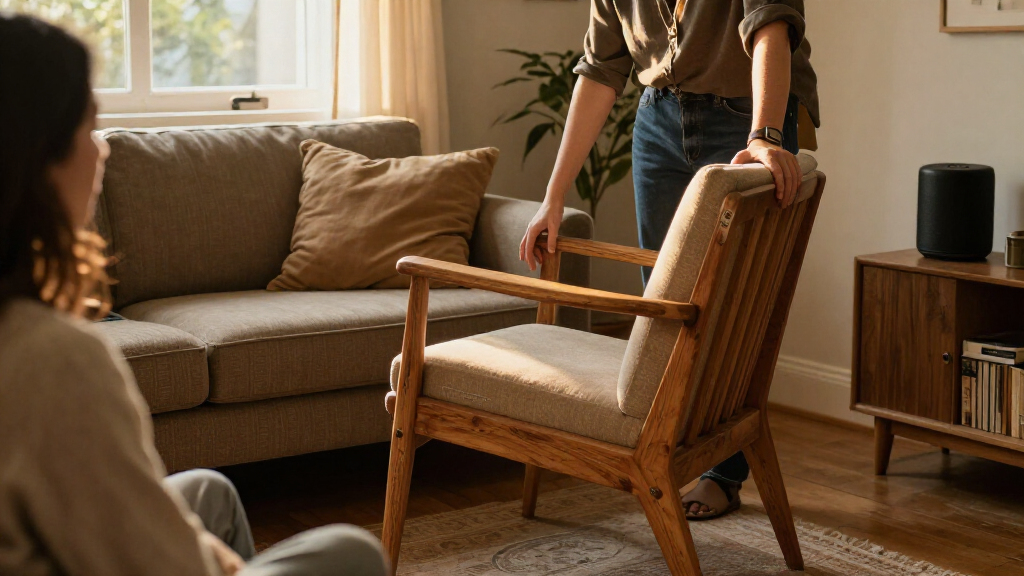
Interior designers are making a case for adding one sculptural, less comfortable chair to a home as a visual accent, according to a Livingetc report. The idea is not to make everyday seating less usable: designers describe the chair as an artistic focal point that can add contrast to rooms otherwise arranged for comfort.
Designer Anahita Rigby told Livingetc that a chair can function as an expression or accent, rather than simply as a place to sit. She said she sees beauty in a chair that is “dysfunctional” because its sculptural form can be the point. Rigby qualified the recommendation: she was not suggesting that every seat in a room should be uncomfortable, but that one such piece can make a space feel more refined.
Sarah Stemp, co-founder of Sascal Studio, said the less comfortable chair she added to her own living room made the room feel more considered and balanced its softer elements. The report presents that as her personal design experience, not as a general finding about how people respond to interiors.
Rigby suggested placing the chair in areas where lingering is not the main purpose, such as a hallway corner, or near a bookshelf as a sculptural object. The report says these chairs are not generally intended for a television-watching area. Designer Simone Haag compared the design choice to a small detail in an outfit that changes its overall effect, describing it as a “collar flick” moment.
A Sculptural Accent, Not Everyday Seating
The recommendation offers a design principle rather than a claim that homes need less comfortable furniture: contrast can make a room feel more intentional. A single unusual chair can draw attention and interrupt a scheme built around softer forms and practical seating. That distinction matters for readers weighing whether the idea suits their homes; its purpose, as the designers describe it, is visual impact, not prolonged comfort.
The concept also treats furniture as something that can shape the impression of a space even when it is seldom used. Rigby said an unexpected artistic piece can affect how people carry themselves or behave in a room. That is her observation, however, and the source provides no research or measurements confirming such an effect. The practical takeaway is narrower: a sculptural seat may serve as an accent, provided the room still has comfortable places to sit.
Products Worth Considering

Levoit Eleva 300X HEPA Air Purifier for Home and Bedroom

LEVOIT Vital 200S-P Smart Air Purifier for Large Rooms

Google Nest Doorbell (Wired, 2nd Gen) – Snow
As an affiliate, we earn on qualifying purchases.
Comfort-First Design Gets a Counterpoint
The Livingetc report sets the idea against years of design conversations focused on comfortable shapes and textures people can settle into. The so-called “uncomfortable chair” is presented as a counterpoint to that approach, bringing a more architectural or sculptural form into a home.
The report includes examples of chairs and stools from a range of retailers and studios, but it does not establish that the pieces share a single design standard or are all literally difficult to use. “Uncomfortable” is used as a broad editorial description for seats whose form and visual role take priority over lounging. The source identifies the idea as a micro trend, without providing sales figures, consumer research or evidence of how widely it has spread.
““The uncomfortable chair I added to my living room definitely makes the space feel more considered, balancing the softer energy it already had to seem more dynamic.””
— Sarah Stemp, co-founder of Sascal Studio, speaking to Livingetc
How Far the Trend Has Spread
The source does not say how many designers or homeowners are adopting the idea, whether interest is growing, or whether the chairs have affected furniture sales. Its description of the trend is based on designer comments and examples, rather than polling or market data. The report also does not define how uncomfortable a chair must be to qualify, and many listed products may vary in their actual comfort.
Claims that these chairs make people stand straighter or behave differently are presented as designers’ observations. No independent evidence is cited to establish those effects. It is also unclear whether the suggestion applies to homes with accessibility needs or other requirements that make comfortable, supportive seating a priority.
A Design Choice to Test at Home
The report does not announce a product launch, formal design standard or next industry milestone. For homeowners interested in the idea, the immediate decision is whether one sculptural seat fits a room’s layout and use. The designers’ guidance is to place it where it can function as a visual accent, while keeping comfortable seating available for regular use.
Whether the idea becomes more than a small design trend remains unclear. Further evidence, such as broader designer coverage, consumer research or sales data, would be needed to show how widely the approach is being adopted. Until then, the recommendation is best understood as a styling suggestion, not a requirement for every home.
Key Questions
What is an “uncomfortable chair” in this report?
It is a broad term for a sculptural or artistic chair whose visual form may take priority over long-term comfort. The report does not set a formal definition or say every example is unusable.
Are designers saying every chair at home should be uncomfortable?
No. Anahita Rigby specifically said she was not suggesting every seat should be uninviting. The idea is to add one contrasting accent while retaining practical, comfortable seating.
Where do designers suggest placing one?
Rigby suggested a hallway corner or a spot near a bookshelf, where the chair can read as an artistic object. The report says these pieces are generally not intended for lounging in front of a television.
Is there proof that an uncomfortable chair changes people’s behavior?
No research is cited in the report. Designers describe the chair as something that may change a room’s mood or how people carry themselves, but those statements are their observations, not established findings.
Source: rss