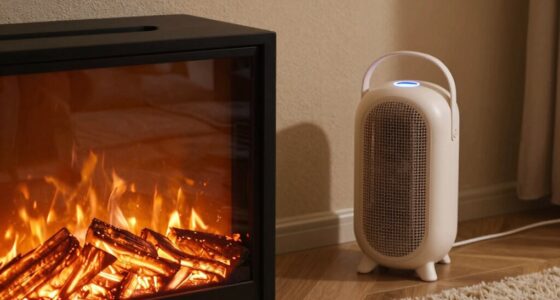
When comparing heating costs, electric heaters usually have lower upfront prices and high efficiency, but electricity costs can raise expenses. Oil heaters tend to require higher initial investments and regular maintenance, with fuel prices fluctuating regionally. Gas heaters often strike a balance with moderate upfront costs and efficient fuel use, especially if natural gas is available. To find the best option for your needs, consider regional fuel prices and long-term expenses—you’ll discover more details by exploring further.

Get home appliances delivered free with Prime
- Fast, free delivery on millions of items
- Prime Video, Amazon Music and more included
- Member-only deals all year
Key Takeaways
- Electric heaters have higher operating costs but lower maintenance, while oil heaters are less efficient and require regular servicing.
- Gas heaters typically offer a balance of moderate upfront costs and efficient fuel use, potentially lowering long-term expenses.
- Electricity is often cheaper if renewable sources are available, making electric heating more eco-friendly and cost-effective in the right regions.
- Oil heaters emit more pollutants and greenhouse gases, increasing environmental costs compared to electric and gas options.
- Fuel prices and regional availability significantly influence the overall cost-efficiency of each heating system.

When selecting a heating system, understanding the costs associated with electric, oil, and gas heaters is essential. You need to weigh not just the upfront expenses but also how much you’ll pay over time. Energy efficiency plays a major role here—more efficient systems use less fuel or electricity, reducing your bills. Electric heaters are often praised for their high energy efficiency because they convert nearly all the electricity they consume into heat. However, their efficiency doesn’t always translate into lower costs if electricity prices are high in your area. Oil heaters, on the other hand, tend to be less efficient because some energy is lost during combustion, but they can be more cost-effective in regions where oil prices are lower. Gas heaters usually strike a balance; they’re fairly efficient and often cost less to operate than electric models, especially if natural gas is readily available.
Choosing the right heating system depends on efficiency, costs, and fuel availability.
Environmental impact is another critical factor. Electric heaters produce no emissions at the point of use, making them a cleaner option in terms of air quality and carbon footprint, especially if the electricity is generated from renewable sources. Oil heaters, however, burn fossil fuels that emit pollutants and greenhouse gases, which contribute to environmental degradation. Gas heaters tend to be cleaner than oil, producing fewer emissions, but they still release carbon dioxide and other pollutants into the air. If reducing your environmental impact is a priority, electric heaters powered by renewable energy are the best choice, though they may come with higher initial costs. Oil and gas systems, while still widely used, are less eco-friendly due to their combustion emissions.
Cost considerations don’t end with purchase and fuel prices. Maintenance costs vary among these systems; electric heaters require minimal upkeep, making them economical in the long run. Oil heaters need regular servicing to keep them running efficiently and safely, adding to their ongoing costs. Gas heaters also require maintenance, including inspections to prevent leaks and ensure safe operation. When evaluating your options, factor in these ongoing expenses alongside fuel costs. Additionally, the availability of fuels in your region can influence your decision—if natural gas is abundant and affordable, a gas heater might save you money in the long run. Conversely, if electricity is cheaper and more sustainable in your area, an electric heater could be the smarter choice.
Furthermore, advancements in projector technology such as high refresh rates and low input lag are changing how gaming enthusiasts select their equipment, highlighting the importance of understanding specific technical features for your needs.
Ultimately, balancing energy efficiency, environmental impact, and total costs will guide you toward the best heating system for your needs. Each type has its strengths and drawbacks, but understanding these aspects helps you make an informed choice that fits your budget and values.
As an affiliate, we earn on qualifying purchases.
Frequently Asked Questions
How Do Regional Energy Prices Influence Heating Costs?
Regional energy prices considerably impact your heating costs because energy price fluctuations vary by location. In areas with higher prices, you’ll spend more on heating, especially if regional consumption patterns favor electricity, oil, or gas. Conversely, regions with lower prices help reduce your expenses. Understanding these regional differences helps you choose the most cost-effective heating options and plan your budget accordingly, especially during peak energy demand periods.
Which Heater Type Has the Lowest Environmental Impact?
You’ll find that electric heaters generally have the lowest environmental impact, especially when powered by renewable energy sources. They produce a smaller carbon footprint compared to oil or gas heaters, which emit more greenhouse gases during operation. By choosing electric options and supporting renewable energy initiatives, you help reduce overall pollution and promote a cleaner environment, making electric heaters the more eco-friendly choice for sustainable heating.
Are There Safety Concerns Unique to Each Heating Method?
Imagine you use a gas heater and forget to maintain proper ventilation; you risk carbon monoxide buildup, which is deadly. Electric heaters pose a lower fire hazard but can cause overheating if misused. Oil heaters, while efficient, have a risk of leaks and potential fire hazards. Always guarantee proper installation, maintenance, and ventilation to minimize safety concerns associated with each heating method.
How Do Installation Costs Compare Among Electric, Oil, and Gas Heaters?
Installation costs vary considerably among electric, oil, and gas heaters. Electric heaters generally have the lowest installation costs since they require minimal setup. Oil heaters usually need more extensive installation, including tanks and piping, raising costs. Gas heaters often have the highest installation costs due to venting and safety requirements. Keep in mind, energy price variations can impact long-term costs, making initial expenses only part of the overall savings analysis.
What Are the Maintenance Requirements for Each Heating System?
Think of your heating system as a loyal steed. Electric heaters need minimal maintenance—just check the filtering system and make certain a steady power supply. Oil heaters require regular cleaning of filters and tank inspections to prevent clogs. Gas heaters need annual professional servicing, including inspecting the pilot light and ventilation. Keep up with these tasks, and your heater will perform smoothly, keeping your home warm and cozy.
As an affiliate, we earn on qualifying purchases.
Conclusion
Ultimately, choosing between electric, oil, and gas heaters is like selecting your own mythic hero—each has its strengths and pitfalls. Electric offers simplicity, oil provides warmth in colder battles, and gas balances efficiency with power. Like Icarus reaching for the sun, your decision depends on weighing costs against comfort. Consider your needs carefully—because, as the gods remind us, even the mightiest heroes must choose their tools wisely to avoid burning out.
As an affiliate, we earn on qualifying purchases.
As an affiliate, we earn on qualifying purchases.
NFL season / tailgating Picks
team gear
As an affiliate, we earn on qualifying purchases.