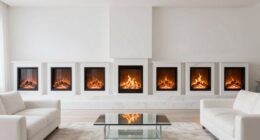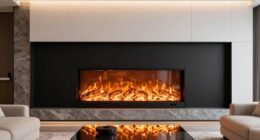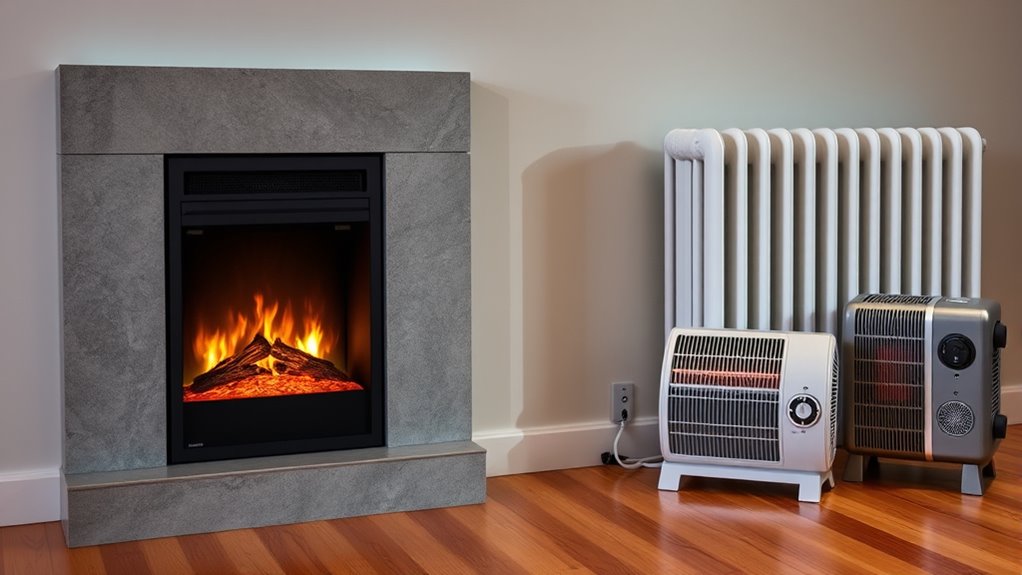
Electric fireplaces are highly efficient because they convert almost all the electricity into heat, delivering warmth directly to your space without energy loss through venting or combustion. Unlike traditional heaters or fireplaces that lose heat, electric units offer rapid, targeted warmth and adjustable settings for better energy management. They’re also safer and easier to install, making them a smart choice for energy-conscious homes. To discover how they compare with other heating methods, keep exploring the advantages they bring.
Key Takeaways
- Electric fireplaces convert nearly all electrical energy into heat, maximizing energy efficiency compared to traditional combustion-based heaters.
- They eliminate heat loss through venting or chimney, offering more consistent and targeted warmth.
- Unlike gas or wood heaters, electric units have no emissions, making them safer and more environmentally friendly.
- Electric fireplaces require less maintenance and installation costs, providing efficient heating without fuel or venting needs.
- Overall, electric fireplaces deliver efficient, safe, and controllable heat, often outperforming traditional heaters in energy utilization.

Have you ever wondered how efficient electric fireplaces really are? Many people are curious about whether they’re worth the investment compared to traditional heating options. One of the biggest advantages is that electric fireplaces are generally safer and easier to install, making them an appealing choice for many households. Unlike wood-burning stoves or gas heaters, electric fireplaces don’t produce real flames, smoke, or harmful emissions. This considerably reduces safety concerns, such as fire hazards or carbon monoxide poisoning, giving you peace of mind. When it comes to safety considerations, electric units are designed with features like overheat protection and cool-to-touch surfaces, making them safer for homes with children or pets. Additionally, because they don’t require vents or chimneys, you don’t have to worry about installing complex ventilation systems or dealing with dangerous fumes.
Speaking of installation costs, electric fireplaces tend to be much more budget-friendly upfront. You won’t need to invest in costly chimney repairs or extensive ductwork, which are common with traditional fireplaces or central heating systems. Most electric models can be plugged into a standard electrical outlet, so you can set them up quickly without professional help—though consulting an electrician for proper wiring might be a good idea if you plan to run the unit continuously or want a more permanent installation. This simplicity markedly reduces installation costs and time, making electric fireplaces a convenient and economical choice. Plus, their compact size allows for flexible placement, whether in a living room, bedroom, or even a basement. Furthermore, electric fireplaces often have high energy efficiency, converting nearly all the energy they consume into heat, which means there’s minimal waste. Unlike traditional heaters that lose heat through venting or require fuel combustion, electric units deliver warmth directly to the space where they’re installed. This targeted heating capability ensures you’re not wasting energy heating unoccupied areas, which can happen with central systems. Furthermore, many electric fireplaces come with adjustable thermostats and multiple heat settings, giving you control over your comfort level and helping you save energy. While traditional fireplaces may seem cozy, they often lose a considerable amount of heat through the chimney and don’t provide consistent heat control. So, if you’re looking for a highly efficient, safe, and easy-to-install heating solution, electric fireplaces are hard to beat, especially when you consider the lower installation costs and enhanced safety features they offer.
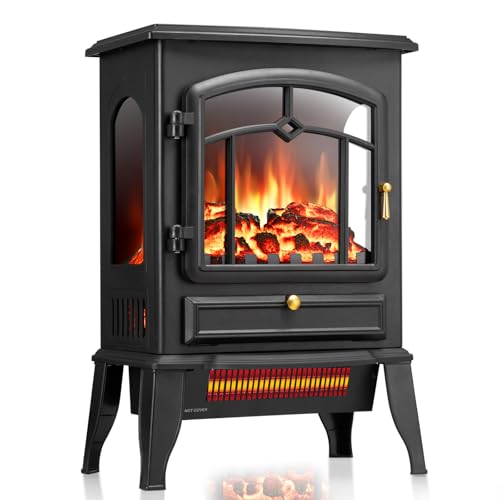
ZAFRO Electric Fireplace Stove, 5100 BTU Quick Heating Electric Fireplace Heater with Adjustable Flame Brightness, 1000W/1500W Thermostat, for Living Room, Bedroom
Charming Design: This electric fireplace stove adopts a vintage – style stove body design, paired with highly realistic…
As an affiliate, we earn on qualifying purchases.
As an affiliate, we earn on qualifying purchases.
Frequently Asked Questions
How Do Electric Fireplaces Compare in Cost to Traditional Wood Stoves?
Electric fireplaces typically cost less upfront than traditional wood stoves, making them an attractive option for many. When you compare costs, you’ll find electric models often have lower installation considerations since they only need an outlet, unlike wood stoves that require venting and clearance. Ongoing expenses, like electricity, are usually lower than fuel costs for wood. So, if budget and ease of installation matter, electric fireplaces can be a more cost-effective choice.
Are Electric Fireplaces Environmentally Friendly Compared to Gas Heaters?
Electric fireplaces are generally more environmentally friendly than gas heaters because they can run on renewable energy sources, reducing your carbon footprint. Unlike gas heaters, which emit greenhouse gases, electric fireplaces produce no direct emissions. If your electricity comes from clean energy, you make an even greener choice, helping to lower overall pollution. So, choosing an electric fireplace supports a more sustainable lifestyle while keeping your space warm.
Can Electric Fireplaces Effectively Heat Large Open Spaces?
Electric fireplaces can effectively heat large open spaces if they have sufficient power and proper placement. They excel at providing consistent heat through good heat distribution, but their efficiency depends on the size of the space and the heater’s wattage. To maximize warmth, guarantee your electric fireplace is rated for large space heating, and consider supplemental heating options if necessary. Proper insulation also helps improve overall heating efficiency.
What Are the Maintenance Requirements for Electric Fireplaces Versus Other Heaters?
Caring for your electric fireplace is like tending a delicate garden—you keep it tidy and it rewards you with warmth. Maintenance routines are simple; just wipe down the glass and check for dust buildup. Cleaning requirements are minimal compared to traditional heaters, which often need regular inspections, filters, and vent cleaning. With less upkeep, you save time and effort, letting you enjoy the cozy ambiance without hassle.
Do Electric Fireplaces Produce Any Harmful Emissions or Pollutants?
Electric fireplaces don’t produce any harmful emissions or pollutants, so they won’t negatively impact your indoor air quality. Unlike traditional heaters that can emit chemical emissions, electric models generate heat through electrical resistance, ensuring clean air. You won’t have to worry about fumes, smoke, or other airborne pollutants, making electric fireplaces a safer choice for maintaining good indoor air quality and a healthier environment inside your home.

DREO Space Heater, Portable Electric Heaters for Indoor Use with Thermostat and Remote, 2024 Upgraded, Digital Display, 12H Timer, 5 Mode, 1500W PTC Ceramic Fast Safety Heat for Office Bedroom Home
Powerful heat that fits everywhere: DREO space heaters for indoor combines Hyperamics 1500W advanced PTC system with a…
As an affiliate, we earn on qualifying purchases.
As an affiliate, we earn on qualifying purchases.
Conclusion
Imagine curling up near a glowing electric fireplace, its gentle warmth wrapping around you like a cozy blanket. Unlike noisy heaters that rattle and waste energy, your electric fireplace quietly radiates heat with impressive efficiency. As the flickering flames dance, you feel a comforting glow that warms your space without draining your wallet. With its sleek design and cost-effective performance, it’s the perfect centerpiece for a snug, inviting home—where comfort meets clever efficiency.

EUHOMY 50 Inch Electric Fireplace Wall Recessed and Wall Mounted with Adjustable Flame Color, Fireplace Heater with Remote Control, Linear Fireplace with Timer, Touch Screen, Log & Crystal, 750/1500W
Package Inclusions & 2-Year Technical Support: : The EUHOMY electric fireplace is equipped with 1* carbon log, 1*…
As an affiliate, we earn on qualifying purchases.
As an affiliate, we earn on qualifying purchases.

XTENDR ARCS V2 Extendable 2.5 Feet. Arc Extra Long Lighter, Flameless Fireplace Stove Electric Candle Lighter, Long Neck for Pilot Light, Grilling, Firepit, Kitchen, BBQ (Silver)
【EXTENDED & DURABLE】-Redesigned V2 grill lighter extends to 30.75 inches for safe distance from heat. Built with a…
As an affiliate, we earn on qualifying purchases.
As an affiliate, we earn on qualifying purchases.