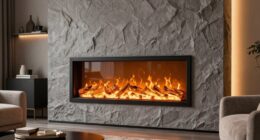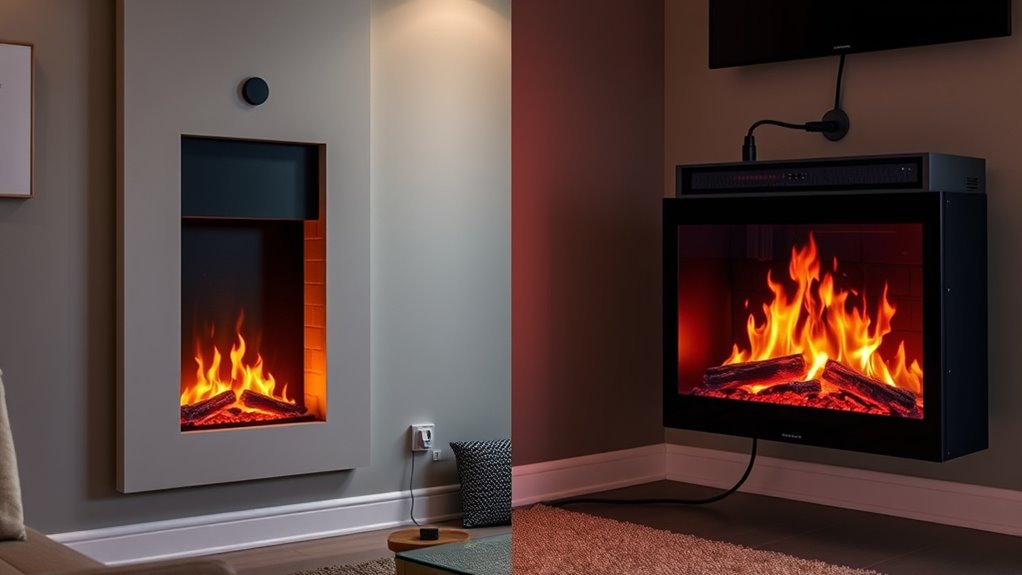

Hardwired electric fireplaces connect directly to your home’s electrical system, offering a sleeker look, better energy control, and support for advanced features like thermostats. Plug-in models are easier to install, portable, and perfect if you want quick setup or are renting. While hardwired units tend to be more energy-efficient, plug-ins provide flexibility and convenience. To decide which suits your needs best, consider your space, budget, and how much control you want—more details can guide your choice.
Key Takeaways
- Hardwired fireplaces require electrical wiring and are more permanent, while plug-in units connect easily to standard outlets for portability.
- Hardwired models often offer better energy efficiency and advanced controls like thermostats and timers.
- Plug-in fireplaces are simple to install, ideal for renters, and can be moved easily without electrical modifications.
- Hardwired units provide a cleaner look without cords, integrating seamlessly into home design; plug-ins may have visible cords.
- Initial installation of hardwired fireplaces is more complex, but they are better suited for larger spaces and long-term use.
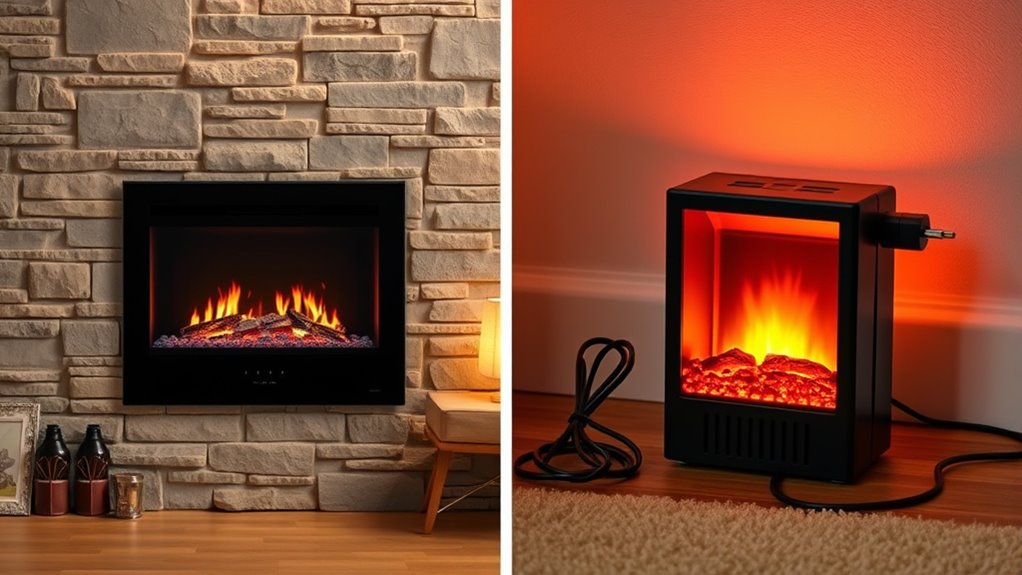
When choosing an electric fireplace for your home, understanding the differences between hardwired and plug-in models is essential. These options vary markedly in terms of installation requirements and energy efficiency, and your choice depends on your space, budget, and long-term goals. Plug-in models are generally the simplest to install. They only need a standard electrical outlet, making them ideal for renters or those who want a quick, hassle-free setup. You just plug them in, and you’re ready to enjoy the ambiance and warmth. Because they don’t require any wiring or electrical modifications, they’re portable and flexible, allowing you to move the unit around as needed. However, their energy efficiency can be slightly lower compared to hardwired units, mainly because some models draw power through the outlet without optimized control over energy consumption. Still, for most everyday uses, plug-in fireplaces are efficient enough to meet your needs.
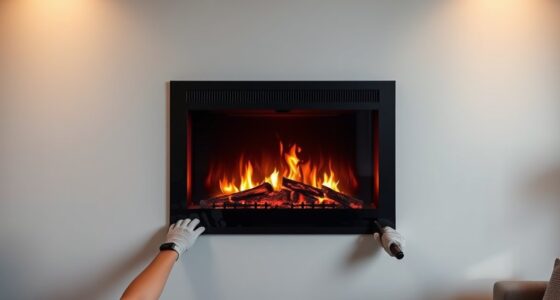
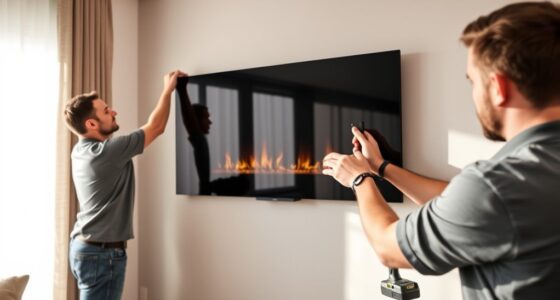
Hardwired electric fireplaces, on the other hand, require a more involved installation process. You’ll need to connect the unit directly to your home’s electrical system, often requiring a dedicated circuit. This installation process may involve hiring a professional electrician to ensure safety and compliance with local electrical codes. While this may seem more cumbersome initially, it offers advantages in the long run. Hardwired units tend to be more energy-efficient because they can be integrated into your home’s electrical system with dedicated controls, allowing for better management of power use. They also tend to provide a cleaner look since they don’t have visible cords or outlets, which can enhance the overall aesthetic of your space. Additionally, because they are wired directly into your home’s electrical system, hardwired fireplaces often support more advanced features, such as thermostats and timer controls, which can improve energy management and reduce consumption.
Understanding the installation requirements of each type can help you make a more informed decision based on your home setup and technical comfort level.
Choosing between these two options involves weighing convenience against long-term efficiency. If you want a quick installation with minimal fuss, a plug-in model is the way to go. But if you’re looking for a more integrated, energy-efficient solution that can handle larger spaces or offer more advanced features, a hardwired fireplace may be the better choice. Whichever you choose, consider your space, your budget, and your energy goals to make the best decision for your home. Proper installation and understanding of each model’s energy efficiency will ensure you get the most enjoyment and value from your electric fireplace.

Westinghouse 50 Inch Electric Fireplace Heater, Compatible with Alexa & Google Home, Wall Mount or in-Wall Recessed Fireplace Insert, 24 Hour Timer, Color Changing Flames, 750W/1500W Indoor Heater
PERSONALIZED COMFORT: Designed with adjustable heater output settings and a built-in thermostat that can be set between 62F…
As an affiliate, we earn on qualifying purchases.
As an affiliate, we earn on qualifying purchases.
Frequently Asked Questions
Can I Convert a Plug-In Fireplace to Hardwired Later?
Yes, you can convert a plug-in fireplace to hardwired later. You’ll need to disconnect the plug for plug-in convenience and install proper wiring for more flexibility and a cleaner look. Make sure to turn off the power before working on the electrical system. If you’re unsure about wiring, it’s best to consult a professional electrician to guarantee safety and compliance with local electrical codes.
Which Type Offers Better Energy Efficiency?
Like the steady flow of a river, a hardwired fireplace usually offers better energy savings and lower operational costs due to its direct connection. It maintains consistent power, reducing energy waste. In contrast, plug-in models might use slightly more energy because of fluctuations or shorter cords. If energy efficiency is your priority, going hardwired is better, helping you save money and reduce your carbon footprint over time.
Are There Safety Concerns Unique to Each Installation?
You should be aware that each installation type has unique safety concerns. Hardwired fireplaces require strict safety protocols to prevent electrical hazards, such as proper grounding and secure connections. Plug-in models are generally safer for DIY setups but still need careful placement to avoid tripping or damage. Always follow manufacturer instructions and consult a professional if unsure, reducing risks of electrical hazards and ensuring safe operation.
How Does Installation Cost Compare Between the Two?
You’ll find that plug-in electric fireplaces typically cost less to install, often around $100 to $300, because of their simple setup. In contrast, hardwired units can range from $300 to $1,000 due to increased installation complexity, including wiring and electrical work. Significantly, a 2023 survey shows that homeowners save an average of 40% on installation costs with plug-in models, making them a budget-friendly choice for quick upgrades.
Do Both Types Require Professional Installation?
You typically need professional installation for both types, especially if ventilation requirements or electrical work are involved. Hardwired fireplaces often demand more extensive setup, matching aesthetic considerations and integrating seamlessly with your home’s wiring. Plug-in models are usually easier and quicker to install, but professional help guarantees safety and proper function. Regardless of type, consulting an expert assures your fireplace is installed correctly, meeting safety standards and enhancing your space’s look.
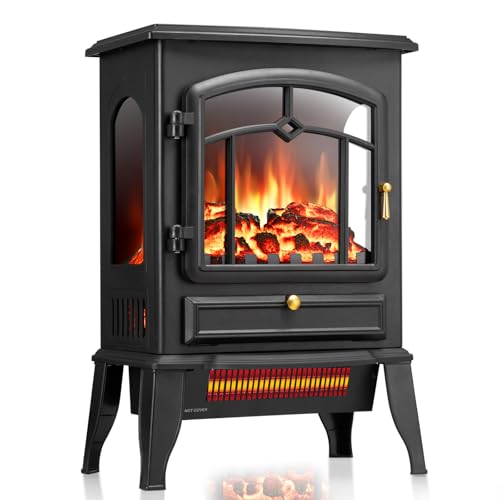
ZAFRO Electric Fireplace Stove, 5100 BTU Quick Heating Electric Fireplace Heater with Adjustable Flame Brightness, 1000W/1500W Thermostat, for Living Room, Bedroom
Charming Design: This electric fireplace stove adopts a vintage – style stove body design, paired with highly realistic…
As an affiliate, we earn on qualifying purchases.
As an affiliate, we earn on qualifying purchases.
Conclusion
Ultimately, choosing between a hardwired and plug-in electric fireplace is like selecting the perfect brushstroke for your home’s living masterpiece. Hardwired models blend seamlessly into your home’s soul, offering a sleek, built-in elegance, while plug-in units bring the charm of portability and ease. Consider your space and style, and you’ll find the ideal flame to warm not just your room, but your heart, turning your home into a cozy haven glowing with personalized warmth.

Touchstone Smart Electric Fireplace-The Sideline 50" Wide-in Wall Recessed – 30 Realistic Ember Color/Flame Options – 1,500W Heater w/Thermostat – Log & Crystal Hearth Options – Alexa/WiFi Enabled
APPEARANCE: The Sideline electric fireplace is designed for recessed in-wall mounting. Creating a cozy atmosphere of a traditional…
As an affiliate, we earn on qualifying purchases.
As an affiliate, we earn on qualifying purchases.

Sweetcrispy Freestanding Electric Fireplace Heater, 26” Indoor Fireplace with 3D Flame Effect, Overheating Safe Design, Energy Saving Space Heater with 12H Timer&Remote for Living Room, Bedroom, Black
Powerful Fireplace Heater: This freestanding electric fireplace heater offers adjustable heat settings ranging from 750W for a gentle…
As an affiliate, we earn on qualifying purchases.
As an affiliate, we earn on qualifying purchases.