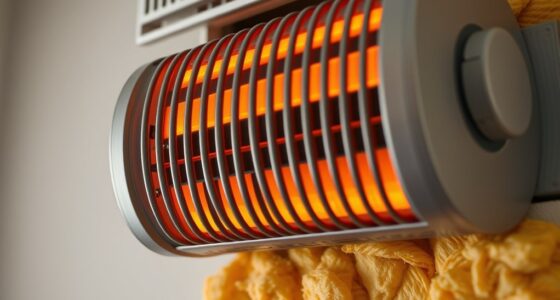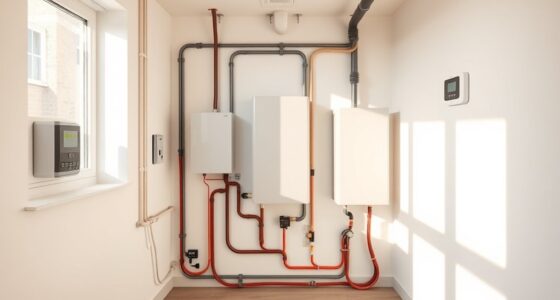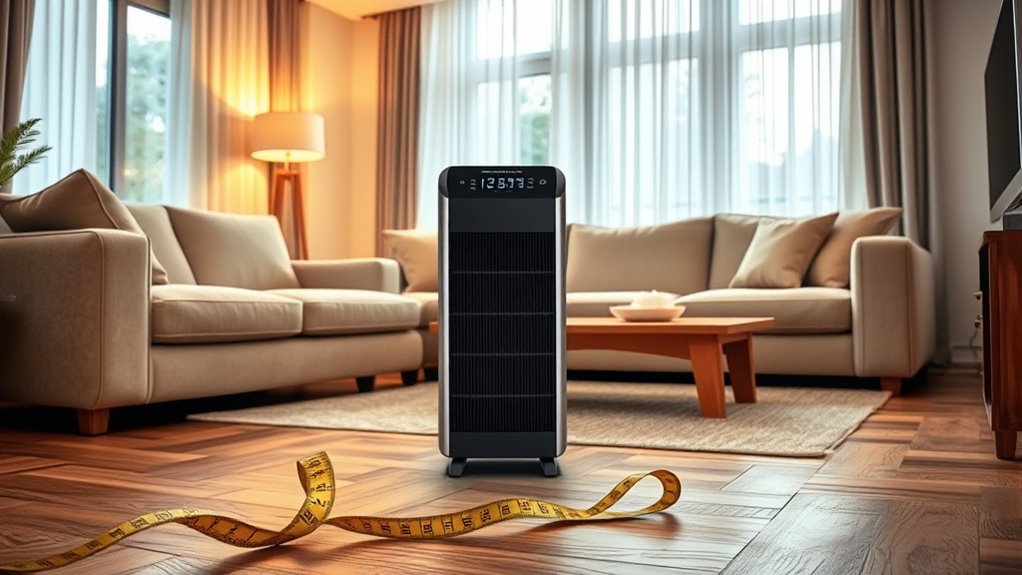
To pick the right room heater, start by measuring your space’s length and width to find the total square footage. Most rooms need about 10 watts per square foot, so multiply your area by this number to find the ideal wattage. Keep in mind insulation, ceiling height, and climate, which may require adjustments. If you want to make certain you’re making the best choice, continue exploring for more tips.
Key Takeaways
- Measure your room’s length and width accurately to calculate total square footage.
- Use the general guideline of approximately 10 watts per square foot for heater capacity.
- Adjust wattage based on room insulation, ceiling height, and climate conditions for optimal heating.
- Ensure the selected heater size matches your room’s measured area for efficient performance.
- Consider safety features and energy efficiency to choose a heater that suits your room size and needs.
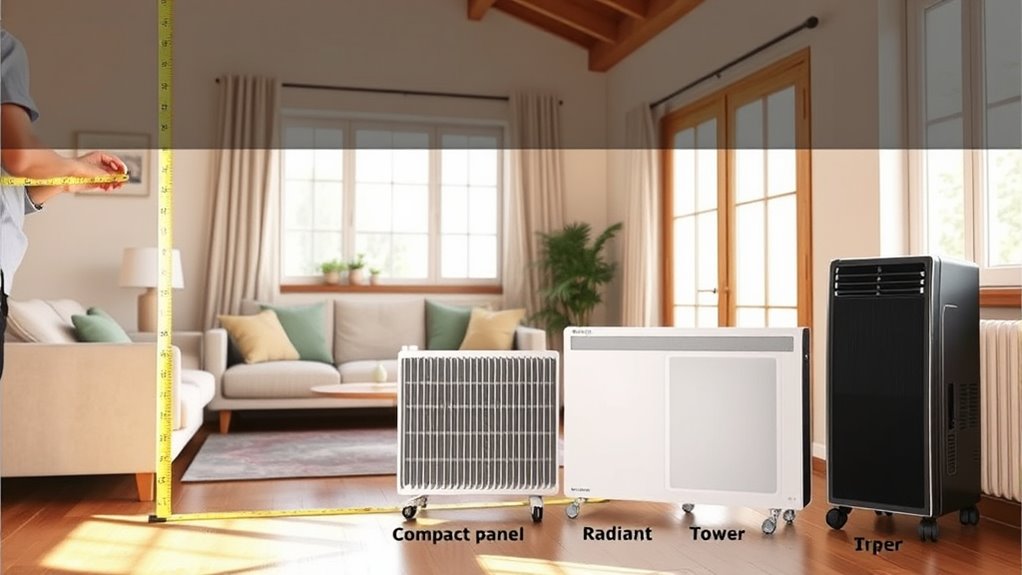
Are you struggling to find the right room heater for your space? Picking the correct size is essential to ensure comfort, safety, and energy efficiency. When you choose a heater that’s too small, it won’t warm your room adequately, forcing you to run it constantly, which can lead to higher energy bills. On the other hand, a heater that’s too large can overheat the space, wasting energy and increasing safety risks. To avoid this, you need to measure your room accurately and select a heater with the right capacity.
Start by calculating the room’s size in square feet. Measure the length and width of the space, then multiply these numbers to get the total square footage. For example, a room that’s 12 feet long and 10 feet wide totals 120 square feet. Once you have this measurement, you can determine the appropriate wattage for your heater. Typically, a heater with about 10 watts per square foot is sufficient for most spaces, but this can vary based on insulation, ceiling height, and climate. If your room has high ceilings or poor insulation, consider opting for a slightly higher wattage to compensate.
Energy efficiency should be a top priority when choosing your heater. Look for models with good reviews for energy consumption, and consider features like programmable timers or thermostats, which allow you to control heating precisely and avoid wasting power. An energy-efficient heater not only helps reduce your utility bills but also minimizes your environmental impact. Remember, the right size combined with smart features can make your heating more effective and economical.
Safety precautions are equally important when selecting and using a room heater. Always choose models that have safety features such as tip-over switches, overheat protection, and cool-to-touch surfaces. Position your heater on a flat, stable surface away from curtains, furniture, or other flammable materials. Never leave a heater unattended for extended periods, especially if it’s operating at high settings. Regularly inspect the cord and plug for damage, and ensure your electrical outlets can handle the heater’s power requirements. Installing smoke detectors and keeping a fire extinguisher nearby adds an extra layer of safety. Incorporating space measurement into your planning process can help you choose a well-sized heater that enhances safety and efficiency.

Dreo Smart Wall Heater, Electric Space Heater for Bedroom 1500W, 120° Vertical Oscillation, Adjustable Thermostat, Remote Control, 24H Timer, Easy-Mount Heater for Indoor Use, Works with Alexa, WH719S
Widespread Warmth: Dreo's 120° wide oscillation heating distributes warm air evenly from top to bottom, helping to bring…
As an affiliate, we earn on qualifying purchases.
As an affiliate, we earn on qualifying purchases.
Frequently Asked Questions
What Safety Features Should I Look for in a Room Heater?
You should look for safety features like tip-over protection and overheat shut-off to prevent accidents. Always follow safety tips, such as keeping the heater away from curtains and furnishings. Proper heater placement is vital—place it on a flat, stable surface and avoid areas with high traffic or moisture. These features and tips guarantee safe operation, giving you peace of mind while staying warm.
How Energy-Efficient Are Different Types of Room Heaters?
Imagine your heater glowing softly, like a cozy fire, while you save on energy bills. Different types vary in energy efficiency; infrared heaters convert most energy into heat, making them cost-effective, while convection models may consume more. Always check heater ratings to see their energy consumption. You’ll find that well-rated, energy-efficient models help keep your room warm without draining your power, giving you comfort and savings simultaneously.
Can a Room Heater Be Used Outdoors Safely?
You should avoid using a room heater outdoors unless it’s specifically designed for outdoor safety and weather resistance. Most indoor heaters lack protection against moisture, wind, and rain, which can cause electrical hazards or damage. For outdoor spaces, opt for heaters labeled as outdoor-safe, ensuring they have weather-resistant features. This way, you stay safe and enjoy your outdoor environment without risking equipment failure or accidents.
What Maintenance Is Required to Keep a Heater Functioning Properly?
Did you know regular maintenance can extend your heater’s lifespan by up to 30%? To keep it running smoothly, follow these maintenance tips: clean filters monthly to make certain of efficient airflow and check for dust or debris. Also, inspect electrical connections and vents periodically, cleaning as needed. Proper filter cleaning prevents overheating, and routine checks help catch issues early, keeping your heater safe and effective during colder months.
Are There Eco-Friendly or Solar-Powered Room Heater Options?
Yes, eco-friendly heaters and solar-powered options are available for your home. Solar-powered room heaters use renewable energy from the sun, reducing your carbon footprint and lowering energy bills. Eco-friendly heaters often include models with energy-efficient features or made from sustainable materials. By choosing these options, you help protect the environment while keeping your space warm. Explore solar-powered options like solar air heaters or eco-friendly infrared heaters for sustainable heating solutions.

DREO Space Heater, Portable Electric Heaters for Indoor Use with Thermostat and Remote, 2024 Upgraded, Digital Display, 12H Timer, 5 Mode, 1500W PTC Ceramic Fast Safety Heat for Office Bedroom Home
Powerful heat that fits everywhere: DREO space heaters for indoor combines Hyperamics 1500W advanced PTC system with a…
As an affiliate, we earn on qualifying purchases.
As an affiliate, we earn on qualifying purchases.
Conclusion
Now that you know how to measure your room, choosing the right heater is like finding the perfect puzzle piece—completely satisfying. When you pick a heater that matches your space, you’ll enjoy cozy warmth without wasting energy or money. Think of it as giving your room a warm hug tailored just for it. So, measure carefully, choose wisely, and turn your space into a snug haven that feels just right every time.

Portable Ceramic Space Heater 1500W, Fast Heating, Digital Display with Touch Controls, Built-in Handle, Overheat and Tip-Over Protection, Ideal for Home, Bedroom, and Office Heating
Fast & Efficient Heating: The PTC ceramic heater heats up in just seconds, delivering continuous warmth while maintaining…
As an affiliate, we earn on qualifying purchases.
As an affiliate, we earn on qualifying purchases.

DREO Space Heater for Large Room, 23 Inch Electric Heaters for Indoor Use, 8 Safe Protection Tower, 70° Oscillation, PTC Ceramic with Thermostat and Remote, Quiet, 12H Timer, Bedroom, Office
Twice the heat power: With dual DC motors, this DREO space heater for indoor use doubles airflow at…
As an affiliate, we earn on qualifying purchases.
As an affiliate, we earn on qualifying purchases.