In very cold climates, electric fireplaces are a reliable way to keep your home warm and cozy. They convert nearly all electricity into heat, making them efficient and environmentally friendly options. Easy to install and operate, they don’t require venting or chimneys, and you can control the temperature with remote settings or thermostats. To maximize their benefits and guarantee safe use, continue exploring tips on placement and energy optimization.
Key Takeaways
- Electric fireplaces provide reliable, consistent heat without venting, ideal for very cold climates.
- Proper placement in central, insulated areas maximizes heat distribution and efficiency.
- Use models with adjustable settings and timers to optimize energy use during harsh winters.
- Ensure electrical system capacity can handle the fireplace’s power requirements safely.
- Combining electric fireplaces with good insulation enhances heat retention and reduces overall energy costs.
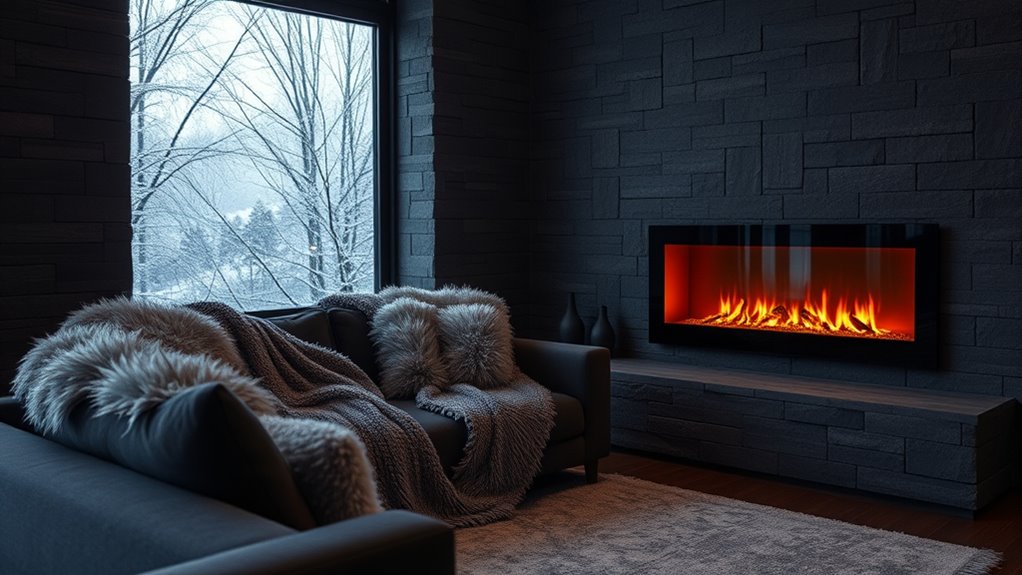
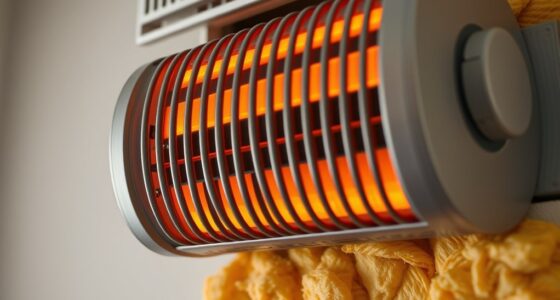
Living in very cold climates means you need reliable heating solutions, and electric fireplaces can be a practical choice. They offer a convenient way to add warmth and ambiance without the complexities of traditional fireplaces. When contemplating an electric fireplace, one of the top benefits is its energy efficiency. Unlike traditional wood-burning or gas fireplaces, electric models convert nearly all the electricity they use into heat, making them a cost-effective option for maintaining a warm home during harsh winters. Plus, since they don’t produce emissions, they’re environmentally friendly, reducing your carbon footprint. This energy efficiency means you can enjoy cozy comfort without skyrocketing energy bills, especially if you select models with adjustable heat settings and timers to optimize usage.
Electric fireplaces offer efficient warmth and eco-friendly comfort perfect for cold climates.
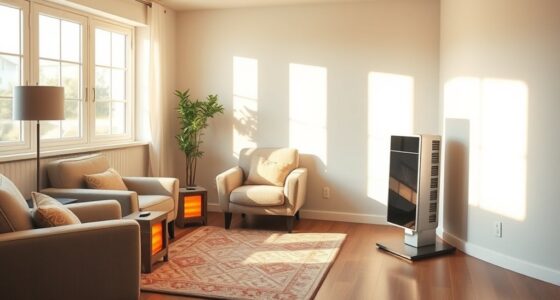
Before installing an electric fireplace, you should carefully evaluate installation considerations. Many models are designed for easy setup and don’t require a chimney or venting, which simplifies installation and saves costs. Still, you’ll want to verify your home’s electrical system can handle the unit’s power requirements. Most electric fireplaces operate on standard household outlets, but some larger or more advanced models may need a dedicated circuit to prevent overloading. Checking your electrical capacity beforehand can save you from potential issues later. Additionally, think about the placement of your electric fireplace. For maximum efficiency and comfort, position it in a central location where heat can circulate effectively, or place it in a room where you spend the most time during winter.
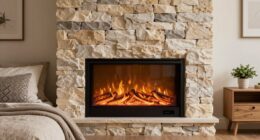
You’ll also want to contemplate whether your chosen model can be installed securely and safely. Wall-mounted units require proper mounting hardware and possibly the assistance of a professional to ensure they’re anchored correctly. Free-standing fireplaces, on the other hand, are simpler to set up but should be placed on level, stable surfaces to prevent accidents. In very cold climates, you might also want to think about additional insulation or draft-proofing around the unit. This helps contain heat within the room and enhances overall efficiency. Some models come with features like thermostats and remote controls, allowing you to adjust settings easily and maintain a consistent temperature without wasting energy. Additionally, using proper insulation around the unit can further improve its efficiency and effectiveness in very cold weather.
Ultimately, choosing the right electric fireplace involves balancing energy efficiency with installation considerations. By selecting a model suited for your space and ensuring proper setup, you’ll enjoy dependable warmth and a cozy atmosphere throughout even the coldest months. With thoughtful planning, electric fireplaces can be a smart, efficient, and attractive addition to your home heating strategy in very cold climates.

Sweetcrispy Freestanding Electric Fireplace Heater, 26” Indoor Fireplace with 3D Flame Effect, Overheating Safe Design, Energy Saving Space Heater with 12H Timer&Remote for Living Room, Bedroom, Black
Powerful Fireplace Heater: This freestanding electric fireplace heater offers adjustable heat settings ranging from 750W for a gentle…
As an affiliate, we earn on qualifying purchases.
As an affiliate, we earn on qualifying purchases.
Frequently Asked Questions
Can Electric Fireplaces Operate Efficiently During Power Outages?
Electric fireplaces can’t operate efficiently during power outages unless you have a power backup like a generator or battery system. Without one, they won’t produce heat, so your warmth and comfort are compromised. If you’re concerned about efficiency during outages, it’s best to invest in backup solutions. That way, you guarantee continuous operation and avoid efficiency concerns when the power’s out, especially in very cold climates.
Are There Safety Concerns Using Electric Fireplaces in Extremely Cold Temperatures?
In freezing temperatures, you might worry about safety, but electric fireplaces generally pose fewer fire hazards than traditional ones. Still, electrical safety is key—ensure cords stay dry and connections are secure. Cold weather can cause wiring issues or condensation, increasing risk. Stay vigilant and follow manufacturer instructions to prevent problems. Proper maintenance and cautious use keep your space warm without compromising safety, even in extreme cold.
How Do Electric Fireplaces Compare to Traditional Heating Methods in Cold Climates?
Electric fireplaces often beat traditional heating methods in cold climates because they’re more cost-efficient and easy to use. You get instant warmth without high energy bills, and their aesthetic appeal adds cozy charm to your space. Unlike forced-air or central heating, electric fireplaces focus warmth where you need it, making them a practical and attractive alternative during chilly winters. Plus, they’re simple to install and maintain, adding convenience to comfort.
Do Electric Fireplaces Require Special Wiring or Electrical Upgrades?
Electric fireplaces usually don’t need special wiring or electrical upgrades, but you should check your power requirements. Most models run on standard electrical wiring, but high-wattage units might need a dedicated circuit. Verify your electrical system can handle the fireplace’s electrical wiring demands to prevent overloads. If you’re unsure, consult an electrician to evaluate your home’s wiring and make any necessary upgrades for safe, efficient operation.
Can Electric Fireplaces Help Prevent Pipes From Freezing in Very Cold Weather?
Electric fireplaces can help prevent pipes from freezing by providing extra heat and improving heating efficiency in your home. While they shouldn’t be relied on solely, running one along with pipe insulation creates a warmer environment, reducing the risk of frozen pipes. Keep in mind, electric fireplaces are supplemental heat sources, so make certain your main heating system is adequate for very cold weather to protect your pipes effectively.

EUHOMY 50 Inch Electric Fireplace Wall Recessed and Wall Mounted with Adjustable Flame Color, Fireplace Heater with Remote Control, Linear Fireplace with Timer, Touch Screen, Log & Crystal, 750/1500W
Package Inclusions & 2-Year Technical Support: : The EUHOMY electric fireplace is equipped with 1* carbon log, 1*…
As an affiliate, we earn on qualifying purchases.
As an affiliate, we earn on qualifying purchases.
Conclusion
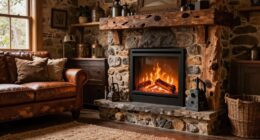
Even in the coldest climates, electric fireplaces can keep your space warm and cozy. Some might worry about their efficiency in freezing weather, but modern models are designed to perform well even when it’s frigid outside. Imagine snuggling up on a chilly night, feeling the gentle glow and comforting heat without worrying about drafts or fuel costs. With an electric fireplace, you can enjoy a warm, inviting home no matter how harsh the winter gets.
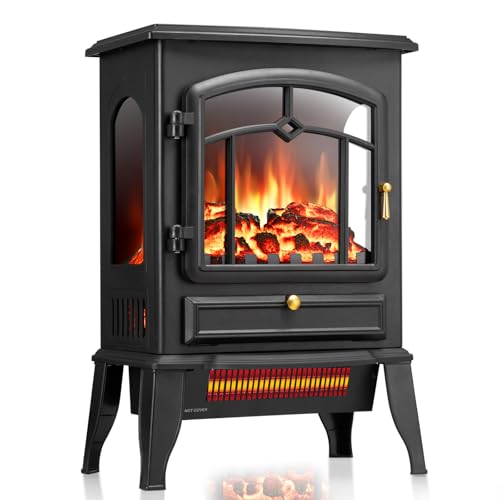
ZAFRO Electric Fireplace Stove, 5100 BTU Quick Heating Electric Fireplace Heater with Adjustable Flame Brightness, 1000W/1500W Thermostat, for Living Room, Bedroom
Charming Design: This electric fireplace stove adopts a vintage – style stove body design, paired with highly realistic…
As an affiliate, we earn on qualifying purchases.
As an affiliate, we earn on qualifying purchases.

ZAFRO Freestanding Electric Fireplace Stove with Realistic Flame, 5100 BTU Electric Fireplace Heater with Retro Design, 1000W/1500W, Dual Safety Protection for Living Room, Bedroom
"Charming Design: This electric fireplace stove adopts a vintage – style stove body design, paired with highly realistic…
As an affiliate, we earn on qualifying purchases.
As an affiliate, we earn on qualifying purchases.