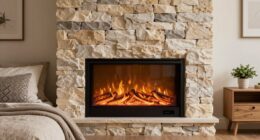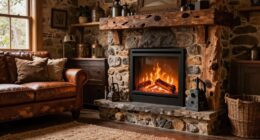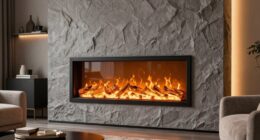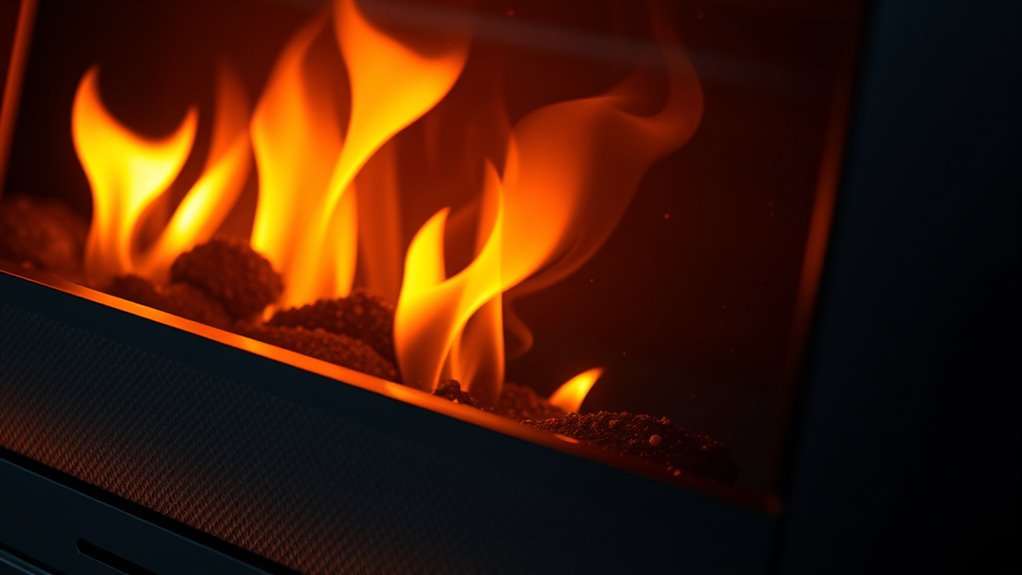
When your electric fireplace smells like burning, it’s usually caused by dust or debris burning off inside the unit, especially if it’s been unused for a while. Turn it off and check for any signs of damage or lingering dust in the vents. If the smell persists beyond a few hours or you notice smoke or sparks, it’s time to inspect more closely or get professional help. Keep exploring to find out how to resolve the issue safely.
Key Takeaways
- Dust or debris on heating elements or inside vents may burn off initially, causing a burning smell.
- Running the fireplace at low settings can help safely burn off accumulated dust and debris.
- Persistent odors may indicate dust buildup, electrical issues, or damaged components needing inspection.
- If the smell continues beyond a few hours or is accompanied by smoke or sparks, turn off and unplug the unit immediately.
- Regular cleaning and maintenance, including filter checks, can prevent burning smells caused by dust accumulation.

If you’ve recently turned on your electric fireplace and notice an unusual smell, you’re not alone. Many homeowners experience a burning odor when first using their unit, but it’s important to understand why it happens and how to address it safely. The smell can be unsettling, but often it’s harmless and temporary. However, it’s essential to consider safety precautions to prevent potential hazards and to follow maintenance tips to keep your fireplace operating smoothly.
Experiencing a burning smell after turning on your electric fireplace is common but usually harmless and temporary.
The most common reason for a burning smell is dust or debris that has settled on the heating elements or internal components during periods of inactivity. When you switch on the fireplace, these particles heat up and produce a burnt odor. This is usually temporary and should fade after a few hours of continuous operation. To minimize this smell, you can run the fireplace at a low setting for a while, allowing the dust to burn off gradually. Regular maintenance tips include cleaning the interior with a soft cloth and vacuuming any vents or filters to remove accumulated dust and debris, which helps prevent future odors.
Another safety precaution involves inspecting the unit for any signs of damage or malfunction. If the smell persists beyond a few hours, or if you notice smoke, sparks, or an electrical burning odor, turn off the fireplace immediately and unplug it. Avoid using the unit until it’s been thoroughly inspected and repaired by a qualified technician. Electrical issues can pose serious fire hazards, so don’t ignore unusual smells that linger or worsen over time.
In terms of maintenance tips, it’s wise to consult your owner’s manual for specific cleaning instructions and safety guidelines. Many electric fireplaces have removable panels or filters that should be cleaned regularly. Check for any frayed wires or burnt components, and replace damaged parts promptly. Keeping the vents clear of dust and debris ensures proper airflow and reduces the risk of overheating, which can also cause a burning smell. Additionally, if your fireplace has a built-in heater, avoid blocking vents or obstructing airflow. Regularly inspecting and maintaining internal components can help prevent overheating and contrast ratio issues that might contribute to unusual odors.

Holikme 30 Feet Dryer Vent Cleaner Kit, Flexible Lint Brush with Drill Attachment, Fireplace Chimney Brushes Extends Up to 30 Feet for Easy Cleaning, Use with or Without a Power Drill
Home Essentials: Fireplace chimney brushes includes two high quality synthetic brush head and flexible rods that extend up…
As an affiliate, we earn on qualifying purchases.
As an affiliate, we earn on qualifying purchases.
Frequently Asked Questions
Can the Burning Smell Indicate a Fire Hazard?
Yes, a burning smell can indicate a fire hazard, so you should act promptly. It could signal dust buildup, loose wiring, or overheating parts. For fire safety, turn off your electric fireplace and unplug it. Regularly clean and inspect your unit to prevent odors and potential fires. Proper odor prevention guarantees your safety and keeps your fireplace functioning smoothly. If the smell persists, consult a professional to avoid risks.
How Long Does the Smell Typically Last?
The burning smell usually lingers for a few hours to a couple of days, like a faint ghost refusing to leave. Poor airflow issues can trap odors, making them stick around longer. To speed up odor persistence, make certain your vents are clear and the unit is clean. Ventilating the room helps dissipate the smell faster, preventing it from becoming an unwelcome guest that overstays its welcome.
Is It Safe to Use My Fireplace While Smelling Burning?
You shouldn’t use your electric fireplace while it smells like burning. The smell indicates possible ventilation issues or electrical concerns that could pose safety risks. Turn off the unit immediately and unplug it. Check for dust buildup or debris inside, which can cause burning odors. If the smell persists or you notice sparks or smoke, contact a professional for inspection before using it again to guarantee safety.
Could the Smell Be Caused by Dust or Debris?
Think of your electric fireplace like a busy kitchen; dust accumulation and debris buildup can cause a burning smell, just like forgotten crumbs in a toaster. Dust and debris can settle on heating elements, leading to a burnt odor when the unit warms up. Regularly cleaning your fireplace, especially the vents and heating components, helps eliminate this smell and keeps it running safely and efficiently.
When Should I Call a Professional for Help?
You should call a professional if you notice persistent burning odors, smoke detection, or any sparks from your electric fireplace. These signs indicate potential electrical safety hazards that require expert inspection. Don’t ignore unusual smells or smoke, as they could signal wiring issues or overheating. An experienced technician can assess the problem safely, ensuring your fireplace operates correctly and prevents fire risks. Always prioritize safety when it comes to electrical appliances.
electric fireplace vent filter
As an affiliate, we earn on qualifying purchases.
As an affiliate, we earn on qualifying purchases.
Conclusion
If your electric fireplace smells like burning, don’t ignore it. Investigate the source, clean the vents, and check for dust or debris. Address any electrical issues promptly, and guarantee proper use and maintenance. By inspecting regularly, cleaning thoroughly, and maintaining safety, you prevent potential hazards. Taking these steps keeps your fireplace safe, efficient, and worry-free. Stay attentive, stay proactive, and enjoy the warmth without the worry. Your safety depends on your vigilance and your care.
electric fireplace dust removal tools
As an affiliate, we earn on qualifying purchases.
As an affiliate, we earn on qualifying purchases.
electric fireplace maintenance parts
As an affiliate, we earn on qualifying purchases.
As an affiliate, we earn on qualifying purchases.