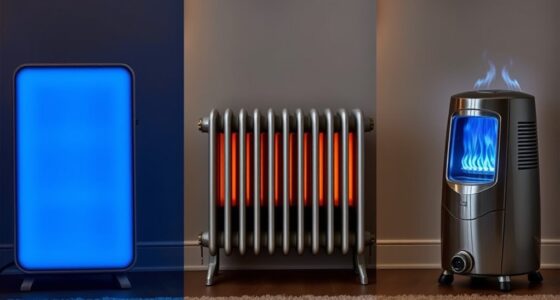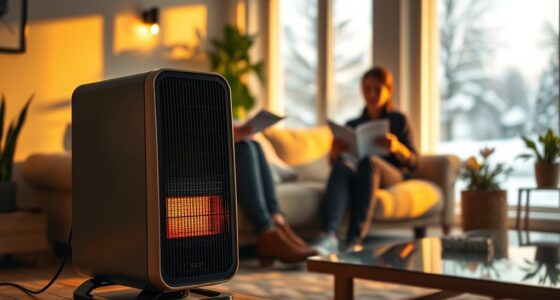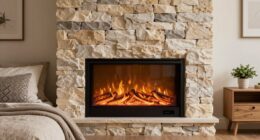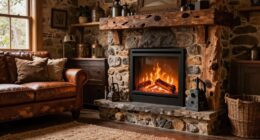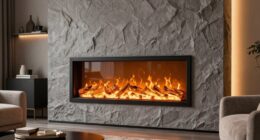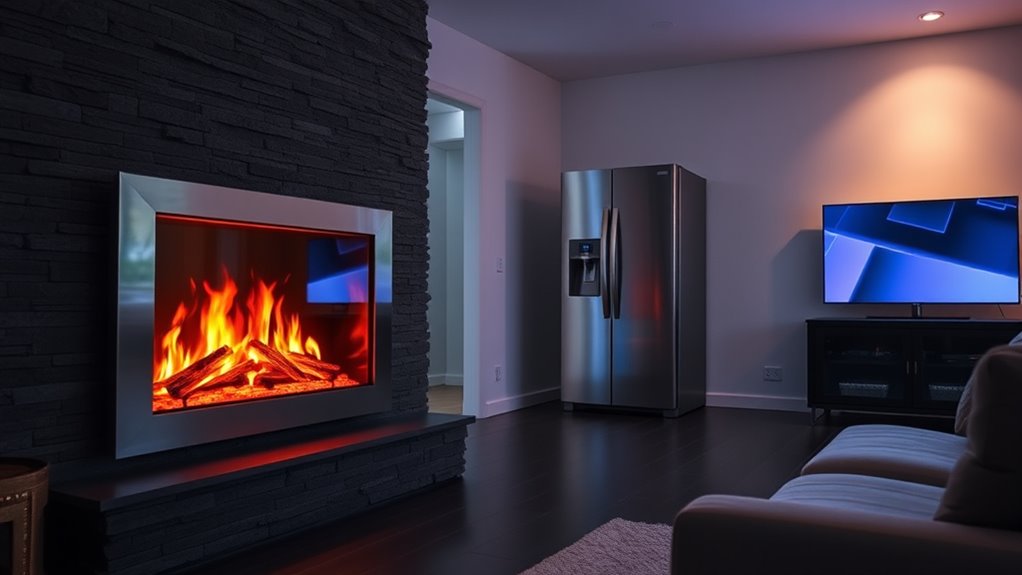

Electric fireplaces are highly energy-efficient, converting nearly all electricity into heat, making them cheaper to run than traditional wood or gas heaters. They’re ideal for supplemental heating, especially if electricity rates are favorable, and produce no direct emissions. While they use less energy than space heaters or older models, their overall efficiency depends on your electricity source. If you want to understand how they compare practically to other household appliances, keep exploring the details.
Key Takeaways
- Electric fireplaces are highly efficient, converting nearly all electricity into heat, often outperforming wood or gas heating in energy use.
- Compared to space heaters, electric fireplaces may use similar or less energy for supplemental heating but are more integrated and visually appealing.
- Central HVAC systems are generally more energy-efficient for whole-home heating but involve higher upfront costs versus electric fireplaces.
- Gas appliances can be cheaper to operate in some regions but produce emissions, while electric fireplaces produce no direct pollutants.
- The overall energy use and environmental impact depend heavily on electricity source; renewable energy makes electric fireplaces more eco-friendly.

Understanding how different energy sources compare in their usage is essential for making informed decisions about sustainability and efficiency. When considering appliances like electric fireplaces versus other household devices, it’s important to evaluate both cost efficiency and environmental impact. These factors influence not only your energy bills but also how your choices contribute to overall environmental health.
Electric fireplaces are often praised for their ease of use and aesthetic appeal, but how do they stack up in terms of cost efficiency? Generally, electric fireplaces tend to be more energy-efficient than traditional wood-burning stoves or gas heaters because they convert nearly all the electricity they use into heat. This high efficiency can translate into lower operational costs, especially if your electricity rates are reasonable. However, the actual cost efficiency depends on your local electricity prices and how much heat you need. If you’re using an electric fireplace for supplemental warmth rather than primary heating, it can be a cost-effective option, especially since it requires less maintenance than combustion-based systems.
Electric fireplaces offer high efficiency and low maintenance, making them a cost-effective heating choice.
When comparing environmental impact, electric fireplaces have both pros and cons. They produce no direct emissions, which makes them cleaner than gas or wood-burning options. This means fewer pollutants enter your home and the atmosphere, making them a better choice for indoor air quality and reducing your carbon footprint. However, the environmental benefits hinge on how the electricity powering the fireplace is generated. If your electricity comes from renewable sources like wind or solar, the overall environmental impact is minimal. But if it relies heavily on fossil fuels, the indirect emissions associated with electricity production can offset some of those benefits. Still, electric fireplaces generally have a smaller carbon footprint compared to traditional combustion appliances, especially when considering their ease of use and low emissions.
Additionally, electric fireplaces are often integrated with modern electrical systems, which can enhance overall energy management and efficiency in your home. When comparing electric fireplaces with other appliances like space heaters, central HVAC systems, or gas appliances, you’ll find that energy consumption varies widely. Space heaters, for instance, can be cost-effective for small spaces but may consume a lot of electricity if left on for extended periods. Central heating systems tend to be more efficient for heating entire homes but come with higher upfront costs and energy use. Gas appliances might be cheaper to run in some areas but emit greenhouse gases and pollutants, impacting the environment more than electric options.

Sweetcrispy Freestanding Electric Fireplace Heater, 26” Indoor Fireplace with 3D Flame Effect, Overheating Safe Design, Energy Saving Space Heater with 12H Timer&Remote for Living Room, Bedroom, Black
Powerful Fireplace Heater: This freestanding electric fireplace heater offers adjustable heat settings ranging from 750W for a gentle…
As an affiliate, we earn on qualifying purchases.
As an affiliate, we earn on qualifying purchases.
Frequently Asked Questions
How Does Insulation Affect Electric Fireplace Energy Efficiency?
Insulation substantially boosts your electric fireplace’s energy efficiency by improving insulation effectiveness and thermal retention. When your space is well-insulated, less heat escapes, so your fireplace doesn’t need to work as hard to maintain warmth. This means lower energy consumption and cost savings. Proper insulation enhances overall comfort, reduces energy waste, and ensures your electric fireplace operates more efficiently, making it a smarter choice for heating your home.
Are There Specific Appliances That Consume More Energy Than Electric Fireplaces?
Imagine your home’s energy landscape as a busy city skyline at dusk. Some appliances, like central heating, kitchen ovens, and clothes dryers, glow brightly and consume more energy than an electric fireplace. During appliance comparison, you’ll notice these high-energy users cast larger shadows, making your electric fireplace seem more energy-efficient. So, with regard to energy consumption, these appliances tend to use considerably more power, especially during peak operation.
Can an Electric Fireplace Replace Central Heating in Terms of Energy Savings?
An electric fireplace can’t fully replace central heating for energy savings because it’s designed for localized warmth, not whole-house heating. While the cost comparison shows electric fireplaces are cheaper to operate in small spaces, they have a limited environmental impact compared to central systems that use fossil fuels. For maximum savings and eco-friendliness, you might consider using an electric fireplace as a supplementary heat source rather than a total replacement.
How Does the Energy Cost of Electric Fireplaces Vary by Model?
Sure, the energy cost of electric fireplaces varies by model, and it’s quite the rollercoaster. Some fireplace models boast energy-efficient features, keeping energy variation minimal, while others guzzle power like there’s no tomorrow. You’ll find that premium models might cost more upfront but save you bucks long-term, whereas budget options could spike your energy bills. So, pick wisely, and don’t be surprised when your electric fireplace’s energy costs dance to its own tune.
Do Electric Fireplaces Have Different Energy Impacts Depending on Usage Frequency?
Yes, electric fireplaces’ energy impacts vary depending on your usage patterns and seasonal impact. If you use it frequently, especially during colder months, expect higher energy consumption. Conversely, occasional use during milder seasons keeps energy use lower. Your habits substantially influence costs, so managing usage patterns—like turning it off when not needed—can help control energy impact and save money, regardless of the season.
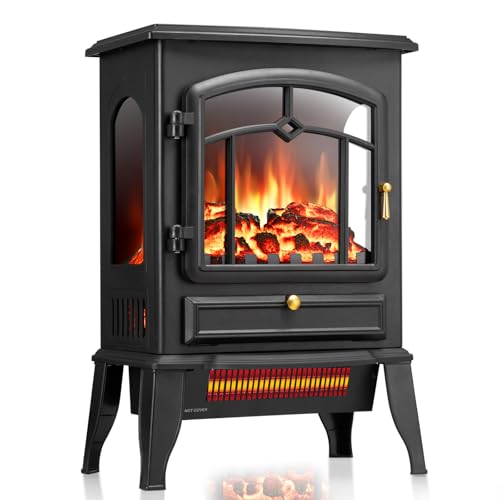
ZAFRO Electric Fireplace Stove, 5100 BTU Quick Heating Electric Fireplace Heater with Adjustable Flame Brightness, 1000W/1500W Thermostat, for Living Room, Bedroom
Charming Design: This electric fireplace stove adopts a vintage – style stove body design, paired with highly realistic…
As an affiliate, we earn on qualifying purchases.
As an affiliate, we earn on qualifying purchases.
Conclusion
Think of your appliances as a team of runners, each with a different pace. An electric fireplace might be the steady sprinter, using energy efficiently during cozy nights. Other appliances are like marathoners, consuming power over longer periods. By choosing wisely, you can keep your energy running smoothly without burning out your resources. Remember, balancing these “runners” helps your home stay warm and your bills stay manageable—keeping your energy race on track.

TURBRO Eternal Flame 26-Inch Infrared Quartz Electric Fireplace Log Heater, Realistic Lemonwood Logs, Adjustable Flame Colors, Remote Control, Thermostat, Timer, EF26-LG, 1500W
Upgraded Infrared Heating: With an added infrared quartz tube, this 1500W zone heater can heat up a room…
As an affiliate, we earn on qualifying purchases.
As an affiliate, we earn on qualifying purchases.
Sweetcrispy Freestanding Electric Fireplace Heater, 26” Indoor Fireplace with 3D Flame Effect, Overheating Safe Design, Energy Saving Space Heater with 12H Timer&Remote for Living Room, Bedroom, Black
Powerful Fireplace Heater: This freestanding electric fireplace heater offers adjustable heat settings ranging from 750W for a gentle…
As an affiliate, we earn on qualifying purchases.
As an affiliate, we earn on qualifying purchases.